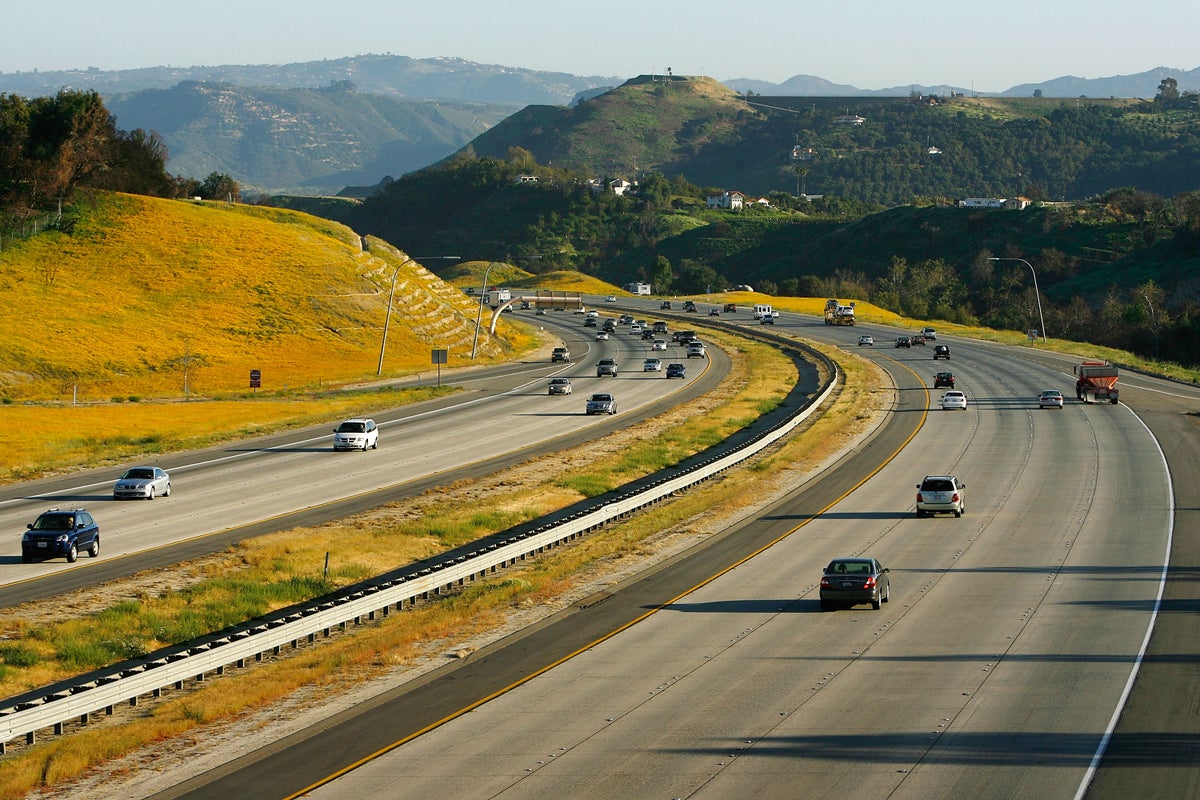
You are sitting on the on-ramp of the Interstate 15 freeway in Temecula, California. The light is red. It stays red. One minute passes, then two, then three. You can see the freeway right in front of you, and traffic is moving, but you are stuck waiting at a dead stop for four minutes just to get on the road.
This isn't a broken traffic light. It is a calculated decision made by a computer math formula.
On June 1, 2026, the Riverside County Transportation Commission launched an eight-mile "smart freeway" pilot program on northbound I-15. It spans from Temecula Parkway up to the split with Interstate 215 in Murrieta. Instead of spending hundreds of millions of dollars to widen the asphalt, transit officials spent 33 million dollars on software, digital signs, and pavement sensors.
The goal is to stop the frustrating stop-and-go bottleneck that turns a ten-minute drive into a 45-minute nightmare during evening rush hour. To do that, the state is handing control of the freeway entrance pacing and speed recommendations over to a live data system.
It is a radical shift in how we manage public roads. It forces a trade-off that many drivers are going to hate at first.
The Reality of Algorithmic Ramp Metering
Most people are used to standard ramp meters. You pull up, the light blinks green every few seconds, and one or two cars go. Those traditional meters run on fixed timers based on historical data. They don't know what is actually happening on the blacktop half a mile ahead.
The smart highway system changes this by using adaptive ramp metering. Underground sensor loops and radar equipment track vehicle volume, speeds, and how packed the lanes are every 30 seconds. If the system detects a slowdown downstream near Winchester Road, it aggressively holds back cars at the upstream ramps like Rancho California Road.
It chooses to create a bottleneck on the entrance ramp to keep the actual highway flowing.
This means your wait time to enter the freeway depends entirely on real-time congestion. Transportation officials confirmed that drivers might wait four minutes or longer at the meter during peak hours. The system spaces out cars so they enter the main lanes one by one, preventing the clumps of vehicles that force freeway drivers to slam on their brakes.
By eliminating those sudden braking waves, the road handles more volume without slowing to a crawl.
Variable Speed Advisories are Not Speed Limits
There is a major misunderstanding about how the speed aspect of this project works. The digital signs along the I-15 test corridor display changing speed numbers, but these are not legally binding speed limits enforced by police tickets. They are variable speed advisories.
If the sign says 50 MPH while the zone is normally 65 MPH, the computer isn't trying to slow you down for the sake of it. It calculates the optimal speed to prevent a traffic breakdown.
When a massive line of cars approaches a bottleneck at 70 MPH, everyone eventually hits a wall of traffic, stomps on the brakes, and stops completely. If the algorithm taps the brakes on the whole system early by advising everyone to move at a steady 50 MPH, the bottleneck clears out before the crowd arrives. You keep moving, even if it feels slower.
University of California, Berkeley researchers previously ran field tests on State Route 78 using similar advisory algorithms. The data showed that driver compliance increases over time as people realize the suggested speeds actually prevent gridlock. In those tests, average morning travel speeds jumped by over eight percent because the system smoothed out the flow.
The Big Trade-Off Local vs Through Traffic
The math behind smart highways works well in computer simulations, but real-world implementation creates a glaring local issue.
When you hold cars on an on-ramp for four minutes, that line of vehicles backs up into the local city streets. It clogs up the intersections, blocks turn lanes, and frustrates people who aren't even trying to get on the highway.
To prevent this local gridlock, the system has to use queue override logic. If sensors detect that the ramp line is spilling back onto city streets like Temecula Parkway, the system abandons its highway-saving plan and flushes the ramp lights to green to save the city intersections. When that happens, the freeway gets hit with a wave of cars anyway.
Balancing the health of the highway against the sanity of local commuters is the hardest part of operating this technology. Transit agencies have to tune the code constantly to make sure they aren't fixing the interstate by ruining the town.
What to Expect Next on Your Drive
If you regularly drive the I-15 corridor in Riverside County or live near State Route 68 in Monterey County—where Caltrans is running a similar adaptive signal pilot—you need to adjust your habits.
Do not expect a magic fix that gives you an empty, open road. The system is designed for incremental improvements, aiming to slash overall corridor travel times by roughly ten to twenty percent based on federal benchmarks for adaptive infrastructure.
Expect longer, more annoying waits at the entrance lights. If you see an overhead digital sign flashing a lower speed than usual, follow it. Accelerating past everyone just to hit the bumper of the car ahead makes the algorithm work harder and keeps everyone stuck in traffic longer.
The five-year pilot program on I-15 will determine if this technology rolls out to major choke points across California. For now, your daily commute depends entirely on what the pavement sensors are telling the computer.