Sports media loves a cheap villain, and nothing sells clicks faster than accusing a pop star of cultural tourism.
Recently, a viral narrative made the rounds after an anonymous NBA player poll labeled Taylor Swift the "fakest" celebrity fan of the New York Knicks, prompting a swift, defensive PR cleanup from the Madison Square Garden front office. The prevailing internet consensus was predictable. Die-hard fans cheered the gatekeeping. Pundits mocked the idea of a billionaire singer-songwriter caring about a mid-season Eastern Conference matchup.
They all missed the point entirely.
Anyone who thinks Taylor Swift sits courtside at Madison Square Garden to prove her encyclopedic knowledge of the 1994 NBA Finals roster misunderstands the foundational economics of modern live entertainment. Calling her a "fake fan" is like calling a hedge fund manager a bad amateur poker player while they quietly buy the entire casino.
I have spent fifteen years inside sports sponsorship agencies and entertainment PR war rooms, watching franchises burn millions of dollars chasing "authentic" celebrity endorsements that move zero merchandise and sell zero tickets. The outrage over Swift’s Knicks fandom exposes a massive blind spot in how fans, players, and sports journalists view the business of courtside real estate.
The Myth of the Pure Courtside Superfan
Let’s dismantle the romantic delusion of Celebrity Row first.
For decades, Madison Square Garden sold the public on a specific fantasy: Spike Lee bleeding orange and blue, Woody Allen brooding behind thick frames, and Jack Nicholson out at the Forum screaming at referees. Fans bought into the idea that A-list celebrities were just regular lunatics with better seats.
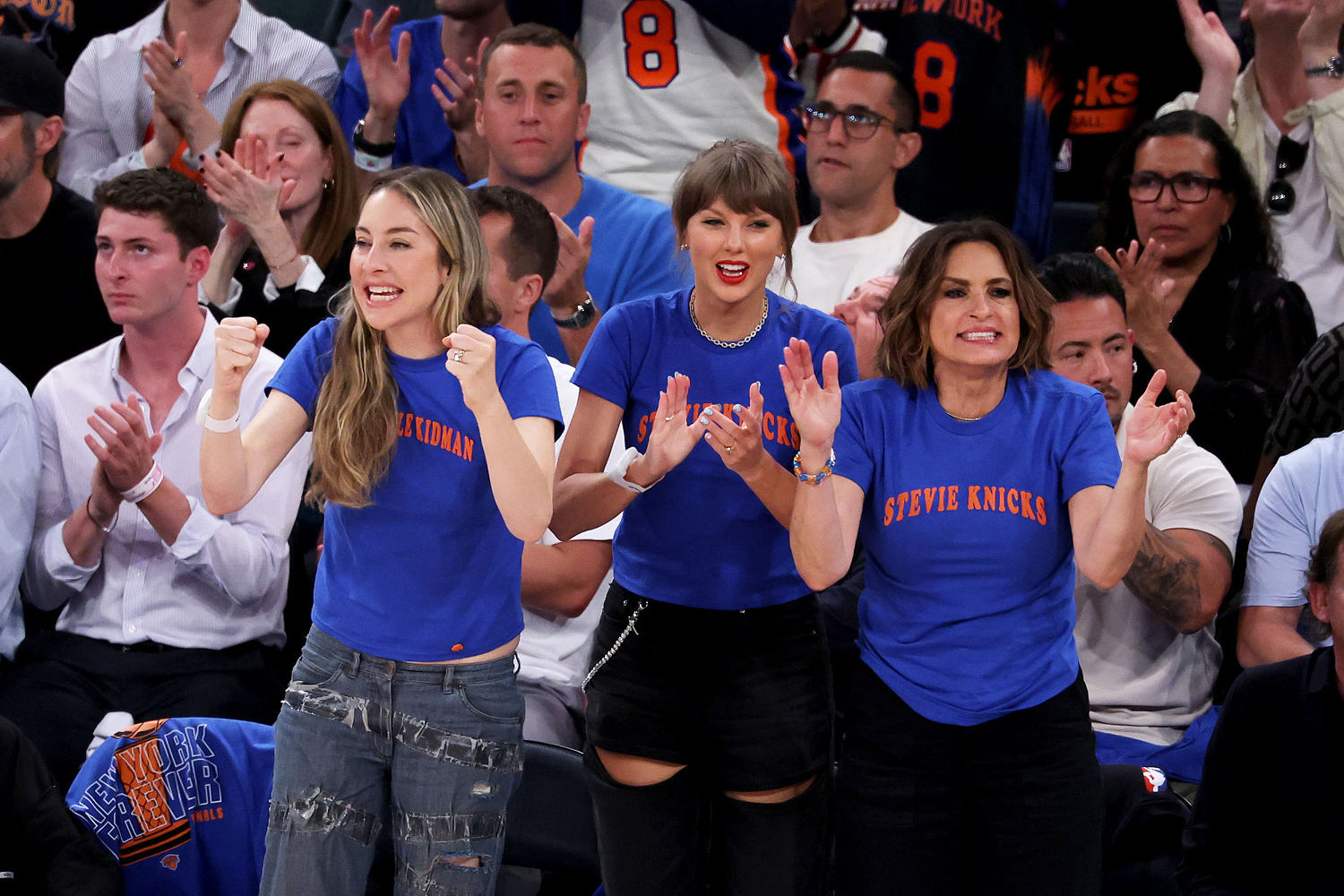
That era is dead. Courtside seating at a marquee NBA franchise is no longer a fan club. It is an unscripted, high-definition commercial broadcast disguised as a sporting event.
When you analyze the mechanics of earned media value—the calculated dollar equivalent of organic press coverage, social media impressions, and broadcast mentions generated without paying for ad space—a single three-second reaction shot of a global megastar outperforms a million-dollar billboard campaign in Times Square.
Here is what actually happens when an A-list entertainer shows up at MSG:
- The Broadcast Hijack: National television directors have a strict mandate to cut to Celebrity Row during dead balls. Those cutaways are syndicated across ESPN, TNT, and international broadcast partners within minutes.
- The Algorithmic Multiplier: Sports highlight accounts on Instagram, TikTok, and X do not just post dunks anymore. They post cultural crossover moments. A clip of a pop star reacting to a buzzer-beater generates triple the engagement of the shot itself because it bridges two entirely separate audience demographics.
- The Corporate Hospitality Exchange: Most celebrities do not buy courtside tickets on StubHub. Those seats are controlled by corporate sponsors, agency heads, and team ownership groups who distribute them as relationship currency.
If you judge Swift by the standards of a guy who listens to sports talk radio during his morning commute in Queens, she fails. Of course she fails. She is not there to debate pick-and-roll coverage. She is there because Madison Square Garden is the single most valuable visual stage in Manhattan on a Tuesday night.
Why the Players Got Played by Their Own Poll
The funniest part of this entire news cycle was watching active NBA players take the bait.
When anonymous player polls circulate, athletes inevitably lean into gatekeeping. Players respect grind, loyalty, and suffering. To an athlete who has spent twenty years obsessing over footwork and film study, watching a billionaire casually drop into the front row—wearing a brand-new Knicks hat with the creases still sharp—feels performative.
From a locker-room perspective, that irritation makes total sense. Athletes see people who actually show up for a 22-win season in February versus people who materialize when the team is relevant and the cameras are rolling.
What those players failed to realize is that the salary cap they negotiate over every collective bargaining cycle is directly subsidized by the exact phenomenon they were mocking.
NBA Basketball Related Income (BRI) relies heavily on massive national media rights deals and global brand expansion. Television networks do not pay tens of billions of dollars merely for the purists who watch film breakdowns on YouTube. They pay for casual eyeballs. They pay for cultural relevance. When a figure with hundreds of millions of global followers puts on a Knicks cap—even if she couldn't name the backup power forward—she injects that franchise's intellectual property into markets that traditional basketball marketing could never reach.
Players want maximum contracts, global shoe deals, and prime-time broadcast slots, yet they sneer at the cultural cross-pollination that makes those revenue streams possible. You cannot demand blockbuster entertainment valuations while enforcing purity tests reserved for dive-bar trivia nights.
The Knicks Front Office Didn't Defend Her Out of Politeness
Look closely at how fast the New York Knicks organization rushed to Swift’s defense after the "fake fan" label started trending.
Amateur observers read the team's response as awkward corporate damage control, as if MSG executives were terrified of offending a powerful celebrity. That is a surface-level misread. The Knicks didn't defend Swift to protect her feelings. They defended her to protect their asset valuation.
In sports marketing, there is a fatal mistake called "devaluing the inventory." If a franchise allows a narrative to take hold that its celebrity attendees are frauds, it poisons the well for every other entertainer, studio executive, and fashion designer considering a courtside appearance.
Imagine a scenario where top-tier talent starts avoiding Celebrity Row because they know they will be subjected to a public interrogation over their sports trivia knowledge every time they accept an invite. Overnight, the broadcast loses its cultural sheen. Sponsors lose their prime networking real estate. The aura of Madison Square Garden shrinks back down to just another basketball arena.
MSG's PR team understood the assignment immediately:
- Shut down the gatekeeping: Validate anyone wearing the team's colors, regardless of their tenure as a fan.
- Reframe the narrative: Shift the conversation from "Is she a real fan?" to "Everyone wants to be part of New York basketball."
- Protect the brand halo: Ensure that global icons feel welcome to use Knicks gear as a lifestyle accessory.
The Knicks have spent decades surviving periods of dismal on-court performance precisely because their brand transcends basketball. Even when the roster was terrible, the logo remained a global fashion staple. Attacking the biggest pop star on earth for wearing your brand is commercial self-sabotage.
What Everyone Is Actually Asking (And Why the Premise Is Broken)
Whenever these celebrity sports controversies erupt, search engines flood with the exact same predictable questions. Almost every single one of them is built on a faulty premise.
Is Taylor Swift actually a Knicks fan?
Asking whether a global entertainment mogul is a "real" fan of a specific sports team is the wrong question. Celebrities at that altitude do not have casual hobbies; they have brand alignments. Swift grew up in Pennsylvania, has deep ties to Philadelphia sports, and famously pivoted into a massive Kansas City Chiefs fixture due to her personal relationship. When she appears at a New York game, she is participating in the local cultural ecosystem of a city where she owns property and conducts business. It is neither fake nor authentic—it is transactional visibility.
Why do celebrities sit courtside if they don't care about the game?
Because courtside is the only VIP section in the world where the camera is legally obligated to film you while you pretend not to notice. At a private nightclub, photography is banned. At an awards show, you are seated in rows facing away from the audience, stiff and rehearsed. At an NBA game, you get to eat, drink, laugh, and look effortlessly cool in candid lighting while millions of people watch you on television. For a celebrity publicist, forty-eight minutes of game time is worth more than a magazine cover.
Does celebrity attendance actually help an NBA team win?
On the hardwood? Zero impact. A pop star in row one has never contested a three-pointer or secured a defensive rebound. In the front office? It changes everything. Free agents—especially younger players building personal brands, podcasts, and fashion labels—care deeply about market gravity. Playing in an arena that attracts global A-listers signals to elite talent that this franchise is the center of the cultural universe. Winning franchises recruit talent with rings; big-market franchises recruit talent with relevance.
The Real Cost of "Authentic" Fandom
To be completely fair, there is a massive downside to this commercialized celebrity strategy, and sports executives hate admitting it.
When a franchise prioritizes celebrity optics over hardcore fan culture, it slowly erodes the home-court atmosphere that makes live sports electric in the first place.
I have sat in arena suites where corporate guests spend four quarters staring at their phones, completely oblivious to a five-point game with two minutes left. When the lower bowl becomes a playground for influencers, publicists, and billionaires treating the game like a backdrop for their Instagram stories, the acoustic energy of the building dies. Real fans get priced out to the upper deck, and the lower bowl turns into a sterile corporate mixer.
That is the legitimate critique of Celebrity Row. If you want to attack the business model of modern NBA arenas, attack the ticket pricing that prices out working-class fans. Attack the corporate seat blocks that leave prime lower-bowl sections half-empty at tip-off because guests are still drinking in the VIP lounge.
Do not waste your breath attacking Taylor Swift because she doesn't know who coached the Knicks in 1999. She didn't design the system. She is just the most visible beneficiary of it.
How Sports Marketers Actually Measure Celebrity Value
If you work in brand partnerships, sports media, or talent management, stop falling for the "authenticity" trap. Agencies routinely waste seven-figure budgets trying to manufacture organic passion between celebrities and teams, only to watch the campaign flop because the public smells the script from a mile away.
Here is how smart operators actually leverage celebrity crossover without embarrassing themselves:
- Stop forcing trivia tests: Never put a celebrity on the jumbotron and ask them to name past players or recite team history. It creates cringe-worthy television and punishes guests for showing up. Let them exist in the space naturally.
- Monetize the aesthetic, not the expertise: Nobody buys a Knicks hat because they think a pop star has great takes on zone defense. They buy it because she made the colors look good on a Tuesday night. Market the lifestyle appeal of your merchandise rather than pretending every wearer is a die-hard historian.
- Separate locker-room culture from front-office marketing: Players should care about championships, discipline, and grit. Marketing departments should care about reach, impressions, and cultural relevance. When players start commenting on marketing optics—and when front offices start pretending celebrities are hardcore fans—both sides look ridiculous.
The sports industry runs on a silent truce between two completely different worlds: the hyper-competitive grind of professional athletes and the glossy, hyper-curated illusion of celebrity culture.
Taylor Swift sitting courtside at Madison Square Garden wasn't a betrayal of basketball purity. It was a live demonstration of how the modern entertainment economy pays its bills. If you're still mad about whether she's a "real" fan, you're arguing about the rules of a game nobody in the front row is even playing.