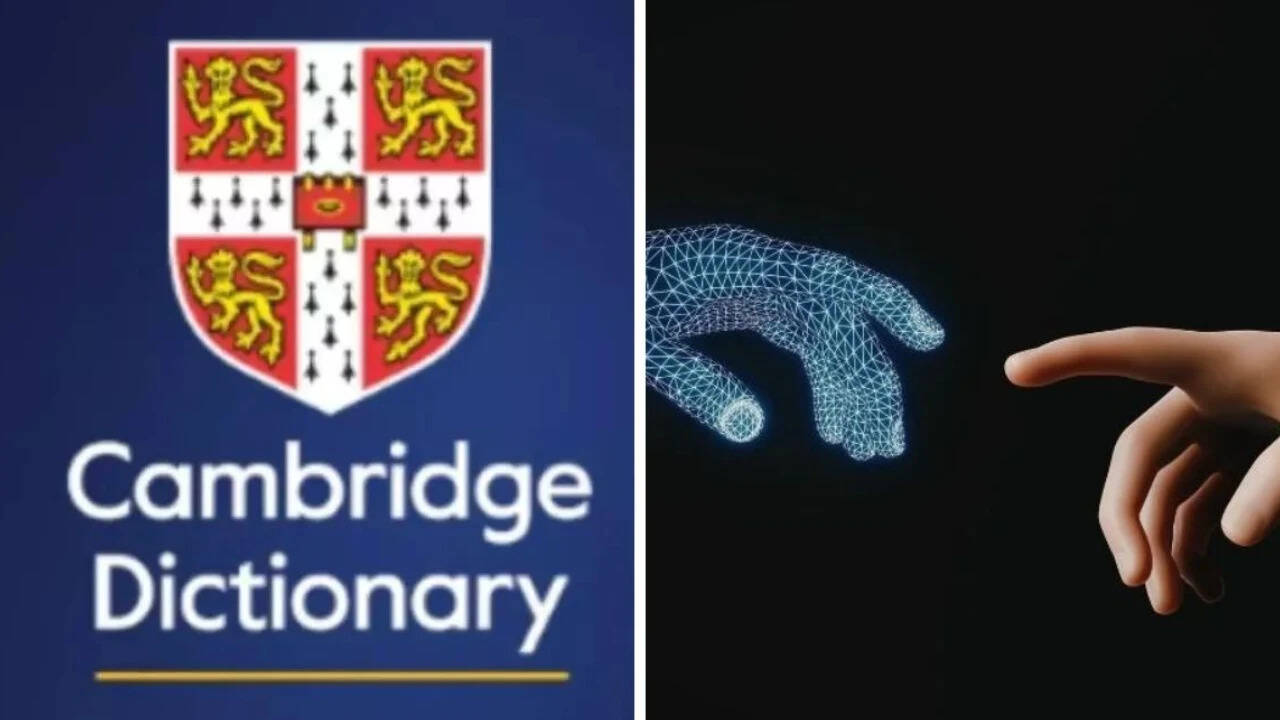
Every single media outlet on the planet is currently clapping like trained seals because Cambridge Dictionary just named "human" its Word of the Year for 2026.
They are spinning it as a heartwarming triumph of the biological spirit. A poetic pushback against the cold, encroaching tide of generative algorithms. A reminder that amid the synthetic noise, flesh and blood still matter.
It is complete nonsense.
When a word that has been in constant, foundational use for over a thousand years suddenly spikes in dictionary lookups, that is not a cultural renaissance. That is a mass identity crisis. You do not look up the definition of water unless you are dying of thirst in a desert, or someone just handed you a glass of clear liquid and told you to guess whether it is poison.
The lazy consensus in tech journalism right now is that "human" winning the crown proves we value authenticity more than ever. I have spent the last decade inside content operations, brand strategy rooms, and product launches watching executives systematically strip every ounce of genuine humanity out of their businesses—only to turn around and slap a "100% Human-Made" sticker on the packaging when their metrics tanked.
We are not celebrating humanity. We are commodifying it because we broke the internet and now we are trying to sell the antidote.
The Anatomy of a Dictionary Panic
Lexicographers do not pick words based on vibes. Institutions like Cambridge, Oxford, and Merriam-Webster track hard search data. They look at spikes in lookup volume—moments when millions of people pause, type a word into a search bar, and ask what it actually means.
Think about the sheer absurdity of typing the word "human" into a dictionary in 2026.
Nobody forgot how to spell it. Nobody confused it with a houseplant. People searched for the word because its legal, economic, and philosophical boundaries have completely dissolved over the last thirty-six months.
When every customer service chat is an automated agent, when half the profiles on dating apps are synthetic engagement farms, and when search engines summarize stolen journalism into bland, frictionless mush, the word "human" stops being a biological classification. It becomes a luxury tier.
This is the exact mechanism economists call signaling. When a baseline trait becomes scarce or hard to verify, it transforms into a status symbol. Two hundred years ago, pale skin meant you were wealthy enough to stay indoors while peasants worked the fields; once office jobs trapped everyone inside, a tan became the status symbol of leisure.
Today, efficiency, perfection, and instant output are cheap. Algorithms produce flawless grammar and polished corporate prose at zero marginal cost. Suddenly, imperfection—typos, weird phrasing, emotional volatility, slow response times—is the new luxury good. And lexicographers are just recording the linguistic fallout of that market shift.
Why "Human-Made" Is the New "All-Natural"
If you work in marketing, product, or media, pay close attention. You are about to watch your competitors blow millions of dollars on the exact same trap that ruined the packaged food industry twenty years ago.
Remember the "All-Natural" craze? Food conglomerates pumped products full of high-fructose corn syrup, stripped out nutrients, and then slapped green leaves and "All-Natural" labels across the front of the box. The term meant nothing legally. It was pure aesthetic anesthesia designed to soothe consumer anxiety while keeping the exact same industrial supply chain intact behind the curtain.
"Human" is the "All-Natural" of the late 2020s.
I have sat in boardrooms this year where leadership teams laid off forty percent of their editorial and support staff, replaced them with automated workflows, and then spent six figures on a brand refresh centered around "human-centric connection." They want the cost structure of a machine with the brand equity of a artisan workshop.
Consumers are not stupid. They can smell synthetic empathy from a mile away. When a brand aggressively markets its humanity, it usually means they are compensating for an automated, soul-crushing user experience.
The Verification Trap
Let us look at the actual mechanics of proving something is human right now.
- Cryptographic provenance: Standards like C2PA attempt to attach digital signatures to cameras and software to prove a human captured an image or wrote a document. The problem? Metadata gets stripped the second a file is screenshotted, compressed, or uploaded to half the social platforms on earth.
- AI detection software: Every major detector on the market suffers from catastrophic false-positive rates, disproportionately flagging non-native English speakers and neurodivergent writers whose syntax follows rigid, predictable patterns.
- Biometric proof-of-personhood: Orb-scanning crypto projects and government digital IDs ask you to surrender your literal retinal data just to prove you are not a script.
Notice the irony here. To prove you are human, you have to submit to invasive machine surveillance or conform to an arbitrary algorithmic standard of what "human writing" looks like. If you write too cleanly, the machine says you are a bot. If you make intentional errors to fool the detector, you degrade your own work.
Dismantling the "Authenticity" Myth
If you search for commentary on Cambridge's announcement, you will see the same tired questions dominating the conversation: How do we keep content human? How can brands sound more human? Will human creativity survive?
Every single one of those questions is built on a flawed premise. They assume that "human" equals "good" and "machine" equals "bad."
Let us be brutally honest. Most human output is terrible.
Before generative models flooded the web, the internet was already drowning in millions of derivative listicles, plagiarized press releases, soulless corporate memos, and mind-numbingly boring customer service scripts written entirely by flesh-and-blood humans who hated their jobs. For decades, corporations trained human workers to write and speak like robots—stripping out personality, enforcing rigid style guides, and punishing anyone who deviated from the script.
When large language models arrived, they did not replace brilliant artists. They replaced the middle layer of bureaucratic text-pushers whose jobs had already been reduced to mechanical repetition.
Sociologist Erving Goffman wrote extensively about dramaturgy—the idea that human social interaction is a constant performance where we wear masks tailored to our audience. On the modern internet, nobody is being their "authentic" self. You are performing a curated, algorithmically optimized version of humanity designed to trigger engagement metrics. Calling that performance "human" just because fingers typed it on a keyboard is pure delusion.
What Actually Matters When Everyone Screams "Human"
If you want to survive the backlash against synthetic media without falling into the trap of performative humanity, stop obsessing over who or what generated the work. Focus on what machines structurally cannot replicate: skin in the game.
Nassim Nicholas Taleb popularized the concept of skin in the game—the idea that true value and trust require bearing the downside risk of your own actions and words.
A language model has zero skin in the game. It cannot get sued for defamation. It does not lose sleep when a product launch fails. It does not feel humiliation when a prediction turns out to be wrong, and it does not bleed when a business goes bankrupt. It generates probabilities, collects no accountability, and moves on to the next prompt.
When audiences crave something "human," they are not craving typos or heartwarming stock photos of people holding hands. They are craving accountability. They want to know that there is a real person with a reputation, a bank account, and a pulse standing behind the claim—someone who suffers real consequences if they lie to you.
How to Build Real Authority Without Fake Humanity
Stop using the word "human" in your marketing copy. Immediately. Every time you write "crafted by humans" or "human-first," you sound defensive, like a restaurant putting a sign in the window that says "Zero Rats in the Kitchen."
Instead, execute these three shifts:
- Publish your scars, not your wins: Synthetic content optimizes for consensus and smooth edges. It summarizes the average of what everyone else already believes. Real expertise comes from failure, edge cases, and specific, verifiable experience. Tell the story of the million-dollar campaign that imploded and show the exact post-mortem data. An algorithm cannot hallucinate genuine institutional trauma.
- Take asymmetric stances: Machines are trained via reinforcement learning from human feedback (RLHF) to be helpful, harmless, and polite. That alignment makes them structurally cowardly. They hedge every statement. They present both sides of settled arguments. If you want to stand out, take clear, defensible, non-consensus positions and back them with primary evidence. Polarize your audience intentionally.
- Attach real names and real liability: Stop hiding behind faceless brand accounts and generic "Editorial Team" bylines. Put individual practitioners front and center. Let them own their track records publicly. When a real person puts their career on the line to endorse an idea, trust compounds faster than any brand campaign can buy.
The Downside Nobody Mentions
There is a massive catch to abandoning safe, sanitized corporate polish in favor of high-accountability, opinionated human work: it does not scale, and it hurts.
When you stop hiding behind bland consensus and institutional anonymity, you become a target. You will alienate conservative clients. You will trigger angry replies. You will occasionally be publicly, embarrassingly wrong, and there will be no algorithm to blame when it happens.
Furthermore, hiring and retaining people capable of original thought and genuine accountability is wildly expensive. You cannot outsource skin in the game to a low-cost content mill, and you cannot automate it with a subscription tier. Your margins will look worse on paper in the short term than your competitors who are pumping out thousands of synthetic pages a day.
Most executives do not have the stomach for that trade-off. They want the safety of algorithmic mediocrity wrapped in the aesthetic of human courage.
Cambridge Dictionary picking "human" as its Word of the Year is not a victory lap for our species. It is a warning flare. It marks the exact moment in history when being a person stopped being a biological default and became a contested brand category.
You do not prove you are human by announcing it in a press release, slapping a badge on your website, or celebrating a dictionary entry. You prove it by taking risks that a machine would never be permitted to take, owning the fallout when things break, and refusing to hide behind the safety of the crowd.