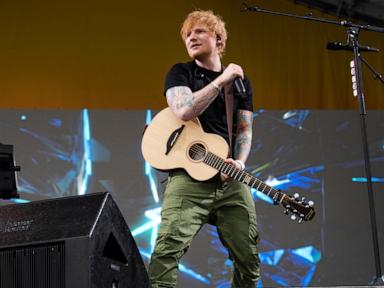
Massive stadium tours are fragile, over-engineered houses of cards. When a promoter pulls the plug on an Ed Sheeran show at Gillette Stadium because of a little water falling from the sky, they are not protecting you. They are protecting corporate insurance policies and legal liability ledgers.
The lazy consensus is that severe weather cancellation protocols keep crowds safe. That is a comforting fiction. The real truth is that stadium infrastructure has become so bloated, litigious, and risk-averse that venues fold at the first sign of an uncooperative forecast, treating live entertainment like a delicate museum exhibition rather than a raw, live medium. If you enjoyed this piece, you might want to read: this related article.
I have spent decades watching the inner workings of major concert production. I have seen promoters blow millions on pyrotechnics, massive stage hydraulics, and rotating center-stage rigs, only to panic the moment the National Weather Service issues a standard thunderstorm advisory. When an artist with a loop pedal and an acoustic guitar cannot perform outdoors because of moisture, the entire live entertainment ecosystem has lost its spine.
The Myth Of Absolute Safety In Open Air Venues
Let us look at the standard excuse handed down by venue operators. They talk about lightning risks, slippery staging, and electrical hazards. For another angle on this development, see the recent update from Rolling Stone.
Every outdoor event carries inherent risk. That has been true since people gathered in amphitheaters thousands of years ago. But modern stadium operators have outsourced their decision-making to corporate risk management committees. Instead of engineering solutions for weather resilience—like reinforced non-slip surfaces, modular electronics housing, and quick-drain stage designs—they hit the panic button.
Canceling a show isn't an act of heroism. It is an administrative failure.
Imagine a scenario where a stadium venue operates with the same weather resilience as a major outdoor festival like Glastonbury or Coachella. Those festivals deal with mud, torrential downpours, and gale-force winds on a regular basis. Do they shut down every time it drizzles? No. They adapt because their economic model depends on the show going on. Stadiums, on the other hand, are cushioned by guaranteed corporate sponsorships, massive insurance riders, and exclusive parking revenue that trickles in regardless of whether an artist plays a single chord.
The Economic Slap In The Face To The Fan
When a stadium tour gets postponed or canceled hours before doors open, the financial damage to the consumer is absolute.
The media focuses on the ticket refund. That is a drop in the bucket. What about the non-refundable hotel rooms booked months in advance? What about the cross-state travel, the arranged time off work, the babysitters, and the parking passes? The promoters do not reimburse those losses. They simply reset the calendar, pocket the float on the ticket revenue for another six months, and pretend everything is fine.
This creates a predatory asymmetry in the live music economy. The promoter and the venue carry zero downside risk for backing out, while the fan absorbs 100 percent of the logistical friction.
If you are wondering why ticket prices keep climbing while the reliability of the actual experience plummets, this is your answer. You are paying premium prices for a luxury product that vanishes the moment Mother Nature behaves like Mother Nature.
The Acoustic Reality Check
Let us address the technical capabilities of a modern stadium production. Ed Sheeran's Mathematics Tour is famous for its massive 360-degree halo screen and circular stage design. It is an engineering marvel designed to project sound and visuals to one hundred thousand screaming fans.
Except when water hits it.
Modern stage technology relies so heavily on sensitive LED walls, automated lighting rigs, and complex digital audio routing that a heavy downpour poses a legitimate short-circuit hazard. But whose fault is that? We have traded acoustic durability for visual flash. We built stages that look like spaceship command centers instead of stages built to withstand the elements they were literally designed to sit beneath.
Decades ago, rock bands played outdoor stadiums in pouring rain, thunder rolling across the horizon, while Marshall stacks hummed and singers belted through water-logged Shure SM58 microphones. It wasn't always pretty, but it was real. Today, we have sterilized the experience. We demand clinical perfection, and the moment reality intrudes, the whole operation collapses like a cheap lawn chair.
How To Fix The Live Event Model
Stop accepting weather cancellations as an unavoidable act of God. They are an operational choice.
If you buy tickets for a major outdoor tour, you need to factor cancellation risk into your entertainment budget. Treat major stadium shows not as guaranteed events, but as high-volatility financial instruments.
Venues need to face financial penalties for pulling the plug prematurely. If promoters had skin in the game—if they were legally required to cover auxiliary travel and lodging costs when a weather cancellation is called outside of an official state of emergency—you would see a sudden, miraculous surge in creative problem-solving. Suddenly, rain covers would improve. Stage drainage would be prioritized. The show would go on.
Until the economics change, stadium tours will remain fragile spectacles run by cowards in legal departments.
Don't buy the safety narrative. It's about liability, not you.