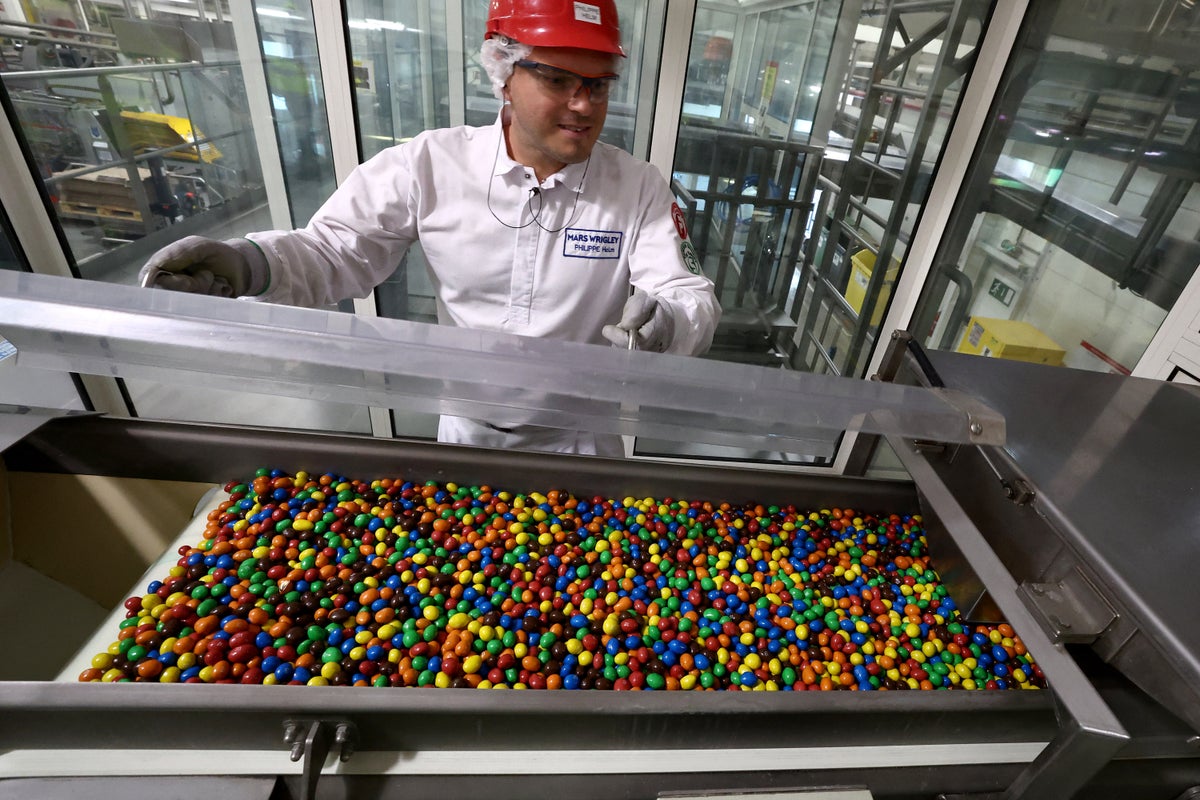
The physical appearance of a consumer packaged good often serves as its primary psychological anchor. For decades, the bright, uniform sheen of M&Ms relied on synthetic Food, Drug, and Cosmetic (FD&C) colorants—petroleum-derived molecules optimized for heat stability, shelf life, and minimal manufacturing friction. However, intensifying regulatory friction and populist political pressure from the "Make America Healthy Again" (MAHA) movement have forced Mars Inc. into a multi-million-dollar operational shift: introducing naturally dyed product lines across its flagship confectionery brands.
This operational pivot exposes a fundamental tension between political idealism and industrial chemistry. Translating clean-label mandates into a manufacturing system that outputs roughly 600 million units per day introduces massive supply chain and engineering bottlenecks. The resulting market offering—an initial online-only rollout stripped of iconic blue and brown varieties—reveals the steep thermodynamic and financial costs of replacing synthetic dyes with plant- and algae-based alternatives.
The Cost Function of Natural Substitutes
Synthetic colorants like Blue 1, Red 40, and Yellow 5 are highly concentrated, chemically inert powders that require minuscule doses to achieve saturated hues. Replacing them with natural alternatives fundamentally alters the cost function of the manufacturing process across three distinct variables: raw material cost, dosing volume, and shelf-life degradation.
- Raw Material Premium: Natural color inputs derived from agricultural sources—such as turmeric for yellow, beets for red, and spirulina for blue—operate on volatile commodities markets. Unlike synthetic dyes produced via predictable chemical synthesis, agricultural extracts are vulnerable to weather disruptions, crop diseases, and regional supply shocks. This structure yields a raw material cost premium that can be up to ten times higher per kilogram than synthetic equivalents.
- Dosing and Yield Loss: Natural pigments possess significantly lower tinctorial strength than petroleum-based molecules. Achieving the visual saturation consumers expect requires a larger physical volume of the natural extract. Increasing the volume of the color additive alters the moisture profile and structural integrity of the sugar shell coating, leading to higher batch rejection rates during quality control.
- Thermodynamic Instability: Light, heat, and pH shifts rapidly degrade organic pigments. While a synthetic M&M can maintain its color profile under standard retail lighting for years, natural alternatives fade rapidly when exposed to ultraviolet light or ambient humidity. Mitigating this degradation requires enhanced packaging barriers or shortened distribution windows, compressing traditional retail margins.
The Blue Pigment Anomaly and Industrial Scaling
The exclusion of blue and brown M&Ms from the initial natural-dye rollout highlights a critical engineering bottleneck: the severe structural limitations of organic blue pigments when subjected to mass production machinery. While nature produces abundant reds and yellows, stable, water-soluble blues are exceedingly rare in the plant kingdom.
To achieve a natural blue, food engineers rely heavily on phycocyanin, a protein-pigment complex extracted from spirulina cyanobacteria. Under laboratory conditions, phycocyanin yields a vibrant blue hue. At scale, however, the molecule behaves as an industrial pollutant within highly automated production environments.
The physical mechanics of processing spirulina colorants introduce immediate manufacturing friction:
- Viscosity and Mechanical Clogging: Formulating sugar syrups with the high concentrations of spirulina required for deep blue hues increases fluid viscosity. This thicker solution clogs the high-pressure spray nozzles utilized in automated coating pans, stopping production lines for unplanned maintenance.
- Foaming and Aeration: Phycocyanin possesses inherent surfactant properties. When agitated in industrial mixing vats, the solution generates excessive foam. This aeration creates microscopic air pockets in the sugar shell as it dries, resulting in brittle, pitted, and unmarketable candy surfaces.
- Secondary Color Cascades: The inability to produce a stable, scalable blue directly eliminates the classic brown candy. Because industrial brown coatings are achieved by blending blue, red, and yellow pigments, the blue bottleneck triggers a secondary product cascade, forcing Mars to drop both colors simultaneously.
Regulatory Compulsion Versus Market Acceptance
This operational restructuring is fundamentally defensive rather than consumer-driven. In 2016, Mars committed to removing artificial dyes from its human food portfolio within five years, only to quietly reverse the decision after identifying deep consumer indifference and a reluctance to accept altered visual profiles or higher price points. The market in the United States historically lacked the structural incentives found in Europe, where the European Union enforces mandatory warning labels on foods containing certain synthetic dyes, shifting the economic equilibrium in favor of natural alternatives.
The current push is accelerated by legal and legislative intervention rather than shifting consumer sentiment. State-level actions, such as the enforcement of restrictive food additive laws in West Virginia and regulatory investigations launched by the Texas Attorney General, threaten to fragment the domestic supply chain. By launching an online-only option, the organization creates an isolated, high-margin sandbox to iterate on natural dye formulations without risking the efficiency of its primary mass-market production lines.
The Dual-Portfolio Playbook
Confectionery manufacturers cannot absorb the capital expenditure of a total natural-dye conversion while maintaining current retail price points. To insulate profitability from escalating supply chain friction, the optimal strategic response centers on a strict dual-portfolio allocation.
Rather than executing an immediate, wholesale elimination of synthetic dyes, manufacturers must split their product architecture into two distinct tiers:
- A Premium Clean-Label Tier: Distributed primarily via e-commerce and high-end specialty retail. This line features a restricted color palette, commands a 20-30% price premium to offset raw material volatility, and targets the demographic aligned with the MAHA movement.
- A Legacy Mass-Market Tier: Maintained across standard grocery and convenience channels utilizing existing FD&C formulations. This preserves high-speed asset utilization and shields the core volume from the margin erosion brought on by agricultural dye alternatives.
Simultaneously, engineering capital must be directed toward stabilizing phycocyanin solutions through microencapsulation—coating the pigment molecules in protective lipid layers to prevent mechanical foaming and nozzle clogging. Until natural blue formulations achieve true mechanical parity with synthetic molecules, any mandate forcing immediate, total adoption across standard retail channels will result in severe product margin compression and structural supply chain deficits.


