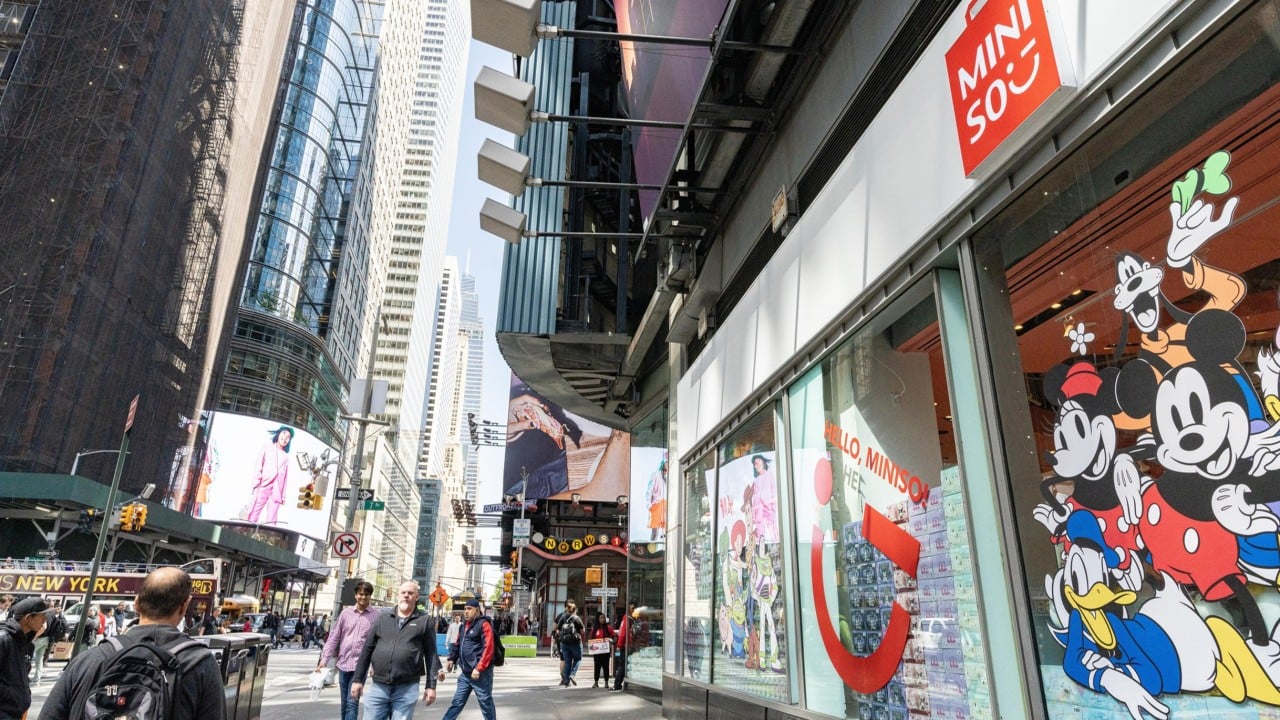
Mainland Chinese consumer brands are accelerating direct entry into the United States, bypassing Hong Kong as a traditional staging ground. The prevailing market narrative frames this shift as a binary choice between a saturated, slow-growth Hong Kong retail sector and a high-margin, high-volume American consumer base. That framing is analytically flawed. Treating Hong Kong and the United States as mutually exclusive capital destinations misunderstands the distinct structural functions each market performs in cross-border brand scaling. Hong Kong operates as a low-friction regulatory sandbox, a currency-pegged liquidity hub, and an institutional signaling mechanism; the United States operates as a high-cost, high-variance customer acquisition engine with severe geopolitical tail risks. Brands that abandon Hong Kong entirely to fund direct-to-US expansion misallocate their risk capital and expose their balance sheets to unhedged operational shocks.
The Structural Divergence Between Testing Ground and Scale Market
The core error in evaluating cross-border retail expansion lies in comparing aggregate addressable market size rather than risk-adjusted return on invested capital. When mainland brands evaluate international expansion, they confront two fundamentally different operating environments that solve entirely separate business problems.
Hong Kong as a Validation Sandbox and Liquidity Buffer
Hong Kong’s value to a mainland enterprise is no longer derived from its domestic population of 7.5 million consumers. Local retail sales growth has faced persistent headwinds from outbound mainland tourism shifts and high commercial real estate costs. However, evaluating Hong Kong strictly on domestic same-store sales misses its actual utility in a corporate expansion architecture:
- Regulatory and Legal Interoperability: Operating under common law with an independent judiciary, Hong Kong allows mainland companies to structure international holding entities, intellectual property licensing agreements, and cross-border supply chain contracts under legal frameworks familiar to Western institutional investors and commercial landlords.
- Capital Account Convertibility: The Hong Kong dollar’s peg to the US dollar eliminates foreign exchange volatility during early international scaling. Mainland firms can accumulate hard currency reserves, manage international treasury operations, and execute cross-border vendor settlements without navigating mainland capital controls for every operational tranche.
- Consumer Behavioral Bridging: Hong Kong’s consumer base exhibits high sensitivity to global brand trends while maintaining linguistic and cultural proximity to mainland operations. Product-market fit adjustments—such as packaging localization, pricing tier elasticity, and service standard recalibration—can be tested in Hong Kong at a fraction of the customer acquisition cost required in North America.
The United States as a High-Variance Margin Engine
Direct entry into the United States offers superior top-line revenue potential and stronger gross margins per unit, particularly for brands in food and beverage, lifestyle retail, and consumer electronics. Yet this upside is paired with structural frictions that routinely destroy unit economics during the first 24 months of operation:
- Customer Acquisition Cost Inflation: Unlike mainland China, where digital ecosystems like Douyin, Xiaohongshu, and Meituan concentrate consumer attention and enable closed-loop conversion, the US digital advertising market is fragmented and expensive. Acquiring customers without established brand equity requires sustained capital burn across Meta, Google, and TikTok, alongside localized influencer networks that command high retainers with low attribution certainty.
- Physical Build-Out and Permitting Friction: Opening a flagship retail or food-service location in Tier-1 US metros such as New York, Los Angeles, or San Francisco involves municipal permitting timelines that frequently stretch from nine to eighteen months. Carrying commercial lease obligations during pre-opening permitting delays erodes working capital before a single dollar of revenue is generated.
- Supply Chain and Tariff Exposure: Direct US operations expose mainland brands to Section 301 tariffs, customs scrutiny, and forced-labor compliance audits under the Uyghur Forced Labor Prevention Act. Re-engineering supply chains to source outside mainland China requires minimum order quantities that early-stage US subsidiaries cannot independently support.
Deconstructing the Cost Function of Direct US Entry
To understand why bypassing Hong Kong creates balance-sheet fragility, examine the capital expenditure and operating expenditure profiles of both expansion paths. A disciplined expansion model separates fixed setup costs from variable scaling costs.
In a sequential model—scaling through Hong Kong before entering North America—the enterprise amortizes its internationalization overhead. The company builds its bilingual legal, compliance, and supply chain management teams in Hong Kong, where talent fluent in both mainland operational norms and international commercial standards is concentrated. When that enterprise subsequently enters the United States, its US subsidiary focuses narrowly on local real estate, store operations, and domestic marketing, relying on the Hong Kong hub for treasury, procurement, and intellectual property management.
In a direct-to-US model, the enterprise must simultaneously build corporate infrastructure and retail operations inside the highest-cost labor and legal jurisdiction in the world. Legal retainers for US corporate structuring, employment compliance, intellectual property registration, and commercial lease negotiation routinely consume millions of dollars prior to market launch. Furthermore, US labor laws, unionization risks in major metropolitan areas, and litigation exposure around consumer safety and workplace regulations introduce contingent liabilities that mainland management teams consistently underprice.
Consider a mid-sized mainland specialty beverage or casual dining chain attempting to open ten locations in California without an established Hong Kong corporate hub. The company must establish a Delaware C-Corp, fund US bank accounts through complex mainland outbound direct investment approvals, negotiate triple-net leases without a US credit history—forcing the posting of massive letters of credit—and build a localized cold-chain distribution network from scratch. If unit-level economics underperform projections by 20 percent due to higher-than-forecasted labor costs or slower permitting, the company lacks a nearby hard-currency cash-generating asset to absorb the variance.
Geopolitical Tail Risk and Corporate Structuring
The push toward direct US expansion is heavily influenced by domestic macroeconomic pressures in mainland China, including deflationary pricing competition and sluggish domestic consumption growth. Faced with margin compression at home, mainland executives view the US market as an essential diversification play. However, ignoring geopolitical friction turns a diversification strategy into a concentration risk.
US regulatory scrutiny of mainland-linked enterprises extends beyond semiconductors and telecommunications into consumer-facing sectors. Data privacy regulations concerning consumer apps, point-of-sale systems, and loyalty programs create compliance tripwires. If a mainland brand collects US consumer data through proprietary ordering apps, it risks regulatory intervention under data security frameworks targeting foreign adversaries.
A Hong Kong corporate structure does not immunize a mainland brand from US geopolitical scrutiny, particularly when beneficial ownership remains onshore. However, it provides structural optionality:
- Ring-Fenced Liability: Separating mainland operational assets from international subsidiaries through a Hong Kong holding structure prevents legal judgments or regulatory penalties in North America from directly encumbering mainland parent entities.
- Alternative Capital Pathways: Should US capital markets or commercial banking relationships tighten due to bilateral tensions, a Hong Kong entity maintains direct access to Asian institutional liquidity, regional private equity, and sovereign wealth capital that remains active across Southeast Asia and the Middle East.
- Multi-Market Staging: Hong Kong serves as a natural command center not just for North America, but for parallel expansion into Singapore, Malaysia, Japan, and the United Kingdom. Brands that bypass Hong Kong to focus exclusively on the United States forfeit geographic diversification across faster-growing, lower-friction Asian markets.
The Operational Reality of Brand Localization
A recurring failure mode among mainland brands entering the United States is mistaking diaspora demand for mainstream market penetration. Initial store openings in areas with high concentrations of Chinese students and immigrants—such as Flushing in New York, Rowland Heights in Southern California, or Richmond in British Columbia—often generate long queues and strong early unit volumes. Executives frequently extrapolate these early metrics across broader suburban and urban American demographics.
That extrapolation fails when the brand attempts to scale beyond diaspora enclaves. Mainstream American consumers exhibit different flavor profiles, portion expectations, service cadence norms, and price-to-value perceptions. Adapting a mainland operating model to meet mainstream US expectations requires deep operational localization:
- Menu and Product Engineering: Simplifying complex, high-SKU mainland menus to reduce kitchen labor hours and food waste, while adjusting sweetness, spice, and ingredient sourcing to match local FDA standards and consumer preferences.
- Management Localization: Replacing expatriate mainland managers—who face visa bottlenecks and cultural friction with local hourly staff—with experienced US retail and hospitality operators.
- Brand Positioning: Stripping away marketing narratives rooted in mainland internet culture that do not translate, and rebuilding brand identity around universal value propositions such as craft, speed, or aesthetic design.
Hong Kong acts as a critical intermediate filter for this localization process. In Hong Kong, mainland brands must already adapt to international food safety standards, higher wage-to-revenue ratios, and consumers exposed to global retail benchmarks. Brands that fail to achieve unit-level profitability in Hong Kong rarely possess the operational discipline required to survive in the United States.
Strategic Limits and Trade-Offs
Maintaining a dual-track strategy—utilizing Hong Kong while scaling into the United States—carries distinct limitations. First, it requires higher upfront organizational complexity, demanding executive leadership capable of managing multi-jurisdictional governance rather than a single streamlined reporting line. Second, Hong Kong’s commercial real estate market, despite recent rental corrections, remains expensive relative to its domestic consumer base; over-investing in flagship Hong Kong retail footprints purely for brand prestige will drain capital needed for US store build-outs. Third, for purely digital or e-commerce-native brands relying on cross-border fulfillment models, physical staging in Hong Kong adds unnecessary logistical touches compared to direct air-freight or bonded warehouse models in North America.
The Optimal Capital Allocation Sequence
Mainland consumer brands should not ditch Hong Kong; they should re-architect how they use it. Rather than deploying capital into expensive, low-margin retail expansion across Hong Kong’s saturated shopping districts, enterprises must treat Hong Kong strictly as an asset-light corporate, treasury, and intellectual property headquarters while concentrating growth capital into disciplined, phased US market entry.
Execute this sequence in three stages:
- Consolidate International Governance in Hong Kong: Establish a Hong Kong holding company to house international trademarks, supply chain contracts, and US-dollar treasury operations, keeping local Hong Kong retail presence limited to one or two high-visibility, break-even flagship locations designed for brand signaling and product testing.
- Validate Unit Economics in Diaspora-Adjacent US Hubs: Enter the United States through a single coastal region, targeting hybrid neighborhoods where diaspora traffic provides an immediate revenue floor while adjacent mainstream demographics allow controlled testing of localized product and pricing models.
- Scale Only After Proving Non-Diaspora Contribution Margin: Restrict aggressive US lease commitments until store-level data demonstrates that non-diaspora customers account for greater than 50 percent of transaction volume and store-level EBITDA clears local cost of capital without mainland parent subsidies.