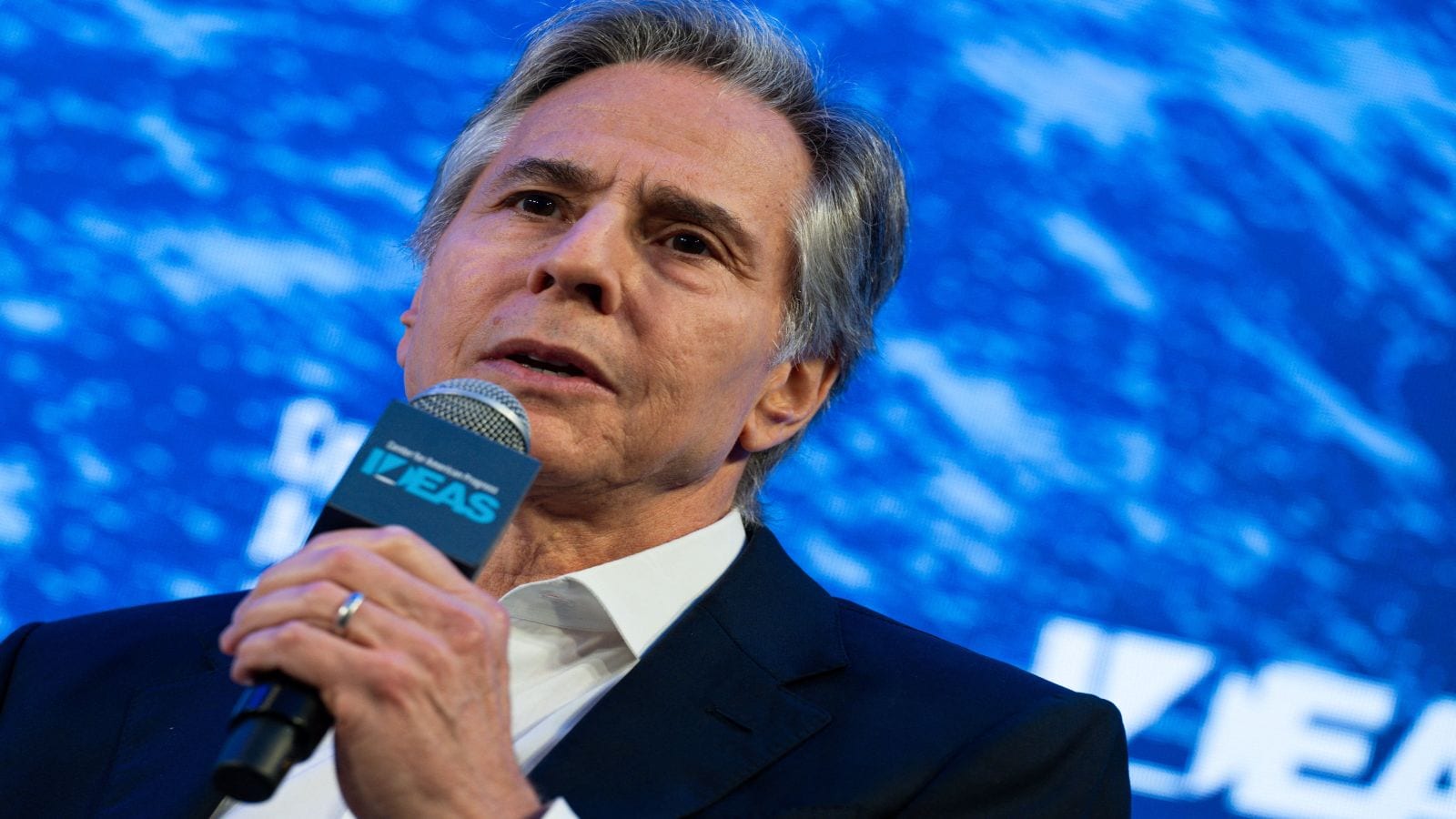
Sovereign climate finance rarely operates as pure philanthropy; it functions as a capital allocation mechanism designed to mitigate systemic risk, secure geopolitical influence, and price externalities that traditional markets ignore. When Canadian Prime Minister Mark Carney committed up to CAD 560 million at the ASEAN Summit toward a Brazil-led tropical forest conservation initiative—structurally aligned with the Tropical Forest Forever Facility (TFFF) model—the move represented a calculated shift in how middle-power economies deploy balance-sheet capacity across overlapping diplomatic theaters.
Understanding this commitment requires separating surface-level diplomatic signaling from underlying financial engineering. Announcing a South American ecological investment during an Indo-Pacific summit appears geographically disjointed only if one views climate policy through bilateral silos. Viewed through the lens of global macro-risk and multilateral asset pricing, the announcement executes three distinct objectives simultaneously: anchoring an emerging blended-finance asset class, strengthening diplomatic alignment with Brazil during pivotal global governance cycles, and establishing credibility with Southeast Asian nations facing identical deforestation-versus-development trade-offs.
The Structural Economics of Tropical Forest Finance
Traditional conservation funding relies heavily on grant-based Official Development Assistance (ODA) or fragmented voluntary carbon markets. Both mechanisms suffer from severe structural flaws. Grant funding is pro-cyclical, dependent on domestic budget cycles in donor nations, and insufficient in scale to compete with the opportunity cost of agricultural conversion—such as cattle ranching, soy cultivation, or palm oil expansion. Voluntary carbon markets, meanwhile, have struggled with price volatility, verification disputes, and baseline manipulation, resulting in high transaction costs and erratic capital inflows for forest-bearing nations.
The Brazil-led framework that Canada’s CAD 560 million supports attempts to solve this liquidity and durability problem by shifting from project-based offsets to performance-based endowment mechanics.
The Endowment Mechanics and Yield Arbitrage
Under the architectural principles of a permanent forest fund like the TFFF, sovereign capital does not merely get spent down over a three-to-five-year grant cycle. Instead, the capital structure is designed to operate closer to a sovereign wealth endowment or a blended-finance collateral pool:
- Sovereign Junior Tranche: Wealthy nations—such as Canada—commit concessional capital or guarantees that absorb initial risk or anchor the fund's credibility.
- Institutional Senior Debt: This sovereign base allows the facility to raise substantially larger sums from institutional investors and sovereign debt markets by issuing investment-grade bonds.
- Spread Capture: The pooled capital is invested in diversified, higher-yielding emerging-market sovereign or corporate fixed-income assets. The financial spread—the difference between the yield earned on the portfolio and the interest paid to bondholders—generates a perpetual revenue stream.
- Per-Hectare Disbursement: That net yield is distributed annually to tropical forest nations based on verifiable satellite monitoring of standing forest cover, penalized sharply for any detected deforestation or degradation.
This structure alters the incentive matrix for recipient governments. Rather than begging for intermittent aid, forest nations receive predictable fiscal transfers tied directly to measurable ecological preservation. For Canada, pledging "up to CAD 560 million" functions as catalytic anchor capital. In blended finance, early sovereign commitments carry disproportionate weight because institutional investors refuse to price risk until a credible G7 balance sheet underwrites the first-loss or foundational layer.
Why Announce a Brazil-Led Initiative at the ASEAN Summit?
In diplomacy, venue selection is a deliberate signaling variable. Unveiling a major commitment to a Brazilian-led mechanism during an ASEAN Summit addresses a specific geopolitical friction point between the Global North and the Global South.
Southeast Asian economies—particularly Indonesia and Malaysia—possess some of the world's most carbon-dense tropical peatlands and rainforests. For decades, these nations have pushed back against Western regulatory frameworks, such as the European Union Deforestation Regulation (EUDR), arguing that punitive trade barriers penalize developing economies without compensating them for preserving global public goods. From Jakarta to Kuala Lumpur, the prevailing critique has been consistent: wealthy nations industrialized by clearing their own forests and now demand that tropical nations freeze economic development without offering viable financial alternatives.
By backing Brazil’s global forest architecture while standing in Southeast Asia, Carney bypassed the defensive posture typical of Western trade negotiations. The logic operates along two axes:
- South-South Validation: Brazil holds immense diplomatic legitimacy among developing tropical nations. Because the mechanism was architected by Brasília rather than Washington or Brussels, it avoids the perception of neo-colonial conditionality. Canada’s financial backing validates a Global South-designed solution rather than imposing a G7-dictated mandate.
- Direct Applicability to ASEAN: A global tropical forest facility is not restricted to the Amazon Basin; it encompasses the Congo Basin and the Mekong and insular Southeast Asian forest systems. By announcing the pledge at ASEAN, Canada signaled to Southeast Asian leaders that the capital pool being capitalized in partnership with Brazil is directly accessible to ASEAN member states that maintain verifiable forest-cover thresholds.
This converts a climate pledge into a broader Indo-Pacific trade and diplomatic asset. Canada’s Indo-Pacific Strategy requires deepening economic ties with ASEAN without alienating domestic constituencies focused on environmental standards. Financing a mechanism that pays ASEAN nations to keep forests standing resolves that tension constructively.
The Three Pillars of Carney’s Capital Allocation Strategy
Mark Carney’s background as a central banker—having governed both the Bank of Canada and the Bank of England—and as a primary architect of private-sector climate finance coalitions shapes how his administration approaches public expenditure. The CAD 560 million pledge reflects a distinct operational philosophy built on three pillars.
1. Balance-Sheet Multiplication Over Direct Expenditure
Fiscal space in G7 economies is constrained by elevated debt-to-GDP ratios, aging demographics, and rising defense obligations. Committing CAD 560 million in pure bilateral grants yields CAD 560 million in total impact—an amount negligible against the multi-billion-dollar annual financing gap required to halt global deforestation.
By routing capital into a leveraged multilateral structure, the Canadian government seeks a multiplier effect. If sovereign commitments attract institutional debt at a 3:1 or 4:1 ratio, Canada’s CAD 560 million helps mobilize over CAD 2 billion in total asset base. In public finance management, maximizing the ratio of mobilized private or institutional capital per dollar of taxpayer outlay is the primary metric of efficiency. The phrasing "up to CAD 560 million" is equally deliberate: it indicates conditional tranche releases tied to matching commitments from other sovereign donors and governance milestones, protecting Canadian taxpayers from bearing unilateral risk if the facility fails to reach critical mass.
2. Systemic Risk Hedging for a Resource-Heavy Economy
Canada is not insulated from tropical deforestation. As a major agricultural exporter, energy producer, and financial hub, the Canadian economy is deeply exposed to physical climate volatility and supply-chain disruption.
Tropical rainforests—specifically the Amazon and Southeast Asian systems—function as planetary hydrological engines. The Amazon generates atmospheric rivers that regulate rainfall across the Western Hemisphere, directly influencing agricultural yields and drought cycles across North and South America. Collapse of these ecosystems—often referred to as forest dieback—triggers non-linear macroeconomic shocks: commodity price spikes, insurance market withdrawals, and sovereign debt defaults in emerging markets where Canadian pension funds hold substantial exposure. Allocating CAD 560 million to prevent a hydrological tipping point acts as a macro-prudential hedge against systemic portfolio risk.
3. Regulatory Alignment and Market Access
Global capital markets are steadily moving toward mandatory nature-related financial disclosures, modeled on frameworks like the Taskforce on Nature-related Financial Disclosures (TNFD). Canadian institutional investors—including some of the world's largest pension funds—require standardized, verifiable metrics to assess biodiversity risk in their global portfolios.
Supporting a Brazil-led facility that relies on high-resolution satellite telemetry and standardized per-hectare accounting helps establish global data infrastructure for natural capital. Once satellite verification protocols and sovereign payout rules are standardized across Brazil and ASEAN, private capital markets gain reliable pricing benchmarks for nature-based assets. Public money thus builds the market plumbing that private capital requires before entering at scale.
Operational Bottlenecks and Execution Risks
While the strategic logic behind the CAD 560 million commitment is coherent, translating high-level diplomatic pledges into functioning financial architecture involves severe operational friction. Treating this announcement as a guaranteed ecological victory ignores four substantial failure points.
The Sovereign Spread Compression Trap
The financial viability of an endowment-style forest facility depends entirely on interest rate spreads. The fund must borrow at low investment-grade rates (backed by G7 guarantees) and invest in higher-yielding emerging-market debt to generate a surplus for forest nations.
If global interest rates remain volatile, or if emerging-market credit spreads widen due to sovereign debt distress, the facility faces a dual threat: borrowing costs rise while underlying portfolio assets face default risk. Conversely, if emerging-market spreads compress too tightly, the net yield generated by the fund drops below the level required to outcompete the economic returns of illegal logging, gold mining, or cattle ranching. A payout of USD 4 to USD 5 per hectare—figures frequently cited in early TFFF modeling—may suffice to tip the fiscal balance for conservation ministries in low-opportunity-cost regions, but it cannot compete with high-margin agribusiness on fertile frontier land without parallel domestic law enforcement.
Satellite Verification Versus Ground-Level Leakage
Modern remote sensing can detect canopy loss with high precision, enabling automated payment triggers. However, canopy cover alone is an incomplete proxy for ecosystem integrity.
- Understory Degradation: Selective logging, poaching, and ground fires can hollow out biodiversity and carbon stocks while leaving the upper forest canopy intact to satellite sensors.
- Cross-Border Leakage: When strict conservation enforcement succeeds in one jurisdiction—such as the Brazilian Amazon—agribusiness and extractive industries frequently shift operations across borders into neighboring countries with weaker governance, such as Bolivia, Peru, or frontier regions in Southeast Asia.
- Subnational Governance Friction: Sovereign funds typically disburse capital to national treasuries. Without strict ring-fencing and transparent fiscal federalism, funds intended for indigenous communities, local municipalities, and forestry enforcement agencies risk getting absorbed into general central government budgets, eroding local buy-in on the ground.
Currency Mismatch and Fiscal Exposure
Canada’s commitment is denominated in Canadian dollars (CAD 560 million), whereas global climate finance facilities operate predominantly in US dollars (USD) or Special Drawing Rights (SDRs), and recipient nations incur local enforcement costs in Brazilian reals, Indonesian rupiah, or Malaysian ringgit.
Significant depreciation of the Canadian dollar against the US dollar reduces the real purchasing power of Ottawa’s commitment unless hedged—and currency hedging carries an ongoing financial cost that eats directly into the capital available for conservation. Furthermore, multi-year sovereign pledges remain vulnerable to domestic political turnover. A conditional pledge of "up to" a specific ceiling allows future administrations to slow-walk disbursements or reinterpret matching requirements if fiscal priorities shift at home.
The Governance Deadlock in Multilateral Funds
History shows that multilateral environmental funds frequently stall over voting rights and disbursement control. Donor nations, accountable to domestic auditors and parliaments, demand strict fiduciary oversight, anti-corruption safeguards, and veto power over governance boards. Recipient nations, led by Brazil and ASEAN states, demand sovereign autonomy over how conservation revenues are spent once satellite verification confirms forest preservation.
If negotiations over board representation and fiduciary controls drag on, capital remains trapped in administrative escrow while deforestation continues in real time. The gap between a headline summit pledge and actual cash reaching forest rangers on the ground routinely spans 24 to 48 months.
Evaluating the Strategic Trade-Offs
To assess whether Canada’s CAD 560 million allocation represents optimal climate policy, one must compare it against alternative uses of the same capital within Canada’s international climate finance envelope.
| Allocation Mechanism | Primary Strength | Core Vulnerability | Capital Multiplier |
|---|---|---|---|
| Multilateral Endowment (Brazil-Led TFFF Model) | Generates perpetual annual payouts tied to verifiable forest metrics; aligns Global South diplomatic interests. | Vulnerable to interest rate spreads, sovereign credit risk, and slow governance negotiations. | High (targets 3x–4x institutional leverage) |
| Bilateral Project Grants | Direct Canadian control over project selection, partner vetting, and domestic visibility. | High administrative overhead; payouts stop when grant cycle ends, risking reversal of gains. | Low (1x direct expenditure) |
| Voluntary Carbon Credit Purchases | Direct private-sector participation; immediate price discovery per ton of carbon sequestered. | Severe reputational risk from inflated baselines, non-permanence, and market illiquidity. | Moderate (market-dependent) |
| Domestic Clean-Tech Subsidies | Retains capital inside Canadian economy; builds domestic industrial capacity and jobs. | Zero direct impact on global ecological tipping points like Amazon or Peatland collapse. | Moderate (via private co-investment) |
Comparing these mechanisms clarifies why Ottawa selected the multilateral endowment route. Domestic subsidies do nothing to prevent tropical hydrological collapse, and bilateral grants lack the scale to shift national land-use economics in countries the size of Brazil or Indonesia. Accepting the financial and governance complexities of a leveraged multilateral facility is a rational bet on scale over control.
Tactical Imperatives for Execution
For Canada’s CAD 560 million commitment to function as an effective financial instrument rather than an unspent diplomatic press release, execution must follow strict operational discipline across three fronts:
- Enforce Hard Matching Triggers: Ottawa should structure its CAD 560 million disbursement on a strict pari-passu or tiered matching schedule. Capital tranches should only release when peer sovereigns—such as Germany, Norway, the United Kingdom, and Japan—commit binding funds, ensuring Canada does not underwrite an under-capitalized vehicle unable to achieve institutional scale.
- Mandate Direct Subnational and Indigenous Pass-Throughs: Financial mechanics fail if local land stewards see zero economic return. Canada should condition its governance approval on legally binding disbursement rules that route a fixed percentage of annual yield payouts directly to indigenous territorial authorities and local forest-protection agencies, bypassing central ministry bottlenecks.
- Integrate ASEAN Forest Metrics Early: To capitalize on the diplomatic goodwill generated by announcing the pledge at the ASEAN Summit, Canadian negotiators must ensure the facility’s technical verification protocols incorporate tropical peatland and mangrove metrics alongside upland rainforests. Securing early participation from Indonesia and Malaysia will validate the facility as a truly global asset class rather than a bilateral Brazilian fund, locking in both ecological coverage and Indo-Pacific strategic alignment.