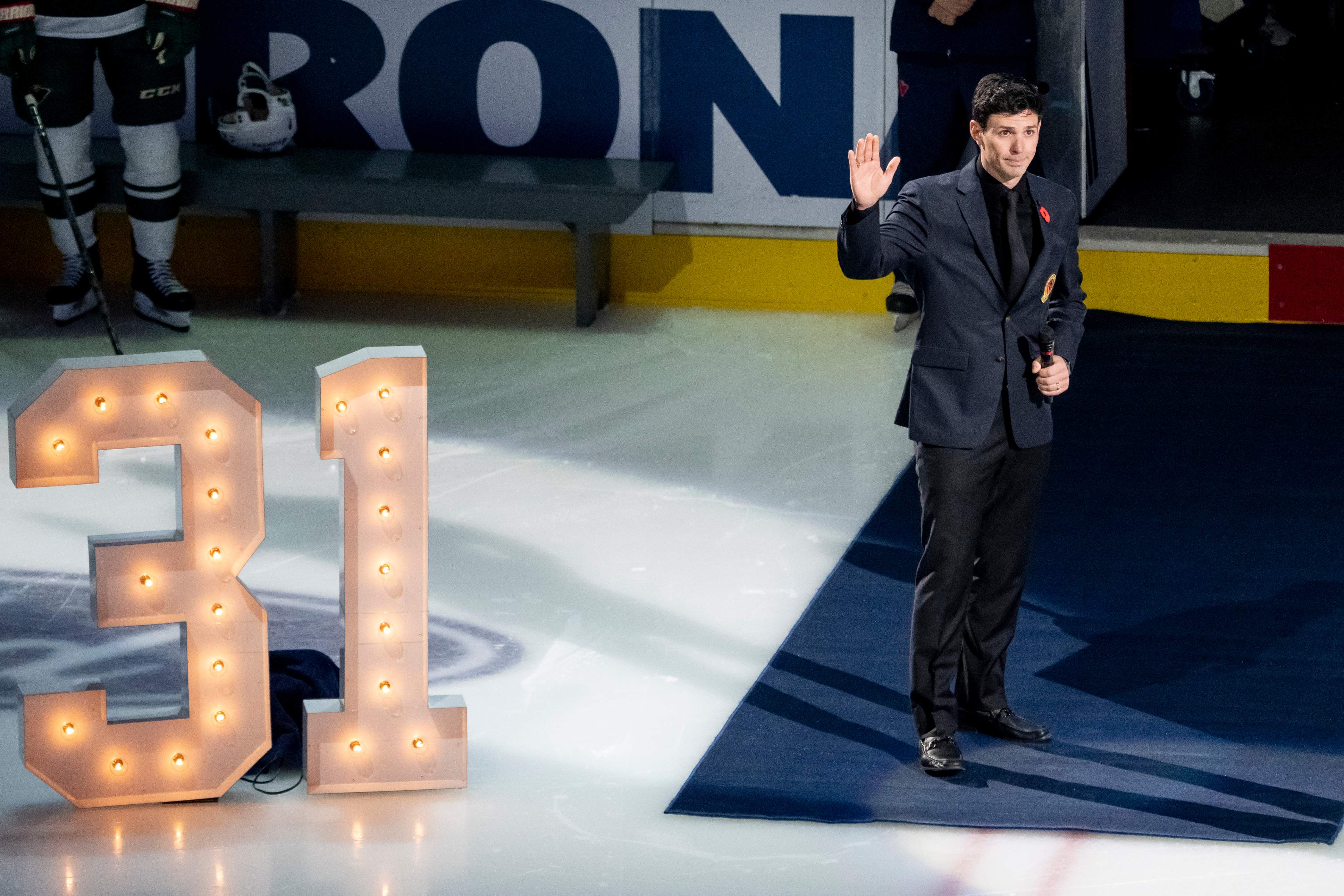
When Carey Price stepped back onto the ice at the Bell Centre to enter the Montreal Canadiens Ring of Honour, the wall-shaking ovation was more than a tribute to a world-class goaltender. It was an emotional release for a franchise and a fan base that spent fifteen years leaning on a single athlete to cover up a multitude of organizational flaws.
Price carried the burden of Canada's most historic sports team through an era defined by scoring droughts, strategic missteps, and perpetual retooling. The roaring welcome he received was part adoration and part implicit acknowledgment of an uncomfortable truth. Without Price masking their structural vulnerabilities, the Canadiens were rarely a legitimate contender. Discover more on a related topic: this related article.
The Myth of the Solitary Savior
For over a decade, Montreal relied on a game plan that was as simple as it was flawed: let Carey win it.
Between 2007 and 2021, the Canadiens consistently ranked in the lower tier of the league in high-danger scoring chance generation at even strength. Yet, season after season, they remained competitive in the standings. That discrepancy was almost entirely attributable to the man in the blue paint. More analysis by CBS Sports highlights comparable perspectives on this issue.
During his peak years—highlighted by the 2014-15 campaign where he swept the Hart, Vezina, Ted Lindsay, and William M. Jennings trophies—Price posted stats that redefined modern goaltending. His cool, economical movement turned chaos into routinely absorbed rebounds. Analysts spoke of his positioning as an art form, but for the front office, it became a crutch.
Management built rosters under the assumption that conceding thirty-five quality shots a night was acceptable because their goaltender possessed superhuman reflexes. When a team operates under that premise, development in other critical areas stalls. Draft picks were spent on defensive-minded blueliners meant to clear sightlines rather than puck-moving defensemen who could transition play. The power play languished.
The strategy was unsustainable. Relying on an elite goaltender to play sixty to seventy games a year while facing a high volume of unblocked shots places an immense physical toll on the human body.
The Mechanical and Physical Cost
Goaltending at the elite level is an exercise in violent repetition. The modern butterfly style requires constant, aggressive hip internal rotation, sudden knee impacts against rigid ice, and micro-adjustments that stress the lower back and groin.
Price played with a technical precision that minimized unnecessary movement, yet the sheer workload caught up with him.
- Cumulative Micro-trauma: Years of dropping into the butterfly position to absorb low-angle shots damaged hip cartilage and labral tissues long before acute injuries sidelined him.
- The 2014 Crease Collision: The knee injury suffered during the Eastern Conference Finals following a collision with Chris Kreider marked the beginning of a cycle of structural instability.
- Complex Knee Reconstruction: Subsequent surgeries, including knee procedure attempts to repair cartilage defects, revealed the severe degradation of the joint.
By the time Montreal made its improbable run to the 2021 Stanley Cup Final, Price was playing through severe pain. His performance during those playoffs—posting a .924 save percentage through twenty-two games—was a testament to his mental fortitude. It was also his final act as a full-time starting goaltender.
The physical bill came due immediately after. The wear and tear on his lower body meant that returning to an 82-game NHL schedule was no longer biologically viable.
What the Ring of Honour Represents
Inducting a player into a team's Ring of Honour is typically a celebration of milestones, silver cups, and long tenure. For Montreal, inducting Price while his contract technically remains on long-term injured reserve carries a different weight.
It marks the end of an era of roster construction by illusion.
Modern NHL management teams have largely abandoned the model of relying on a single mega-star goaltender to drag a deficient roster into the postseason. Salary cap economics and advanced analytics have shifted focus toward deep defensive corps, possession-oriented forward lines, and tandem goaltending setups that manage workload efficiently.
Montreal’s current rebuilding phase reflects this realization. The new front office has prioritized puck movement, skill integration, and structural depth over quick fixes. They are building a team designed to control play rather than survive it.
The applause inside the Bell Centre was loud because the fans understood what Price endured on their behalf. He gave everything his body had to offer to keep a storied franchise relevant through a turbulent era, standing tall against impossible odds night after night. The tribute was well deserved, but the lesson his career leaves behind is even clearer: no single player, no matter how gifted, should ever have to carry a franchise alone again.