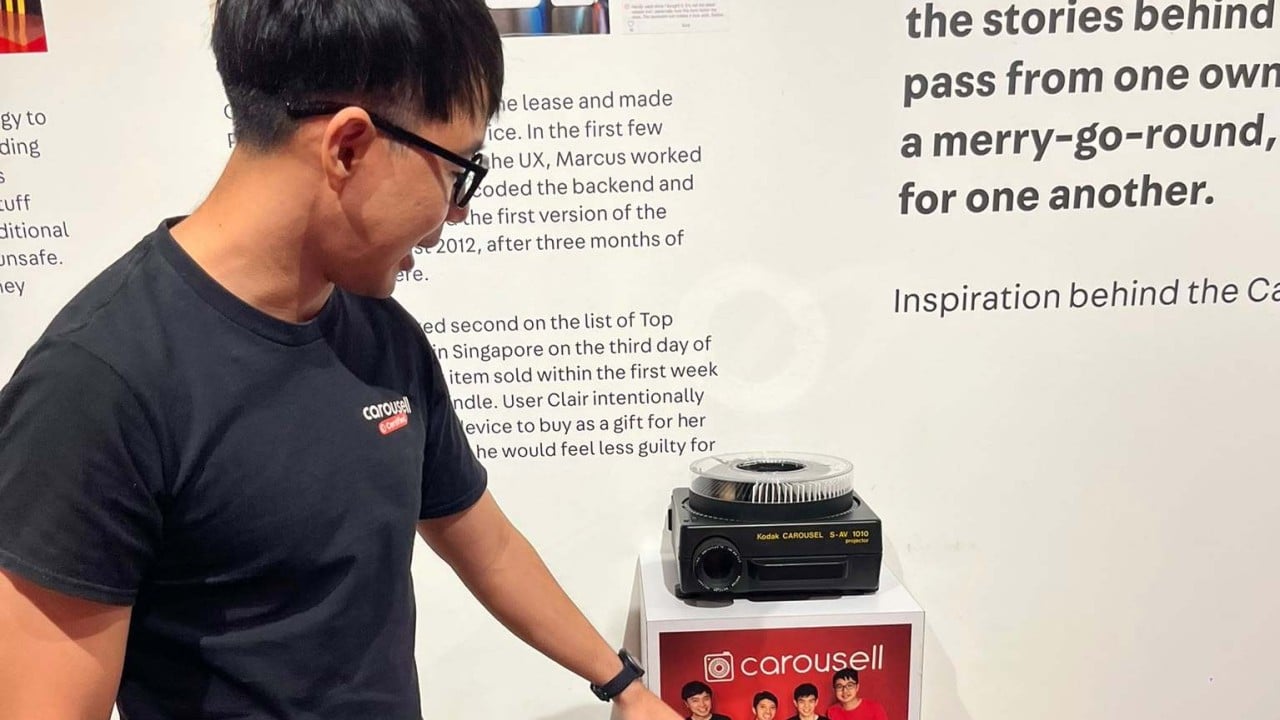
For years, the knock on online classifieds platforms was simple. They were great for clearing out your closet, but terrible at making money. Skeptics looked at Singapore-based unicorn Carousell and saw a digital version of a suburban garage sale—high traffic, low margins, and an endless battle against low-ballers and scammers.
That narrative just hit a wall.
Carousell Group officially swung to positive EBITDA for the 2025 financial year. Driven by an 18% jump in revenue to $141 million, the regional marketplace nearly tripled its top-line compared to its 2021 performance. It turns out that building a sustainable business around secondhand goods is entirely possible. You just have to stop acting like a basic message board and start acting like an infrastructure provider.
If you have ever bought a used phone online only to find a cracked screen, or met a stranger at an MRT station who tried to haggle the price down at the last second, you know the inherent friction of the old peer-to-peer model. Carousell's turnaround tells a bigger story about where retail is going. It reveals how the company systematically eliminated those pain points by moving away from pure classifieds and into what the industry calls recommerce.
The Secret Shift From Text Messages To Transactions
Most people still think of Carousell as a place where you take a blurry photo of an old t-shirt, type a brief description, and wait for someone to message you. That model helped the company scale across seven regional markets like Malaysia, Hong Kong, and Vietnam since its founding in 2012. But as a business model, pure peer-to-peer classifieds have hard limits. Advertisers only pay so much, and users expect the core service to be free.
To break through, management had to overhaul how things worked. They built a massive transaction ecosystem. Instead of just connecting a buyer and a seller, the platform began taking control of the actual transaction pipeline.
The strategy worked. Recommerce revenue surged 40% year-on-year, locking in 45% of total sales for the group. We are talking about integrated payment processing, shipping labels generated inside the app, and programs like "Sell to Carousell." The program allows users to skip the listing hassle entirely by selling items directly to the platform or its commercial partners.
This isn't just about convenience. It creates an entirely new revenue stream through service fees, shipping margins, and trade-in spreads. The numbers show this shift was the primary engine behind the swing to profitability, proving that consumers are willing to pay extra if you remove the sketchy elements of buying used goods.
Bricks, Mortar, And Mobile Phones
One of the most surprising details of this turnaround is the physical footprint. While traditional e-commerce brands are busy shutting down retail spaces to cut costs, Carousell went the opposite way. By the end of 2025, the company was running 29 physical retail stores across Singapore, Hong Kong, Malaysia, and Indonesia.
That sounds counterintuitive for a tech company. Physical stores mean rent, staff salaries, and inventory risks. But in the secondhand market, physical touchpoints solve a massive trust problem.
Think about high-ticket items like luxury handbags or used smartphones. It's one thing to buy a $15 book based on a digital photo. It's a completely different risk profile to send hundreds of dollars to a stranger for an iPhone 15 Pro. Carousell used its physical stores as authentication and trade-in hubs.
When a user wants to buy a luxury bag or a phone through their authenticated programs, the item undergoes a professional inspection. This offline strategy yielded a 20% lift in Gross Merchandise Value across their luxury, mobile, and fashion categories. The stores act as a bridge. They give buyers the confidence of a retail experience with the lower prices of a secondhand marketplace.
The Silent Architecture Saving Transactions
You can't scale a secondhand platform across Southeast Asia without addressing security. Scams kill user retention faster than bad UI. The company has quieted critics by leaning into artificial intelligence to clean up its marketplace, and the data suggests the approach is working.
Carousell reported that its scam detection accuracy reached 98% after recent software updates. This isn't just an internal metric. It translates to a reality where 99.96% of all transactions across their markets now happen without a single fraudulent incident.
The system uses machine learning to screen listings and monitor user behavior patterns in real time. It flags problematic uploads and boots bad actors before they can dupe a buyer. For instance, if an account suddenly posts five luxury watches at impossible discounts from a fresh profile, the platform catches it instantly.
On the front end, the tech acts as an onboarding accelerator. Sellers can generate complete marketplace listings in roughly three seconds. The AI analyzes uploaded images, suggests accurate titles, categorizes the item, and estimates a fair market price based on historical sales data. It lowers the barrier to entry for casual sellers who don't want to spend ten minutes typing out specifications.
Playing Inside Your Own Boundaries
Many tech firms stumble when they try to expand too quickly into new regions before fixing their core unit economics. Carousell took the opposite approach over the last couple of years. Instead of trying to plant flags in new countries, management kept its focus locked on its seven existing markets, which include regional brands like Cho Tot in Vietnam and Mudah.my in Malaysia.
Chief Strategy Officer Shing Tai Leung points out that this profitability milestone wasn't achieved through panic-driven cost cuts or sudden layoffs. It was a multi-year business model evolution. By focusing on deep liquidity and user behavior data within markets they already understood, they managed to build an ecosystem that is incredibly difficult for outside competitors to clone.
The platform holds billions of historical data points tracking exactly how people buy, haggle, and sell used goods in Southeast Asia. They know which neighborhoods buy the most baby clothes, what time of day people browse for electronics, and exactly how much a secondhand Chanel bag depreciates in Hong Kong versus Singapore. They use this data to determine which categories to venture into next, minimizing the risk of expensive project failures.
What Real Sustainability Looks Like For Recommerce
Now that the company is EBITDA positive, the path forward shifts from survival to scaling the new playbook. For operators, founders, and investors watching the e-commerce space, Carousell’s trajectory offers a clear blueprint for the next phase of retail.
First, stop treating offline and online as two separate businesses. If you are dealing in secondhand goods or high-value trade-ins, physical verification centers aren't a luxury. They are the infrastructure that builds consumer trust.
Second, monetize the friction, not the connection. If you try to charge users a listing fee just to chat with buyers, they will jump to free alternatives like Facebook Marketplace. Instead, keep the basic connection free and charge for the heavy lifting: escrow payments, guaranteed shipping, and expert authentication.
The secondhand market in Southeast Asia is still adapting. As consumer mindsets change to favor sustainability and cost savings, the platforms that win won't just be the ones with the most listings. They will be the ones that make buying a used item feel exactly like buying a new one.
To replicate this success in your own digital commerce strategies, start auditing your user journey for trust gaps. Identify the highest-value, highest-risk categories in your inventory. Focus your engineering resources on automating the listing process via image recognition, and invest heavily in secure escrow frameworks. The companies that remove transactional anxiety are the ones that survive the shift toward a circular economy.