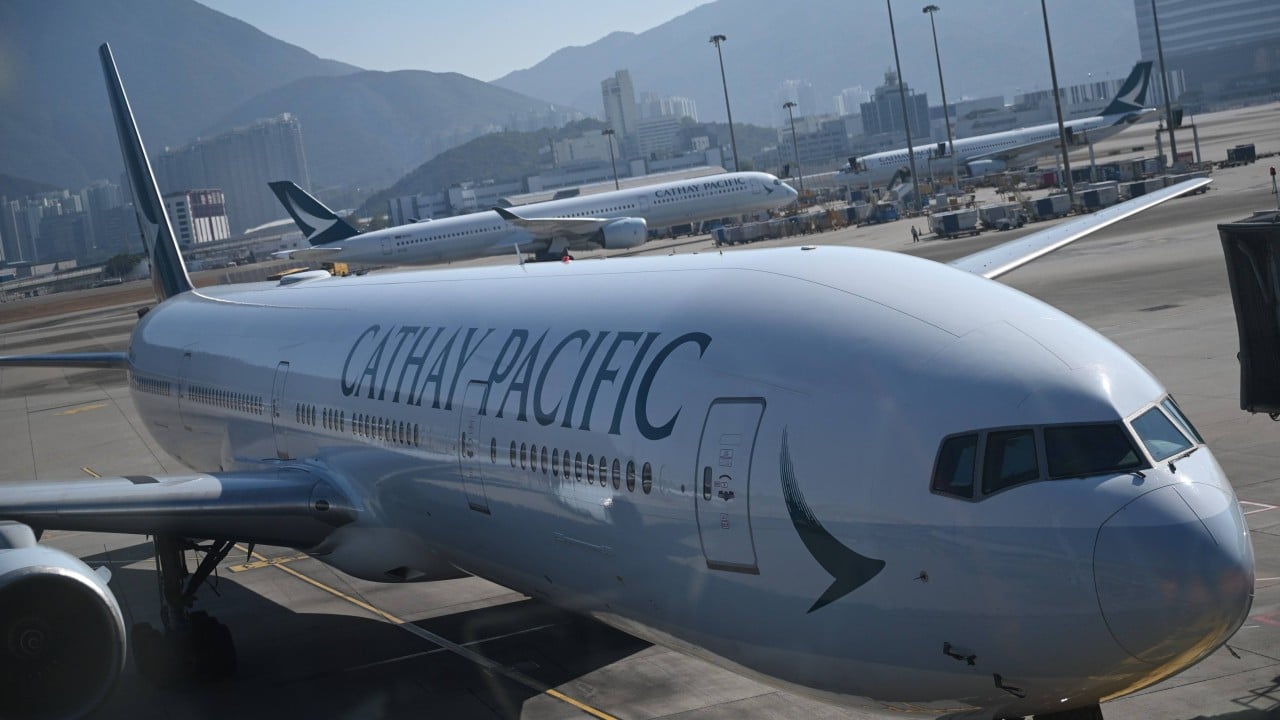
Cathay Pacific has successfully raised HK$2.08 billion ($267 million) through its first public bond offering since the global health crisis brought the aviation industry to a standstill. This move marks a critical shift in the carrier’s recovery strategy, moving away from government-backed lifelines and toward standard commercial financing. By pricing the 3.83% notes due in 2027, the airline isn’t just looking for cash. It is signaling to the global financial markets that the "sick man of Asian aviation" is finally off life support and ready to pay its own way.
The bond issuance was oversubscribed, reflecting a sharp appetite for high-yield corporate debt in a city where the aviation sector's survival was, until recently, an open question. This capital injection will primarily be used for refinancing existing debt and general working capital. But the numbers on the page only tell half the story.
The Pivot from Survival to Sustainability
For three years, Cathay Pacific existed in a state of suspended animation. While US and European carriers benefited from rapid domestic rebounds, Hong Kong’s strict quarantine mandates kept Cathay’s fleet grounded and its balance sheet bleeding. The airline stayed afloat thanks to a HK$39 billion government-led bailout in 2020. That rescue package was a leash. It came with high interest rates on preference shares and the heavy hand of government oversight.
The decision to tap the public bond market now is a calculated escape. By securing HK$2.08 billion at a fixed rate of 3.83%, Cathay is effectively locking in borrowing costs before any potential market volatility hits in the latter half of the decade. They are replacing expensive, crisis-era debt with cheaper, structured public debt. It is a classic treasury play. It works because the market finally believes in the recovery of the Hong Kong hub.
Breaking the Reliance on State Support
The most significant aspect of this bond sale is what it says about the relationship between the carrier and the Hong Kong SAR government. In late 2023 and early 2024, Cathay began the process of buying back the preference shares held by the government. This bond issuance provides the liquidity necessary to finish that job.
Investors aren't buying these bonds because they love the airline industry's razor-thin margins. They are buying them because Cathay has reclaimed its monopoly-like grip on premium long-haul travel out of South China. With the "Big Three" Chinese state carriers still finding their footing in international markets, Cathay has seized the window to restore its cash flow.
Why Investors Bit on a 3.83 Percent Yield
In a high-interest-rate environment, a sub-4% yield might seem modest. However, the demand for this paper suggests that institutional investors view Cathay as a "safe harbor" play within the volatile transport sector.
- Yield Compression: Compared to the double-digit "junk" territory some airlines occupied in 2021, 3.83% represents a return to blue-chip status.
- Asset Backing: While these are unsecured notes, the underlying recovery of the airline's secondary market value for its aircraft provides a psychological floor for bondholders.
- Strategic Scarcity: There are few ways to play the "Hong Kong Recovery" theme in the fixed-income market that offer this level of liquidity.
The bonds were issued under Cathay’s Medium Term Note (MTN) programme, a flexible framework that allows the company to issue debt quickly when market conditions are favorable. This specific HK$2.08 billion tranche was a "test of the waters" that proved the water is warm.
The Operational Reality Behind the Financial Smoke
Financial maneuvers can often obscure the gritty reality of running an airline. While the CFO celebrates a successful bond hunt, the operations team is still fighting a war of attrition. Cathay’s capacity has struggled to reach 100% of pre-pandemic levels, hampered by a global shortage of pilots and a strained supply chain for aircraft parts.
You cannot fly a bond. You fly planes, and those planes need crews.
The "Why" behind this bond issuance is also linked to the Three-Runway System at Hong Kong International Airport. As the airport expands its footprint, Cathay must expand its fleet to maintain its dominant slot share. If they don't have the capital to buy the next generation of fuel-efficient widebodies—like the Boeing 777X or additional Airbus A350s—they risk losing their lunch to regional competitors like Singapore Airlines or the emerging Gulf carriers.
The Hidden Cost of the Delay
Cathay is playing catch-up. While they were focused on survival, Singapore Airlines was bolstering its balance sheet and upgrading cabins. This HK$2.08 billion is a drop in the bucket compared to the capital expenditure required over the next five years. To truly compete, Cathay needs to refresh its aging regional fleet and fix a fractured relationship with its labor force.
The pilots who took massive pay cuts during the pandemic are watching these financial successes closely. They see the bond oversubscription. They see the returning profits. If the airline uses this new capital solely to appease bondholders and the government while ignoring the "human capital" crisis, the operational recovery will stall.
Risk Factors the Prospectus Won't Emphasize
Every bond offering comes with a list of risks, usually written in dry, legalistic prose. But the real risks for Cathay are geopolitical and structural.
Hong Kong's role as a global transit hub is being challenged. The rise of direct flights from mainland Chinese cities to Europe and North America bypasses Hong Kong entirely. Historically, Cathay thrived on being the gateway to China. Now, that gateway is one of many.
Moreover, the yield environment for passenger tickets is starting to normalize. The "revenge travel" era, where passengers paid triple the normal fare just to get out of the house, is ending. As airfares drop, the margins required to service this new HK$2.08 billion debt will tighten. Cathay is betting that their operational efficiency will improve faster than their ticket prices fall.
The Fuel Hedge Gambit
Aviation is essentially an oil speculation business with a travel agency attached. Cathay has historically been aggressive with fuel hedging—a strategy that has both saved and scorched them in the past. Part of the working capital raised through this bond issuance will likely act as a buffer against volatile Brent crude prices. Without a solid cash pile, an airline is at the mercy of the pumps.
The Institutional Squeeze
The success of this public offering also puts pressure on other regional players. When Cathay proves it can raise billions at sub-4% rates, it raises the bar for airlines in Malaysia, Thailand, and Indonesia. It creates a "flight to quality" where only the strongest national champions can access the public markets, leaving smaller players to rely on expensive bank loans or further state dilutive equity.
We are seeing a consolidation of financial power in Asian aviation. Cathay Pacific, backed by the Swire Group and bolstered by this successful debt sale, is positioning itself as the consolidated winner of the Greater Bay Area.
The Mechanics of the HK$2.08 Billion Raise
The issuance was handled by a syndicate of top-tier banks, ensuring wide distribution among private banks and institutional fund managers. This wasn't a "friends and family" deal; it was a cold, hard market transaction.
By choosing Hong Kong Dollars for the issuance rather than US Dollars, Cathay also avoided the immediate "basis swap" costs that can eat into the proceeds of a debt raise. It also tapped into the local liquidity of a city that is desperate for high-quality local currency corporate bonds.
The 2027 maturity date is telling. It gives the airline three years to fully integrate the new third runway's capacity into its revenue model before the bill comes due. It is a bridge to a future where the airline hopes to be at 120% of its former self.
Moving Beyond the Bailout
The ultimate metric for Cathay's success isn't the HK$2.08 billion raised today. It is whether they can maintain this momentum without the "training wheels" of government support. This bond issue is the first time in years that the airline has looked the private market in the eye and asked for a vote of confidence.
The market said yes.
But the market is a fickle master. If the next quarterly earnings report shows a dip in load factors or a spike in labor costs, the cost of the next bond issuance will rise. For now, the management team at Cathay House can breathe a sigh of relief. They have replaced a looming debt wall with a manageable, medium-term obligation.
The path forward requires more than just clever treasury management. It requires an aggressive reclamation of the premium service standards that once made Cathay the undisputed leader of the skies. They have the money. Now they need to prove they still have the soul.
Stop looking at the HK$2.08 billion as a windfall. It is a mortgage on a house that is still being rebuilt. The foundation is set, the walls are up, but the roof is still a work in progress. Cathay has bought itself time, and in the airline business, time is the only commodity more expensive than fuel.