One new hire for every six workers lost. That math doesn't work when you're trying to run national disease tracking, maternal health surveillance, and genetic disorder registries.
Union figures reported in October 2026 show that CDC hiring has crawled back to just 16.5% of the positions wiped out by Department of Government Efficiency reductions in force, even more than a year after deep cuts hit the agency. Compare that to other federal health bodies over the same stretch: the National Institutes of Health brought back 34%, the Food and Drug Administration hit 39%, and the Centers for Medicare and Medicaid Services actually climbed past its losses at 131.7%.
If you've watched public health headlines over the past year and a half, you've probably seen the big numbers—layoffs, buyouts, resignations, and leadership churn. What's less obvious from a quick headline scan is why Atlanta's flagship public health agency is stuck in neutral on rehiring while sister agencies are moving faster. Honestly, the gap isn't just about budget lines or slow HR paperwork. It's about competing priorities, bruised morale, and a massive shift in what leadership says it wants federal health workers to do.
What the Hiring Numbers Actually Show
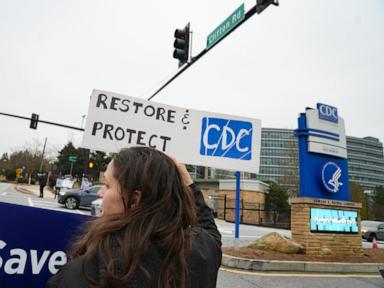
Personnel data examined in late 2026 paints a stark picture of attrition outpacing replacement at the Centers for Disease Control and Prevention. Civil service headcount at the CDC stood around 12,705 in March 2025. By May 2026, 3,539 employees had exited and another 271 remained on paid leave, pushing overall staffing down roughly 30% from pre-2025 layoff levels—with further cuts reported after May.
Meanwhile, hiring has moved in fits and starts. Union reporting cited 95 new hires between January and July 2026, adding up to that 16.5% replacement rate against DOGE reduction-in-force losses.
Why did CMS bounce back above 100% while NIH and FDA reached roughly a third or more, and the CDC lagged far behind? Three practical differences explain much of the split:
- Payment and benefit operations vs. specialized population science: CMS handles high-volume claims, payment systems, and benefit administration where backlogs trigger immediate political and operational pressure across millions of enrollees. A lot of CDC work sits in surveillance, lab coordination, and long-term population tracking, where hollowing out a team shows up more gradually until data gets thin.
- Leadership turnover and policy whiplash: The CDC has gone through intense turbulence—including clashes over vaccine policy, acting leadership stints, and shifting staffing assurances. Even when leaders tell staff a hiring plan is almost ready, employees have heard similar promises for months without seeing broad backfilling on the ground.
- Workforce trauma and trust deficits: Anyone who has worked inside or alongside federal agencies knows you can't just post a job announcement and expect top epidemiologists, data analysts, and program specialists to line up overnight when headlines are full of abrupt firings, reversals, and safety scares.
I've seen plenty of organizations try to rebuild specialized teams after a major restructuring. On paper, leadership assumes you can "right-size" first and "hire back the right people" later. In practice, institutional memory walks out the door on day one, and rebuilding trust takes way longer than posting an opening on USAJOBS.
Why CDC Hiring Lags Behind Other Health Agencies
Calling this a simple HR bottleneck misses the deeper tug-of-war inside the Department of Health and Human Services.
Health Secretary Robert F. Kennedy Jr. has argued that HHS is reshaping its workforce to focus more heavily on chronic health and has spoken about bringing in roughly 12,000 new hires across the department over time. At the same time, CDC leaders—including CDC Director Dr. Erica Schwartz, who spoke at an October 2026 town hall about filling center-level leadership slots and advancing a hiring plan—have pointed to upcoming recruitment efforts.
Yet public health leaders and union representatives argue that the gap between announced intentions and actual seats filled is leaving congressionally funded programs stretched thin. Dr. Georges Benjamin, CEO of the American Public Health Association, described some remaining efforts as running "catch-as-catch-can," with stretched staff working hard just to cover minimal functions.
There's also a real debate here that deserves straight talk. Supporters of the overhaul argue that parts of the federal bureaucracy grew bloated, slow, or overly siloed, and that shaking up personnel is necessary to rethink priorities. Critics—including former CDC officials and union voices—counter that slashing specialized teams without replacing them breaks essential public health plumbing before anyone outside the agency sees the damage. Both sides are looking at the same staffing chart and drawing completely different conclusions about what's healthy and what's broken.
Programs and Patients Feeling the Squeeze
When CDC hiring falls behind, the fallout isn't abstract. It hits specific surveillance systems and communities that rely on federal data to spot patterns and coordinate care.
Take the Pregnancy Risk Assessment Monitoring System (PRAMS), part of Congress's $113.5 million Safe Motherhood/Infant Health initiative. PRAMS has long served as a cornerstone source of maternal health data. When staffing and operations get pinched, tracking risks and outcomes across states becomes harder and slower.
Or look at sickle cell disease surveillance. Sickle cell is a painful, potentially life-threatening genetic blood disorder that disproportionately affects Black and minority patients. Dr. Tabatha McGee, CEO of the Sickle Cell Foundation of Georgia, warned in October 2026 reporting that data from the CDC's sickle cell data collection program matters directly for reaching patients—and losing track of people puts lives at risk. Dr. Karen Remley, a former CDC director for the National Center on Birth Defects and Developmental Disabilities, went even further, calling the failure to staff certain CDC programs "morally wrong" when known tools and interventions exist to help people.
Even where individual clinicians are fighting to close the gap—such as traveling long distances between cities like Atlanta and Columbus, Georgia, to reach patients in underserved areas—one doctor on the road can't substitute for consistent national data infrastructure.
Common Misconceptions About Staffing Cuts
People outside public health often misunderstand how federal staffing cuts play out in real life:
- "A 30% cut just means 30% less bureaucracy." Cuts don't fall evenly on middle management or paperwork. They hit front-line scientists, statisticians, grant managers, and program coordinators who keep data pipelines moving.
- "Congress appropriating money automatically means a program is fully staffed." Funding authorizations and actual filled civil service billets are two different things. A program can have congressionally backed dollars and still sit understaffed while hiring plans stall.
- "Hiring freezes end the moment someone says they're lifted." Rebuilding a team takes job classifications, security/vetting steps, onboarding, and months of training before a new hire operates independently.
Practical Steps If You Track or Rely on Public Health Data
Whether you run a local clinic, manage state or nonprofit health programs, do research, or simply want reliable health guidance for your family, don't assume federal data feeds will look just like they did two years ago.
- Audit your data dependencies now. Identify which CDC datasets, surveillance reports, or technical assistance channels your organization relies on—especially in maternal health, chronic disease, or rare/genetic conditions. Note where delays or gaps would slow your work.
- Pair federal sources with state and academic surveillance. State health departments, university research centers, and disease-specific foundations often hold granular local context that helps bridge national reporting lags.
- Watch hiring plans and appropriations, not just press releases. If you follow policy or advocacy, track actual billet fills, center leadership confirmations, and congressional oversight on appropriated programs rather than relying solely on broad hiring pledges.
- Build slack into clinical and community outreach. If you serve vulnerable patients—like people managing sickle cell disease or expectant mothers—build stronger local referral loops and patient check-ins so care doesn't hinge on delayed federal registries.
The numbers are clear enough: until CDC hiring catches up with the scale of its losses, the smartest move for anyone doing real-world health work is to verify your data sources early and keep your local safety nets tight.