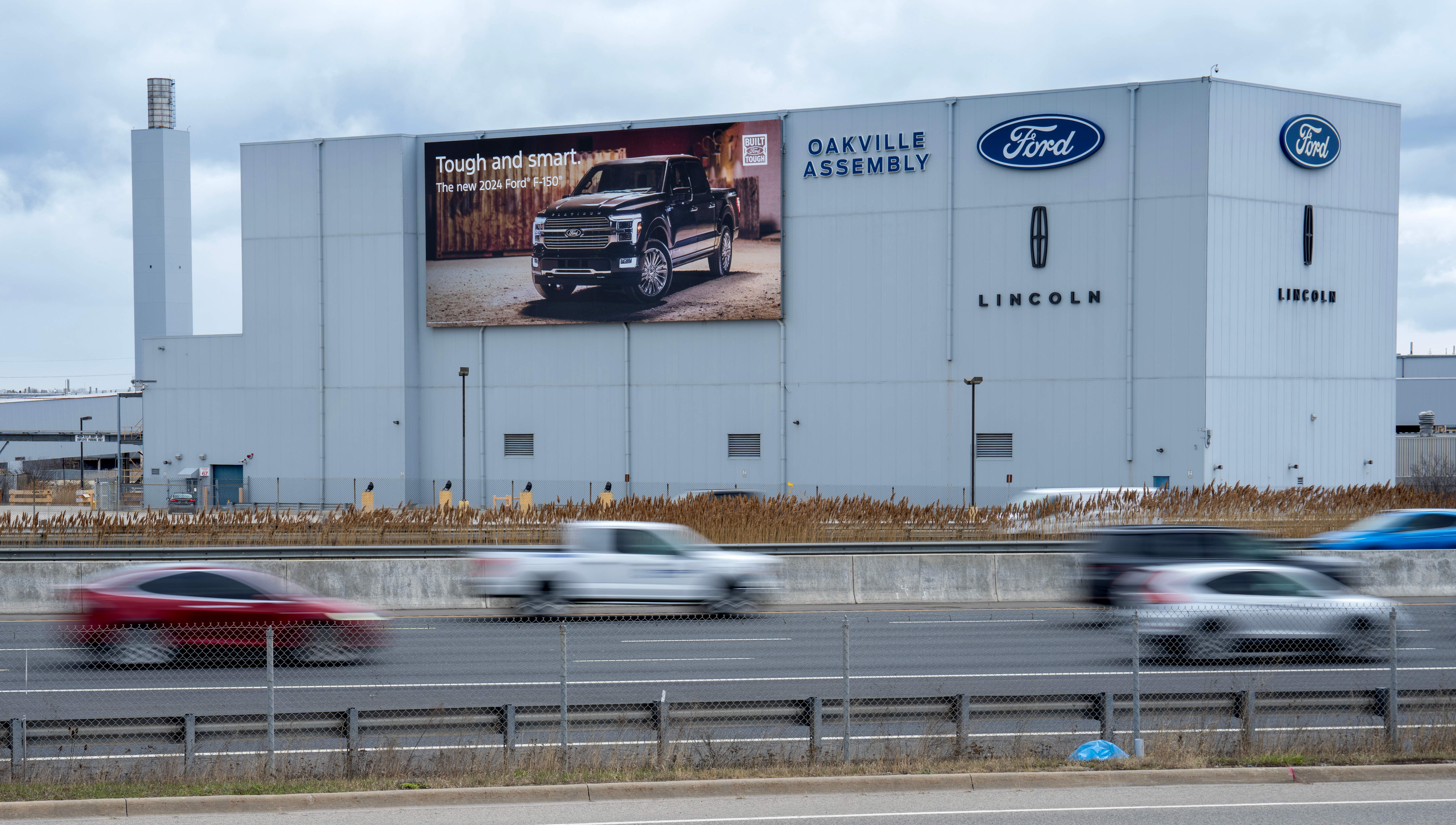
Every financial news desk in London has already written the same lazy script. Centrica, the parent company of British Gas, is cutting hundreds of roles across its Business division. The standard narrative writes itself: corporate greed, ruthless executives padding margins after a volatile energy market, and another blow to UK workers during an economic squeeze.
That story is comfortable, predictable, and completely wrong.
If you actually look under the hood of UK commercial energy retail, the real scandal isn't that Centrica is trimming headcount in British Gas Business. The real scandal is that this bloated, margin-crushing division stayed this overstaffed for this long.
The Myth of the Evil Margin-Grab
When legacy reporters see "energy giant" and "job cuts" in the same headline, their brains short-circuit straight to 2022 windfall profits. They lump upstream gas production, nuclear stakes, and energy trading into the exact same bucket as business-to-business energy supply.
That is financial illiteracy.
Centrica operates as an integrated energy company, meaning it has wildly different engines under one roof. Upstream exploration and energy marketing are capital-intensive, high-volatility businesses that print cash when commodity curves spike. Commercial energy supply—selling gas and electricity contracts to UK pubs, factories, offices, and mid-sized enterprises—is the exact opposite. It is a razor-thin, brutal, low-margin commodity brokerage business where survival depends entirely on operational efficiency and credit risk management.
In B2B energy retail, gross margins routinely hover in the low single digits. When wholesale prices whip around like they have over the last four years, any supplier carrying legacy back-office bloat gets eaten alive.
I've watched regional B2B suppliers across Europe blow tens of millions of pounds because they mistook temporary high revenue during price spikes for structural profitability. They hired armies of account managers, compliance administrators, and manual billing clerks to handle complex commercial tariffs, only to realize that once wholesale curves normalized, their cost-to-serve per meter point was higher than the margin on the kilowatt-hours they were selling.
Centrica’s leadership isn't swinging an axe out of malice. They are reacting to basic unit economics.
Why Commercial Energy Retail Is Broken by Design
To understand why these cuts are happening, you have to understand how an incumbent utility actually functions on the inside.
British Gas Business is a textbook example of an incumbent burdened by its own history. While digital-native challengers built automated pricing engines, self-serve portals, and algorithmic hedging desks from day one, legacy utilities spent decades bolting new software onto ancient billing mainframes.
The result? An army of humans doing work that software should have killed ten years ago.
Consider what happens when a mid-sized manufacturing firm renews a commercial energy contract with a traditional supplier:
- Manual bespoke pricing: Instead of real-time automated curve pricing, an analyst pulls half-hourly consumption data, manually adjusts for non-commodity pass-through costs, and emails a spreadsheet to a third-party intermediary.
- Broker dependency: Over 70% of UK B2B energy volume flows through Third-Party Intermediaries (TPIs)—energy brokers who demand hefty commissions baked into the unit rate. The supplier maintains an entire parallel sales force just to manage the brokers who are actively shopping their customers away.
- Billing exceptions: Smart meters and Automated Meter Reading (AMR) devices fail to communicate regularly. When an estimated bill clashes with an actual read on a multi-site commercial account, human billing agents spend weeks manually reconciling the ledger.
You cannot run a 2% margin business with a 1990s headcount structure. When wholesale energy prices were skyrocketing, suppliers could hide operational inefficiency inside massive top-line turnover. Now that forward gas and power prices have settled into a more predictable range, that camouflage is gone. Every unnecessary middle-management layer and manual billing desk shows up directly as a drag on return on capital.
The "People Also Ask" Trap
Whenever corporate restructuring hits the wires, search engines fill up with the same predictable questions from retail investors, employees, and business owners. Most of them ask the wrong question entirely.
Will cutting staff make British Gas Business customer service worse?
This assumes that throwing more bodies at a broken process produces good service. It doesn't. In commercial utilities, poor customer service is almost always caused by billing inaccuracies and rigid legacy IT systems, not a shortage of call center agents.
When a business owner calls their supplier, they aren't looking for a warm chat. They want their direct debit to match their meter reading and their VAT certificate processed without six follow-up emails. Hiring more people to apologize for broken billing software is lighting money on fire. Real service improvement in B2B energy comes from eliminating the errors that force customers to call in the first place.
Is Centrica in financial trouble?
Not even close. Look at Centrica’s balance sheet. Under CEO Chris O'Shea, the company spent the last several years turning a debt-heavy, sprawling conglomerate into a cash-rich fortress, offloading assets like Spirit Energy’s Norwegian portfolio and Direct Energy in North America.
They aren't cutting jobs because they are running out of cash. They are cutting jobs because institutional investors and capital allocation discipline demand that every division earn its cost of capital. In corporate finance, subsidies from profitable trading desks shouldn't be used to permanently prop up an uncompetitive commercial retail unit.
Should UK businesses switch away from British Gas right now?
If you are a commercial energy buyer, the headcount of your supplier's back office is irrelevant to your risk profile. What matters is counterparty creditworthiness and hedging discipline.
Remember 2021 and 2022? Over two dozen UK energy suppliers collapsed because they were under-hedged and under-capitalized. Businesses that chased the cheapest quote from thinly capitalized challengers got dumped onto Supplier of Last Resort (SoLR) tariffs at catastrophic prices. Centrica survived because it had the balance sheet to back its hedges. Leaving a tier-one, investment-grade counterparty because they are trimming administrative fat is cutting off your nose to spite your face.
The Unspoken Truth About Energy Brokers and Bloat
If you want to know who actually benefits from bloated legacy utility teams, look at the UK commercial energy broker market.
For years, energy consultants and TPIs have thrived on the complexity and inefficiency of suppliers like British Gas Business. When a supplier’s pricing process is slow, opaque, and reliant on relationship managers, brokers can justify massive hidden uplifts in unit rates—sometimes adding 1p to 3p per kilowatt-hour on top of the wholesale cost—under the guise of "navigating supplier bureaucracy."
Ofgem, the UK energy regulator, has repeatedly cracked down on microbusiness broker transparency, forcing commission disclosures that exposed just how much money was leaking out of the system.
As suppliers strip out manual account management and move toward automated, direct-to-business digital quoting, the middlemen lose their moat. That is the real structural shift happening underneath these layoffs. Centrica isn't just reducing payroll; it is dismantling an operating model built around slow, human-heavy distribution in favor of leaner, automated execution.
The Honest Downside of Ruthless Efficiency
Pretending that corporate restructuring is painless or guaranteed to succeed would be dishonest. There is a very real execution risk when an incumbent utility cuts hundreds of roles at once, and anyone who has lived through a utility transformation knows where the bodies are buried.
First, institutional memory walks out the door. In complex commercial energy contracts—especially multi-site industrial accounts with bespoke pass-through arrangements for Transmission Network Use of System (TNUoS) charges and Balancing Services Use of System (BSUoS) costs—experienced analysts know the quirks of legacy billing systems that aren't written down in any manual. Cut too deep before the new automated platform is fully battle-tested, and billing backlogs spike overnight.
Second, morale craters among the survivors. Restructuring announcements freeze decision-making for six to nine months. Top commercial sales performers and sharp risk analysts rarely sit around waiting to see if their desk survives the next review; they take their client books to competitors like EDF, TotalEnergies, or Octopus Energy Business.
Third, regulatory scrutiny intensifies. Ofgem keeps a magnifying glass on incumbent suppliers. If Centrica’s headcount reduction leads to a measurable drop in complaint resolution times or smart meter rollout targets for small businesses, the regulator will issue public enforcement notices and fines that wipe out the payroll savings in a single afternoon.
This is a tightrope walk. Cut too slowly, and your cost base bleeds you dry against leaner rivals. Cut too fast without fixing the underlying software architecture, and you trigger a self-inflicted operational meltdown.
What Smart Operators Do When Incumbents Restructure
Whether you run a commercial energy procurement desk, manage a corporate balance sheet, or lead operations inside a legacy industry, watching Centrica’s move offers a clear blueprint. Do not waste time moralizing about corporate headcount. Read the structural signal instead.
- If you are a commercial energy buyer: Audit your current supply contract immediately. Check whether you are paying a legacy "relationship" premium through an intermediary for a commodity product. Demand direct digital quotes, strip out hidden broker uplifts, and lock in fixed non-commodity cost structures where possible while forward curves are stable.
- If you run an energy brokerage or B2B service firm: Stop selling access and manual quote-gathering. Incumbents are automating that layer out of existence. If your value proposition isn't anchored in genuine energy efficiency engineering, on-site generation, battery storage optimization, or half-hourly demand flexibility, your margins are on borrowed time.
- If you are an executive in a legacy sector: Stop confusing headcount with capability. When a division relies on dozens of manual workarounds to deliver a basic product, adding staff doesn't scale the business—it scales the friction. Audit your cost-to-serve down to the individual customer level and kill every manual handoff before market normalization forces your hand in the headlines.
The End of the Comfort Zone
The UK energy market has spent half a decade bouncing from crisis to bailout to regulatory intervention. That chaos created an illusion of permanence for inefficient business models, protecting bloated cost structures behind emergency price caps, government schemes, and extreme market volatility.
That era is over.
Markets always revert to unit economics. You can delay the math with subsidies, obscure it with high commodity prices, or soften it with PR statements, but eventually, every business unit has to justify its existence on a spreadsheet without excuses. Centrica finally stopped pretending that British Gas Business could carry a 20th-century overhead into a 21st-century commodity market.
The rest of the legacy corporate world should stop clutching its pearls and start checking its own spreadsheets.