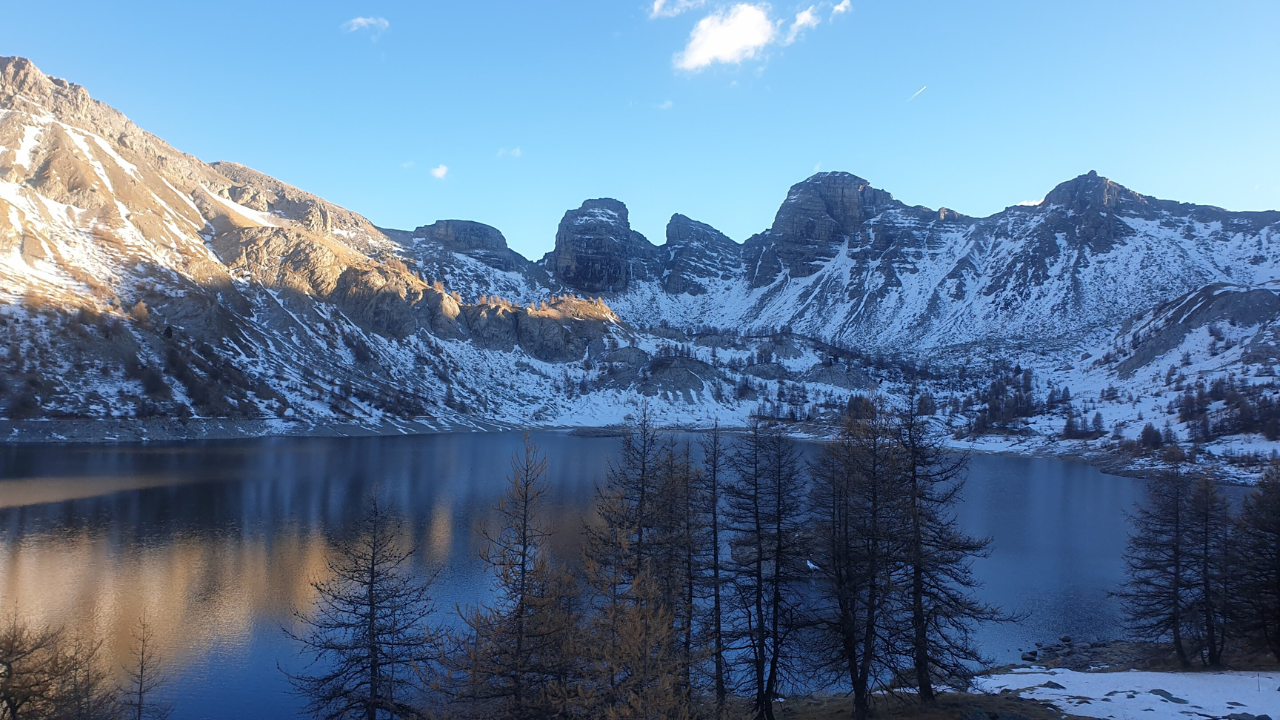
In 1924, a deliberate translocation deposited Arctic charr (Salvelinus alpinus) from the deep, cold waters of Lake Geneva into the high-altitude, oligotrophic environment of Lake Allos. One hundred years later, this population persists, presenting an empirical case study in biological adaptation, founder effects, and the ecological constraints of alpine aquatic ecosystems. Evaluating this century-long isolation requires stripping away casual observation to examine the mechanical variables dictating population survival, morphological divergence, and genetic drift in closed alpine systems.
Alpine lakes operate under severe thermodynamic and nutritional limitations. Lake Allos sits at an elevation of over 2,200 meters in the French Alps, characterized by an extended ice-cover duration, low baseline primary productivity, and a highly restricted macroinvertebrate prey base compared to the deep peri-alpine basin of Lake Geneva. When a fish population transitions from a large, deep lake system to a small, high-altitude cirque lake, the metabolic cost function shifts radically. Survival depends entirely on immediate phenotypic plasticity followed by generational genetic selection favoring energy conservation, reduced growth rates, and altered reproductive timing.
The Founder Effect and Genetic Bottlenecks
The initial stocking event in 1924 established a population from a finite number of founding individuals. This creates a genetic bottleneck, shrinking the initial gene pool and restricting standing genetic variation. In isolated salmonid populations, such bottlenecks typically accelerate genetic drift and increase the probability of inbreeding depression.
[Initial Stocking Event (1924)]
        │
        ▼
[Severe Genetic Bottleneck]
        │
        ├─► Reduction of Allelic Diversity
        ├─► Accelerated Genetic Drift
        └─► Fixation of Adaptive Traits
        │
        ▼
[Phenotypic Divergence in Lake Allos]
The genetic trajectory of the Lake Allos charr population is governed by two competing evolutionary forces:
- Purifying Selection: The harsh alpine environment aggressively culls individuals carrying deleterious recessive alleles, purging some genetic load despite the small population size.
- Random Genetic Drift: Neutral alleles are lost or fixed purely by chance, which reduces overall heterozygosity and limits the population's capacity to adapt to future environmental stressors such as rapid thermal shifts or novel pathogens.
Without recurrent gene flow from migratory populations, the Lake Allos charr rely exclusively on spontaneous mutation and recombination to generate novel variation. Consequently, phenotypic differences observed today between the descendant population and ancestral Lake Geneva stocks are direct functional responses to extreme ecological filtering.
Metabolic Scaling and Nutritional Constraints
The trophic architecture of Lake Allos dictates the bioenergetic limits of the fish population. Lake Geneva supports a complex pelagic and benthic food web, allowing Arctic charr to exploit multiple trophic niches, including deepwater plankton and forage fish. Lake Allos lacks this ecological redundancy.
The energy budget of an ectothermic vertebrate in an oligotrophic high-altitude lake is strictly constrained by the availability of fixed carbon. The growth rate of the Lake Allos charr is depressed relative to ancestral parameters, a phenomenon directly linked to the thermodynamic cost of foraging in near-freezing water combined with sparse caloric return.
To maintain homeostasis, the fish exhibit several physiological adaptations:
- Reduced Basal Metabolic Rate: Lowered standard metabolic demands allow survival during months of prolonged ice cover when exogenous food intake approaches zero.
- Dietary Shift and Opportunism: The population transitions from specialized piscivory or zooplanktivory to generalized benthic scraping and opportunistic surface feeding, utilizing chironomid larvae, cladocerans, and terrestrial insects dropped by wind currents.
- Stunted Morphological Profiles: A prevalent trait in isolated alpine salmonid populations is dwarfism. By maturing at a smaller body size, individuals reduce the absolute cumulative caloric threshold required to reach reproductive competency.
These adaptations illustrate a fundamental physiological trade-off. Energy allocation is diverted entirely away from somatic growth and invested into immediate survivorship and gametogenesis.
Reproductive Isolation and Life History Shifts
Reproductive strategies in Lake Allos have been reshaped by the predictability and duration of the thermal window suitable for spawning and embryonic development. In native, low-elevation environments, Arctic charr cue in on specific autumn water temperatures to initiate spawning over gravel beds.
In Lake Allos, the timing of ice breakup and subsequent littoral warming creates a compressed temporal window for embryonic development. If spawning occurs too late, developing embryos experience lethal anoxia or mechanical destruction from shifting ice scour. If spawning occurs too early, metabolic exhaustion precedes nutritional availability for fry.
The centurylong persistence of the population proves that the spawning phenotype successfully synchronized with local thermal regimes. However, this synchronization comes with demographic vulnerabilities:
- Recruitment Variability: Strong year classes depend entirely on stochastic weather patterns during the spring and autumn transition periods. A single anomalous winter can induce complete recruitment failure for a given cohort.
- Effective Population Size Reduction: Because physical spawning habitat in Lake Allos is restricted to specific littoral gravel zones, competition for redd sites intensifies, leading to skewed reproductive success and further lowering the effective population size relative to the absolute census count.
Ecological Stability and Anthropogenic Pressures
A century of isolation does not equate to equilibrium. Alpine ecosystems across Europe face escalating atmospheric nitrogen deposition, rising baseline water temperatures, and shifting precipitation patterns driven by broader climatic shifts.
The Lake Allos Arctic charr population operates near the edge of its fundamental thermal niche. As water temperatures rise during shortened ice-cover periods, metabolic demands increase exponentially while dissolved oxygen concentrations in the hypolimnion decline. This compresses the thermal habitat available for a cold-water specialist, forcing fish into deeper, colder water layers that may lack adequate prey densities.
Furthermore, management interventions in surrounding alpine watersheds, historical stocking of other salmonid species in adjacent drainages, and shifting recreational use patterns introduce biotic and chemical pressures that threaten the structural integrity of the aquatic food web. The absence of legal or physical barriers between minor regional sub-catchments historically permitted unauthorized introductions of competing species, introducing predation risks and competitive displacement that native-stock alpine isolates are ill-equipped to withstand.
Implement rigorous baseline monitoring protocols targeting juvenile recruitment ratios, multidecadal thermal profile logging, and genomic tracking to quantify loss of heterozygosity, establishing the precise inflection point where demographic stochasticity outpaces evolutionary adaptation.