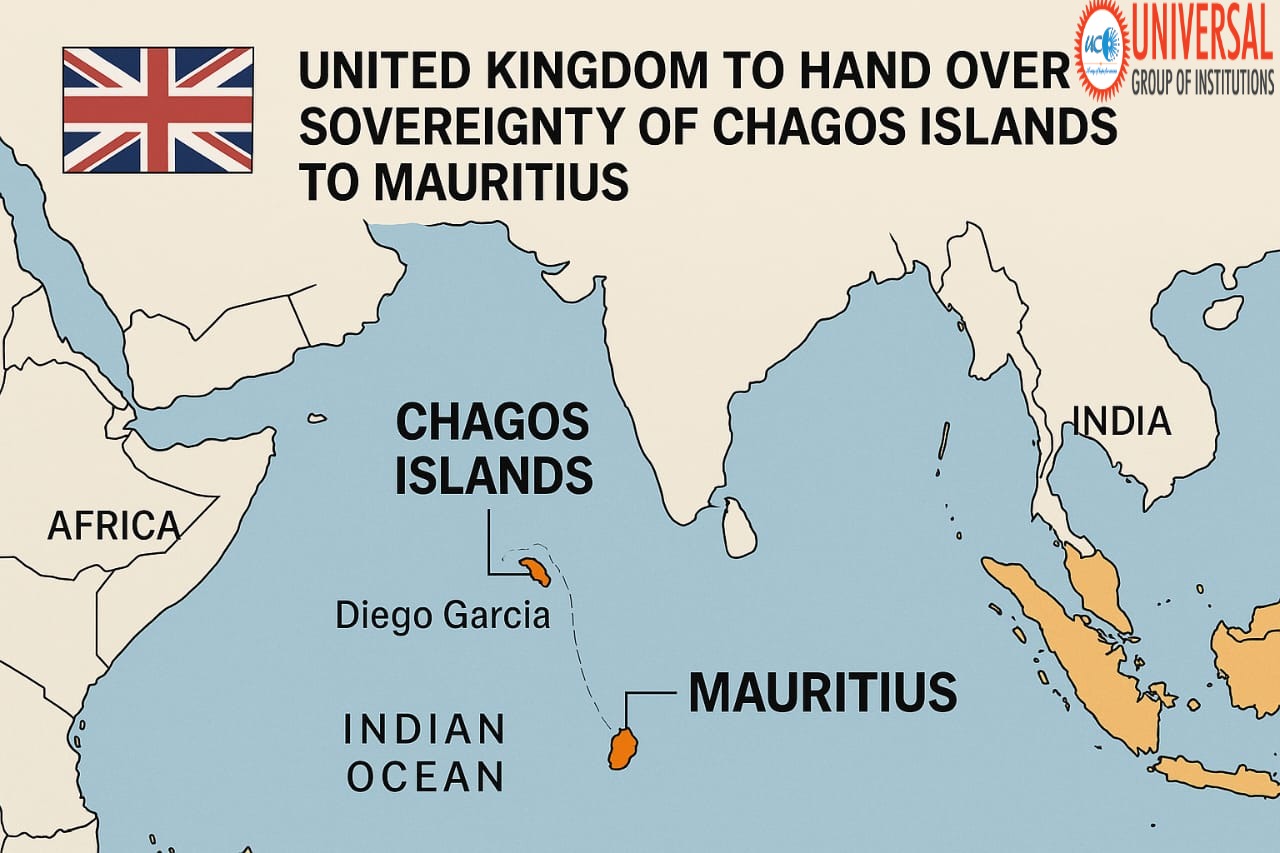
Geopolitics is not a courtroom drama where the side with the most moral outrage wins. The recent hand-wringing over the UK’s hesitation to hand the Chagos Islands to Mauritius is a masterclass in performative decolonization. Critics are obsessed with "international law" and "historic wrongs," yet they consistently ignore the cold, hard mechanics of global security. The reality is simple: sovereignty is a luxury bought with the ability to defend it. Mauritius cannot defend the Chagos Archipelago. The UK can.
The media narrative suggests that a "dropped bill" is a failure of diplomacy. It isn’t. It is a rare moment of British realism. Yielding to Mauritius isn't just about a few patches of coral; it’s about the strategic integrity of the Indian Ocean in an era where power vacuums are instantly filled by the highest bidder.
The Diego Garcia Fallacy
Most commentators treat Diego Garcia like a bothersome footnote. They argue that a long-term lease back to the US and UK would solve everything. This is a naive misunderstanding of how military bases function. You do not maintain a high-readiness strategic asset on land owned by a third party whose foreign policy is subject to the whims of shifting domestic coalitions or external debt traps.
If Mauritius takes sovereignty, the base at Diego Garcia becomes a guest in a house it no longer controls. We have seen this movie before. Nations under economic pressure often find themselves forced to "renegotiate" terms with foreign superpowers. Sovereignty for Mauritius over Chagos is effectively an open invitation for rival influence to begin chipping away at the Western security architecture in the region.
The Decolonization Delusion
The "lazy consensus" dictates that returning the islands is the only moral path. This ignores the fact that Mauritius itself is a post-colonial construct with its own complex internal politics. Handing the islands over doesn't "fix" the displacement of the Chagossian people; it merely transfers the administrative burden to a government that has historically shown more interest in the territory than in the people themselves.
I have watched diplomats trade away strategic leverage for the sake of a "clean" reputation, only to realize too late that reputation doesn't win wars. The UK’s obligation is to the security of its interests and those of its primary allies. International Court of Justice (ICJ) advisory opinions are exactly that: advisory. They are not a suicide pact for national security.
Why the US Opposition Actually Matters
The UK didn't just wake up and decide to annoy the UN. The US opposition is based on a granular understanding of logistics. Diego Garcia is the "unsinkable aircraft carrier." It is the pivot point for operations across the Middle East and the Indo-Pacific.
- Logistics: The base requires total control over the surrounding waters and airspace.
- Intelligence: Shared sovereignty means shared vulnerability. Signal intelligence and undersea surveillance are compromised the moment a host nation lacks the hardware to police its own borders.
- Continuity: A 99-year lease sounds stable until a new administration in Port Louis decides it needs more "infrastructure investment" from a certain superpower in the East.
The US understands that in the current global climate, there is no such thing as a "neutral" strategic location. You are either in one camp or the other.
The Sovereignty Trap
People ask: "How can the UK claim to support a rules-based order while ignoring the ICJ?"
The premise of the question is flawed. The "rules-based order" is maintained by the power that enforces it. If the UK and US retreat from their strategic outposts, the vacuum isn't filled by "international law." It is filled by the next expansionist power that doesn't care about the ICJ at all.
Critics point to the UN General Assembly votes as a sign of Britain's "isolation." Let them vote. A thousand non-binding resolutions do not provide the heavy-lift capacity or the strike range that Diego Garcia offers. Britain’s hesitation isn't a sign of weakness; it’s a sign that the adults in the room have finally realized that moral grandstanding doesn't keep the sea lanes open.
The Harsh Reality for Chagossians
The most uncomfortable truth in this entire debate is that neither Port Louis nor London has a perfect track record with the islanders. However, shifting the deed to Mauritius doesn't guarantee a "right of return" that is anything more than symbolic. The islands are remote, ecologically fragile, and largely unsuitable for modern civilian life without massive, unsustainable subsidies.
If we are being brutally honest, the Chagossians are being used as a moral shield by Mauritius to expand its Exclusive Economic Zone (EEZ). It is a land grab dressed in the language of human rights.
The Risk of Soft Power Surrender
The UK has spent the last decade apologizing for its existence. This bill was an extension of that trend—a desperate attempt to look "modern" at the cost of actual influence. Stopping the transfer is a correction. It recognizes that the world is entering a period of renewed great-power competition where physical territory is more valuable than a "thank you" from a UN committee.
The downside to this contrarian stance? It’s ugly. It looks like "Empire" to the uninitiated. It wins no friends in the faculty lounges of elite universities. But in the corridors of power where real decisions about global stability are made, it is the only move that makes sense.
If the UK hands over Chagos, it isn't "freeing" an island chain. It is abandoning a post and handing the keys to a landlord who is already looking for a more profitable tenant.
The bill stayed on the shelf because someone finally checked the math on the strategic cost. That wasn't a mistake. It was a rare instance of competence.
Keep the islands. Maintain the base. Stop apologizing.



