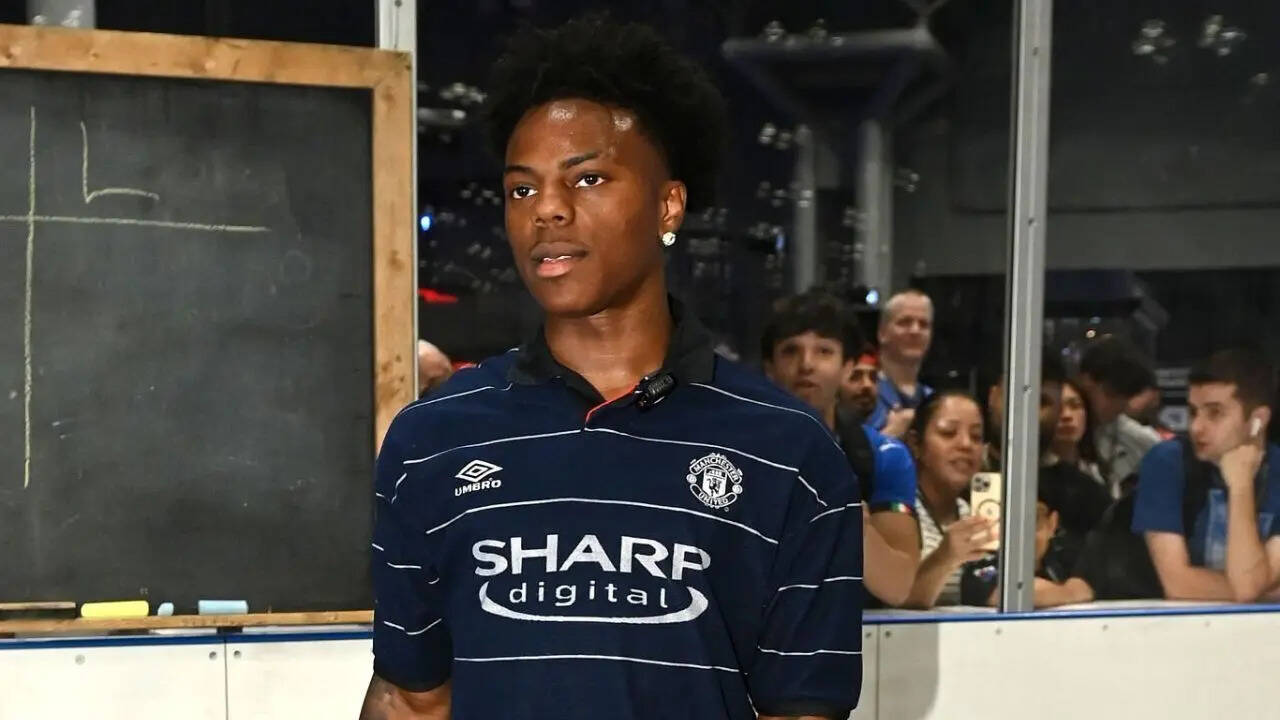
The room smells like stale energy drinks and sweat. It is a nondescript recording studio, the kind with soundproof foam bleeding off the walls and heavy-duty cables snaking across the floor like slumbering pythons. A camera tilts up. For a split second, the frame catches a face known to hundreds of millions of teenagers across the globe. Darren Watkins Jr.—the nineteen-year-old phenomenon the world calls IShowSpeed—is hunched over a microphone. Beside him stands a producer, gesturing wildly as a heavy, driving bassline thumps through the monitors.
Then, the video cuts out.
It lasted only a few seconds. It was uploaded without context, bounced across TikTok, mutated into a viral thread on X, and ultimately sparked a wildfire of speculation. The internet, as it always does when Speed breathes, went into meltdown. The rumor? Speed is secretly recording the official anthem for the FIFA World Cup 2026.
To the uninitiated, this sounds absurd. Traditionalists will scoff. They will point to Shakira’s hips shaking to "Waka Waka" in 2010, or Ricky Martin’s soaring vocals in 1998. They will argue that the biggest sporting event on the planet deserves a seasoned pop icon, a musical virtuoso, or a legacy act with cross-generational appeal.
They are wrong. They are looking at the future through a rearview mirror.
To understand why a leaked snippet of a streamer in a studio is sending shockwaves through the entertainment industry, you have to look past the barking, the backflips, and the chaotic energy that defines Speed’s brand. You have to look at the invisible stakes of modern attention.
The Death of the Traditional Anthem
Every four years, FIFA attempts to capture lightning in a bottle. A World Cup anthem is supposed to be a sonic bridge. It must connect a fan in Buenos Aires to a viewer in Tokyo, unifying them under a single, catchy chorus.
But the media landscape has fractured into a million jagged pieces. The monolithic culture of the nineties and early aughts is dead. There is no single television channel everyone watches; there is no single radio station everyone tunes into. If FIFA hires a traditional pop star today, they risk alienating the very demographic they are desperate to capture: Gen Z and Gen Alpha, the digital natives who do not watch ninety minutes of live television without a second screen glued to their palms.
Consider the data. Traditional sports viewership among younger demographics has been slipping for a decade. Legacy brands are terrified. They are realizing that owning the rights to the game is no longer enough; you have to own the culture surrounding the game.
Enter the streamer.
Speed is not just a guy who plays video games in his bedroom. He is a walking, breathing human algorithm. When he traveled to Asia, thousands of people flooded the streets of Kuala Lumpur and Mumbai just to catch a glimpse of him running past. He possesses a raw, unedited connection with his audience that a highly polished PR campaign can never replicate.
When a traditional artist releases a song, it is a product. When Speed releases a track—like his previous football-centric anthems "World Cup" or "Ronaldo"—it is an event. It is a meme. It is a shared cultural moment that his fans will stream, remix, and clip until it saturates every corner of the digital ecosystem.
Inside the Studio Walls
Let us look closer at that leaked footage. If you strip away the hype, what do you actually see?
You see a young man carrying the weight of an unprecedented career path. There is no blueprint for what Speed is doing. He is navigating fame at a scale that used to require a massive Hollywood machine, yet he does it with a skeletal crew and an iPhone.
The audio in the leak is muffled, intentionally obscured to prevent copyright strikes, but the rhythm is unmistakable. It features the frantic, high-BPM tempo of Brazilian funk mixed with standard Euro-dance elements. It is loud. It is chaotic. It sounds exactly like what a stadium full of eighty thousand screaming fans would chant after a last-minute goal.
Critics will point out that Speed is not a trained vocalist. His pitch fluctuates, and his lyrics are rarely complex. But music in 2026 is no longer judged solely by technical merit. It is judged by kinetic energy.
Imagine a hypothetical teenager named Leo. He lives in Ohio. He does not watch MLS games, and he has never bought a ticket to a live soccer match. But he watches Speed every single day. If Speed tells Leo that the 2026 World Cup is the greatest event on earth, Leo believes him. If Speed releases a track that serves as the soundtrack to the tournament, Leo will stream it on repeat while playing EA Sports FC.
FIFA knows this. The executives in Zurich might wear bespoke suits and speak in quiet, measured tones, but they understand the brutal arithmetic of modern marketing. They need Speed more than Speed needs them.
The Paradox of Authenticity
But there is a dangerous line to walk here, and it is where the real tension of this story lies.
Speed’s entire appeal is built on the perception that he is unmanaged, unvetted, and completely out of control. He is the anti-corporate hero. He says the wrong things, he reacts purely on instinct, and he routinely breaks the unwritten rules of traditional broadcasting.
The World Cup, by contrast, is the ultimate corporate juggernaut. It is sponsored by multinational banks, massive beverage conglomerates, and state-owned airlines. It is an environment of intense scrutiny, where every piece of branding is sanitized for global consumption.
What happens when these two irresistible forces collide?
If the rumors are true, and Speed is indeed collaborating on an official piece of music for the tournament, a subtle negotiation must be taking place behind closed doors. FIFA cannot sanitize Speed without destroying the magic that makes him valuable. If they force him into a neat, corporate box, his fans will smell the inauthenticity from a mile away. They will reject the song as a sellout move.
Conversely, Speed cannot be entirely unguided. He is representing a global tournament held across three nations—the United States, Canada, and Mexico. The stakes are monumental. A single PR misstep could cost sponsors tens of millions of dollars.
This is the tightrope. It is a fascinating cultural experiment playing out in real-time, hidden beneath the surface of a ten-second video clip leaked on an internet forum.
Beyond the Screen
We tend to dismiss internet culture as fleeting. We look at viral stars and assume their relevance will evaporate when the next trend arrives. But we are witnessing a permanent shift in how power and influence are distributed.
The kid who started out yelling at his monitor because he lost a virtual match is now potentially holding the keys to the sonic identity of the world's largest sporting event. It is a story of democratization, but also one of immense pressure.
Behind the manic laughter and the high-energy antics seen on screen, there is a nineteen-year-old boy sitting in a dimly lit studio, trying to catch his breath between takes. The bass continues to rattle the soundproof foam. The producer watches the levels peak on the monitor. Outside those walls, millions of people are waiting, refreshing their feeds, demanding to be entertained.
The camera cuts to black, leaving only the lingering echo of a drumbeat that might just define a summer.