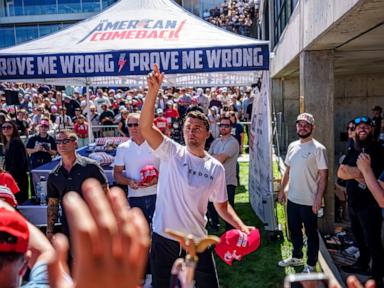
When conservative activist Charlie Kirk walked onto the stage at Utah Valley University on September 10, 2025, thousands of supporters filled the venue. Within moments, a sniper perched on a nearby rooftop 400 feet away fired the fatal shot. Now, Kirk's family isn't just waiting for a criminal trial against the accused gunman. They are aggressively targeting the institution they hold responsible for letting the tragedy happen in the first place.
Kirk's parents, Robert and Kathryn Kirk, alongside his widow Erika Kirk, filed a formal notice of claim signaling their intent to sue Utah Valley University and related local authorities. The legal filing doesn't mince words. It accuses the university parties of a series of stunning failures and reckless decisions that created a clear, foreseeable danger.
Breaking Down the Alleged Security Failures
If you look at the core of the family's legal notice, it points directly to massive security oversights on campus. The claims highlight that campus police lacked a cohesive written security plan for the high-profile event. Crucially, they failed to hold proper security briefings before the massive gathering.
Even more damning is the proximity argument. The gunman, identified as Tyler Robinson, scaled a roof roughly 400 feet from where Kirk was speaking. The family's legal team points out that the risk of a rooftop sniper should have been blindingly obvious. Coming so soon after the high-profile assassination attempt on Donald Trump—a close political ally of Kirk—rooftop security should have been priority number one. Instead, the roof was left unsecured and unmonitored.
University officials responded cautiously to the notice of claim. Representatives stated they are aware of the filing and will handle the legal proceedings through established institutional processes while focusing on supporting their campus community. Meanwhile, the Utah Attorney General's Office has declined to comment on the looming litigation.
The Road Ahead in the Courts
While the wrongful death claim lays the groundwork for civil damages, the criminal case against the accused shooter moves at a glacial pace. A Utah judge recently scheduled the trial for the summer of 2028—nearly three years after the assassination took place.
That timeline sparked immediate outrage from Kirk's family. Attorney Jeffrey Neiman, representing Erika Kirk, voiced deep frustration over the delay. Pointing out that waiting until 2028 does not feel speedy or just, the family noted that every additional day without resolution prolongs their suffering. Prosecutors had pushed for an earlier start date, while defense attorneys requested even more time to sift through tens of thousands of files and evaluate whether they can seat an impartial jury in Utah County.
As the criminal proceedings crawl forward, the civil suit represents a different kind of accountability. It forces public institutions to answer tough questions about crowd safety, threat assessment, and operational negligence. When high-profile speakers tour college campuses, the bare minimum requirement is a secure perimeter. By signaling this lawsuit, Kirk's family is demanding that universities can no longer escape liability when basic security protocols are ignored.