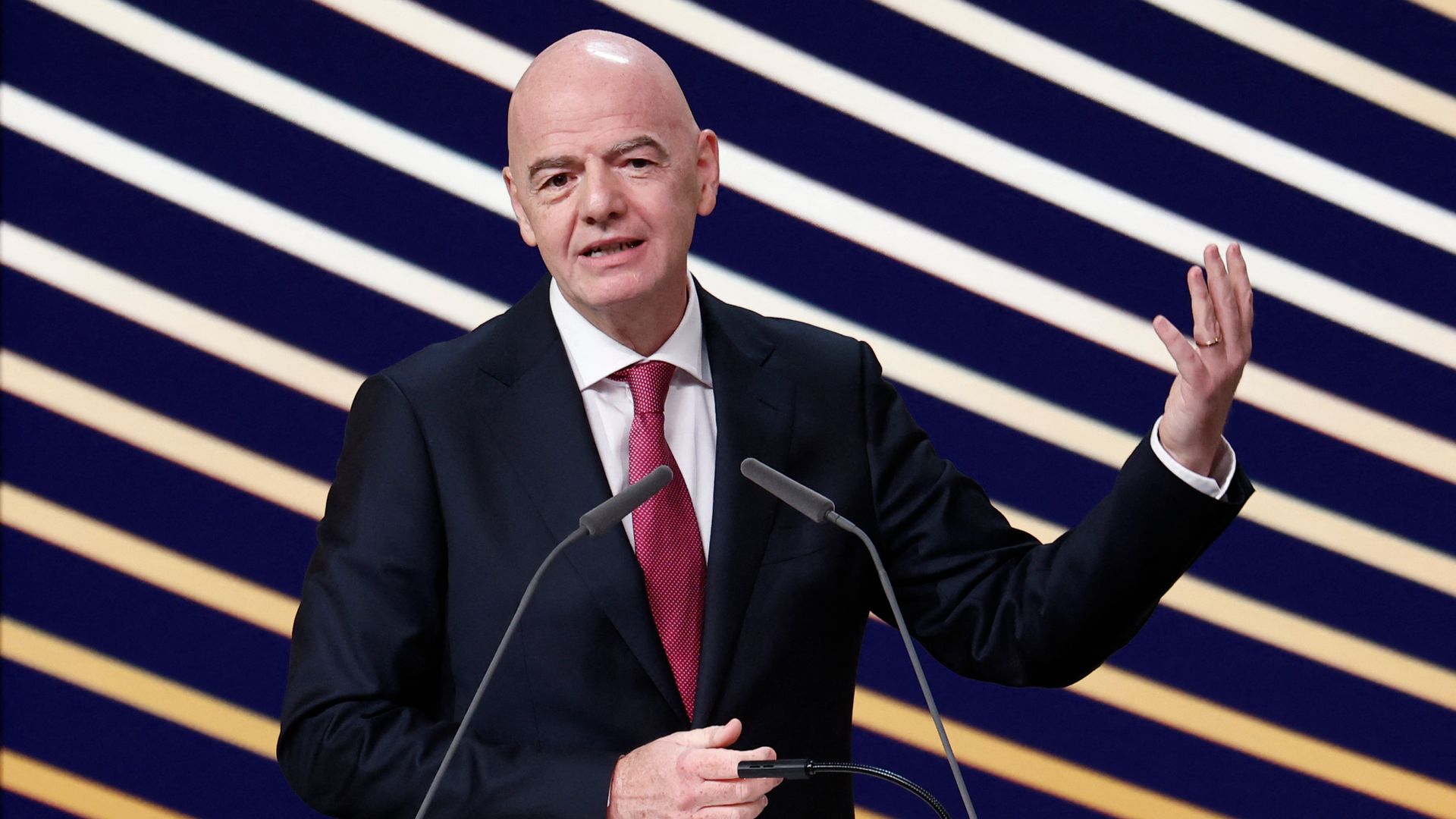
The administrative class of European soccer loves a good committee. Give them a crisis, and they will immediately pitch an emergency summit, complete with mineral water bottles, tailored suits, and a manifest destined for the recycling bin. The latest brilliant brainwave features Dutch football administrators calling for a global summit to curb the powers of the FIFA president before anyone dares challenge Gianni Infantino.
It is a comforting fantasy. It assumes that FIFA is a normal democratic institution suffering from a temporary calibration error at the top. In similar developments, take a look at: Why Julian Alvarez Is Stuck in the Middle of a Transfer War.
Fix the bylaws, clip the executive wings, find a charismatic alternative candidate, and the old house cleans itself.
Absolute nonsense. Yahoo Sports has also covered this fascinating topic in extensive detail.
I have watched federations burn millions on institutional reform while the core incentives of international sports governance remained completely untouched. FIFA is not broken because Infantino holds too much administrative authority. Infantino holds authority because the structural plumbing of global football demands a strongman distributor of cash and votes.
The Fallacy of Structural Reform
Let us look at the mechanics. The prevailing narrative claims that if member associations gather in a hotel ballroom to redraft governance codes, the presidency will magically transform into a ceremonial figurehead. This ignores how global voting blocs actually operate. FIFA consists of over two hundred national associations. A tiny island federation with three hundred registered players possesses the exact same General Assembly voting weight as the German Football Association.
When you distribute power across a decentralized base of micro-federations, you do not create a clean meritocracy. You create a market for patronage.
The presidency was never about constitutional loopholes. It is about development funds, tournament allocations, and infrastructure grants. Asking the beneficiaries of that system to vote away the powers of the man who signs the checks is political suicide.
Imagine a scenario where a rebellious coalition manages to pass every single restriction proposed at this Dutch-backed summit. Presidents find their hands tied, executive committees claw back authority, and the office is neutered. Within six months, the constituent federations starved of direct cash distributions will revolt, oust the reformists, and demand a return to centralized cash-dispensing autocracy.
The Wrong Battlegrounds
The anti-Infantino resistance always focuses on the personality instead of the architecture. Opponents hunt for a heroic challenger, a clean-cut alternative who promises transparency, ethics committees, and digital town halls.
History shows this approach fails every single time. Sepp Blatter did not survive decades at the apex of world football because people thought he was humble; he survived because he understood that loyalty is purchased through redistribution.
When reformers spend their energy organizing pre-election summits to select a challenger, they are treating a systemic market reality as a personnel problem.
- The Cash Loop: FIFA generates billions through global broadcast rights and commercial partnerships.
- The Vote Bank: The revenue is funneled downward to secure the voting blocs necessary to maintain power.
- The Feedback Loop: The more money centralized at the top, the more entrenched the presidency becomes.
No amount of parliamentary debate in Amsterdam will break that loop. Changing the occupant of the chair while keeping the financial engine intact changes nothing.
What Actually Disrupts FIFA
If you want to shift the power dynamics of world football, stop trying to draft committee papers.
Real leverage requires structural starvation, not legislative whining. If European and South American heavyweights genuinely wanted to alter the balance of power, they would bypass the administrative theatre entirely and weaponize their own economic gravity. The moment elite clubs and powerhouse confederations threaten commercial secession—setting up independent circuits that keep revenue inside the playing ecosystem rather than funding peripheral administrative bloat—the entire calculus of global governance shifts overnight.
As long as the major leagues keep feeding the beast while complaining about its master, summit declarations are just expensive press releases. Stop negotiating terms with a machine designed to ignore them. Cut off the fuel, or accept the driver.