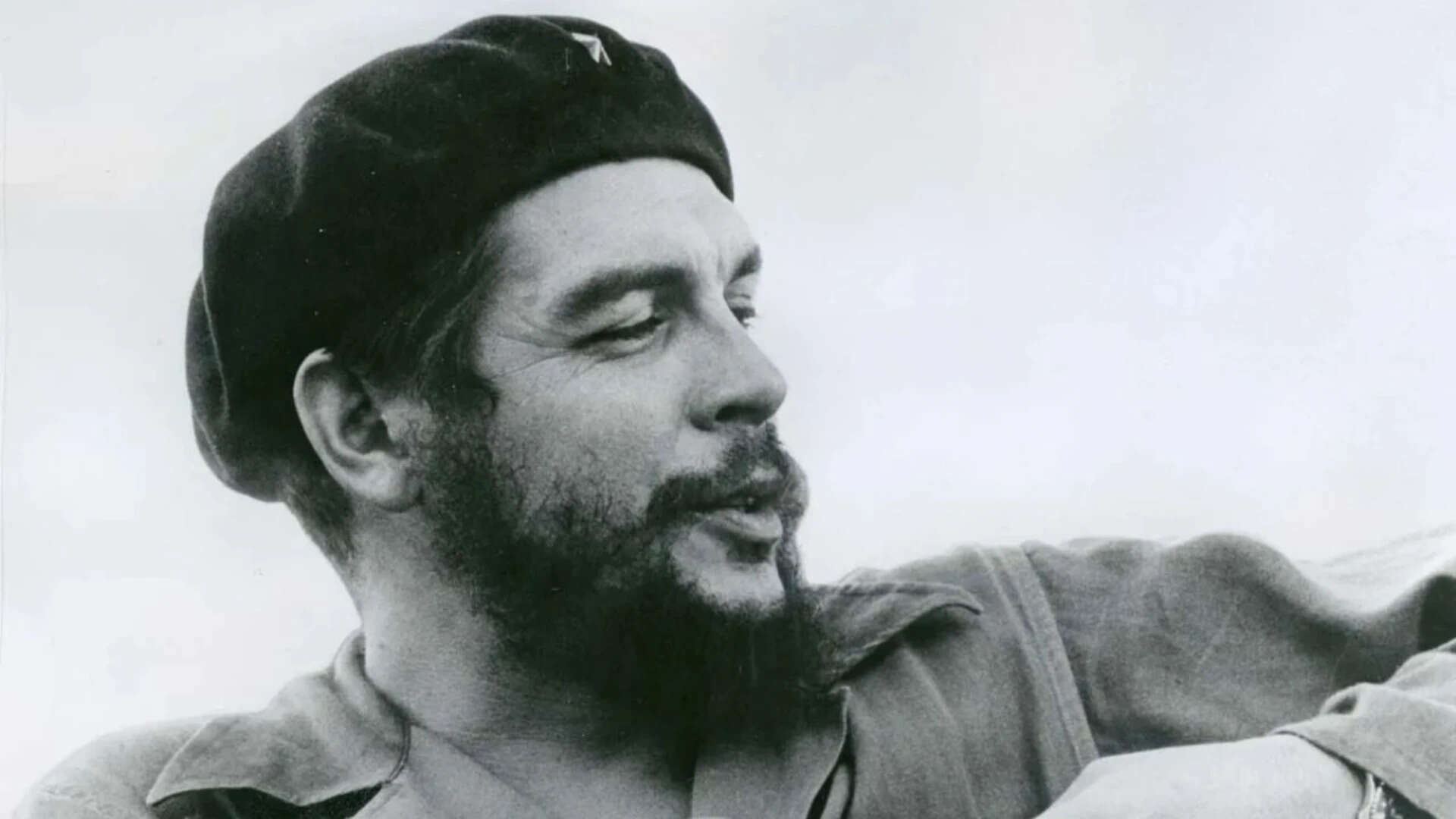
Ernesto "Che" Guevara famously declared that the life of a single human being is worth millions of times more than all the property of the richest man on earth. It is an extraordinary quote. It looks brilliant on a poster. It feels morally pure to repeat at dinner parties.
It is also fundamentally useless as a framework for running an economy, a movement, or a society.
The lazy consensus loves this quote because it offers cheap moral superiority without requiring anyone to grapple with trade-offs. It frames human value as an absolute binary: people on one side, cold hard property on the other. But when you examine how resource allocation, infrastructure, and systemic policy actually function in the real world, prioritizing an abstract, infinite valuation of individual life over pragmatic material realities destroys the very systems required to sustain human life in the first place.
The Mathematical Trap of Infinite Value
Saying an individual life has near-infinite value sounds compassionate. In practice, it creates a total policy paralysis or, worse, perverse economic outcomes.
If one human life is truly worth more than all accumulated capital, then every single dollar spent on anything other than immediate life preservation is an ethical failure. Why build a municipal park when those funds could buy insulin? Why research space exploration when malaria nets remain underfunded?
When you treat human life as an infinite variable in a finite system, resource allocation breaks down.
- Risk Management Collapses: Civil engineering operates on a concept called the Value of a Statistical Life (VSL). Regulatory agencies like the EPA and DOT routinely place a explicit dollar metric—typically around $10 million to $12 million—on a human life. They do this not because they are unfeeling sociopaths, but because if safety standards were designed to eliminate 100% of risk at any cost, a single mile of highway would cost ten billion dollars, and society would grind to a dead halt.
- Capital Allocation Stagnates: Innovation requires taking real capital and risking it on uncertain outcomes. If capital is universally subordinated to immediate individual welfare, venture investment and capital expenditure stop. No enterprise risk, no progress.
- Systemic Collapse Over Individual Priority: I have watched early-stage founders blow through millions in capital because they refused to make painful headcount cuts, citing the sacred importance of their team's immediate livelihood. The result? The company went under six months later, and all fifty people lost their jobs instead of five.
Rhetoric Versus the Reality of Production
Guevara spoke these words during a 1960 speech to the Cuban militia, advocating for a "new human" motivated by moral duty rather than material gain.
We have over six decades of empirical data on what happens when moral posturing replaces price signals and property rights. It yields scarcity, economic centralization, and widespread institutional decay.
The economic reality is harsh: property rights are not the antithesis of human value. They are the prerequisite for it.
Without secure property rights and the orderly accumulation of capital, you cannot build the factories that mass-produce low-cost antibiotics. You cannot finance the deep-water ports that import grain during a drought. You cannot incentivize the relentless operational efficiencies that pull millions of people out of extreme poverty.
To praise the individual while dismantling the mechanics of capital accumulation is a total logical failure. Capital is simply saved labor and prospective utility. Destroying or vilifying property does not liberate the individual; it strips them of the tools needed to build long-term security.
The Danger of Romantic Idealism in Leadership
Modern managers and political leaders frequently fall into the Guevara trap. They adopt saintly rhetoric, assuring their teams that "people come first, above all else."
Then market realities hit.
When leaders pretend trade-offs do not exist, they set up their organizations for catastrophic failure. True responsibility requires making brutal decisions about where resources go, who gets funded, and what gets cut.
If you operate on pure sentimentality, you end up making decisions based on optical morality—doing what feels noble right now—rather than functional outcomes that secure the future.
- The Trade-Off Paradox: Every budget decision is a choice to let one opportunity die so another can live. Denying that reality does not make you a humanist; it makes you incompetent.
- The Capital Requirement: Philanthropy requires surplus. High safety standards require wealth. Human rights are best protected in places where high productivity generates the tax base required to enforce a rule of law.
Stop Measuring Intentions and Start Measuring Systems
The debate shouldn't be about whether human life is valuable. That is a trivial baseline.
The real debate is about what systems demonstrably preserve, elevate, and expand human capability at scale.
Moralizing slogans provide zero horsepower to run a grid, supply a hospital, or incentivize the creation of new technologies. If you genuinely value human lives, you must respect the cold, unfeeling machinery of economic calculation, trade-offs, and capital management that keeps those lives viable.
In the end, sentimentality saves no one. Efficient, sustainable, and wealth-generating systems do.
Put down the motivational quotes, accept the reality of trade-offs, and focus on building systems that actually work.