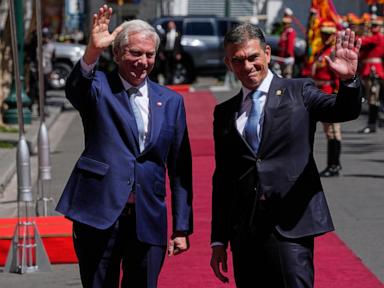
Headline-driven reporting treats a 71-year diplomatic milestone as a fairy-tale thaw between two neighbors. Chilean President José Antonio Kast’s October 2026 state visit to La Paz—the first by a sitting Chilean head of state since Carlos Ibáñez in 1955—is far more accurately understood as a calculated hedge against domestic fiscal strain, cross-border security leakage, and shifting continental alliances. Standard coverage stops at ideological symmetry: two conservative executives, Kast in Santiago and Bolivian President Rodrigo Paz in La Paz, meeting amid a broader rightward turn across South America. That framing mistakes shared political labels for durable institutional alignment. Real diplomatic progress requires separating symbolic optics from hard transaction costs, resolving unresolved sovereignty claims that have kept full ambassadorial ties frozen since 1978, and building verifiable trade and security mechanisms along an 861-kilometer frontier.
A rigorous strategic analysis of this rapprochement rests on four analytical pillars:
- The Sovereignty-Utility Trade-Off: Measuring when governments defer historical territorial grievances—specifically Bolivia’s Pacific coastline loss in the 19th-century War of the Pacific—to capture near-term economic and logistical gains.
- The Domestic Pressure Function: Tracing how internal political constraints—such as fuel subsidy protests in Bolivia and falling approval ratings in Chile—shape executive risk tolerance abroad.
- The Corridor Arbitrage Model: Evaluating physical transit alternatives, including Bolivia’s offer of access to the Paraguay-Paraná waterway toward the Atlantic against Pacific port dynamics.
- The Security and Alignment Multiplier: Assessing how bilateral cooperation on border control, organized crime, and regional coalitions interacts with external great-power and hemispheric initiatives.
Why Ideological Labels Overstate Bilateral Stability
Conventional commentary leans heavily on ideological convergence to explain diplomatic movement. When two leaders share conservative credentials and rhetorical alignment with Washington, observers often assume friction will melt away. In international relations, shared ideology lowers initial communication friction, yet it rarely overrides entrenched domestic veto players or multi-generational grievances.
Restoring full diplomatic relations was explicitly kept off the agenda during the October 2026 visit. Bolivian officials framed the moment as an effort to build conditions over time rather than settle core disputes immediately. Critics at home, including former President Evo Morales, immediately attacked the omission of Bolivia’s maritime claim as a betrayal of historical memory. That reaction exposes the core structural tension: any Bolivian leader who formally abandons the maritime aspiration faces severe domestic legitimacy costs, while any Chilean leader who concedes sovereign territory faces fierce political pushback in Santiago.
In protracted territorial disputes, functional cooperation advances fastest when governments ring-fence sovereignty from commercial and operational agreements—and stalls the moment domestic opposition turns functional cooperation into a referendum on national honor.
Comparing executive incentives clarifies why both capitals chose incrementalism over grand bargains.
- Incentive asymmetry in La Paz: Bolivia faces acute external financing pressure, foreign-service arrears, and a need to reintegrate into regional trade and investment networks after years of diplomatic isolation. Engagement with a major Pacific neighbor promises logistics relief and institutional normalization without requiring immediate formal surrender on sovereignty.
- Incentive asymmetry in Santiago: Chile holds the positional advantage on existing Pacific transit infrastructure and faces fewer existential trade bottlenecks than a landlocked economy. For Santiago, engaging La Paz is attractive primarily when it reduces irregular border crossings, transnational crime, and supply-chain friction while reinforcing regional alignment.
- Credibility constraint: Because bilateral memoranda announced in La Paz lacked binding dollar figures or strict enforcement timelines, their near-term value lies in signaling intent rather than locking in capital expenditure.
The Sovereignty-Utility Trade-Off and Corridor Arbitrage
Landlocked economies face a classic geographic penalty: higher transport costs, longer transit times, and vulnerability to third-party transit bottlenecks. In trade economics, reducing effective distance between inland producers and global markets requires either bilateral transit agreements or alternative routing corridors.
Bolivia’s outreach during the visit included offering Chile access to the Paraguay-Paraná waterway system—which links interior South American routes via Brazil, Paraguay, Argentina, and Uruguay toward the Atlantic—alongside discussions on mining, energy, and trade. From a systems perspective, that move attempts to turn geographic constraint into multi-corridor leverage. Rather than relying exclusively on a single directional narrative tied to the Pacific coast, La Paz is positioning itself as a connector across South American river and overland routes.
Consider how an export-oriented mining or agricultural firm evaluates routing options under uncertainty. If a single port corridor faces strikes, blockades, or diplomatic freezes, unit transport costs spike and delivery schedules slip. Adding an alternative waterway or inland hub lowers variance even before total freight volume shifts dramatically. Yet physical geography still imposes hard limits: shallow river drafts, seasonal water levels, lock capacity, and customs harmonization across multiple jurisdictions determine whether an alternative corridor is commercially viable or merely aspirational.
Three operational variables govern whether these trade and corridor proposals produce real throughput:
- Customs and border friction: Harmonized inspection protocols and reduced clearance delays along the 861-kilometer border matter more in the short run than grand infrastructure announcements.
- Capital commitment versus signaling: Non-binding cooperation pacts attract attention, but private operators require clear tariff rules, property protections, and predictable schedules before committing fixed capital.
- Domestic protest exposure: Fuel pricing and subsidy disputes create immediate supply-chain shocks; a government fighting street unrest has narrow bandwidth to execute complex cross-border regulatory reforms.
Domestic Fragility as a Catalyst for Foreign Policy Moves
A critical cause-and-effect link missing from surface-level coverage is how domestic political vulnerability shapes diplomatic timing. Leaders under pressure at home often seek external visibility or pragmatic problem-solving wins to demonstrate competence, yet domestic instability simultaneously weakens their negotiating leverage.
In Bolivia, fuel subsidy protests have tested the Paz administration, while foreign ministry officials have worked to clear multi-million-dollar arrears to international bodies and diplomatic staff while rebuilding ties across multiple capitals and multilateral partners. In Chile, the Kast government has contended with declining poll numbers and domestic transport friction around fuel costs. When both executives face domestic headwinds, a historic summit offers high visual impact at relatively low immediate fiscal cost—provided it does not trigger an immediate domestic backlash over sovereignty.
This dynamic carries a clear operational lesson for executives, investors, and policy teams tracking South America. Do not treat a high-profile presidential handshake as proof of institutional durability. Domestic political shocks can reverse diplomatic momentum quickly if a successor government—or a coalition partner reacting to street protests—decides that rapprochement has become a political liability.
To separate durable structural shifts from fragile political theater, analysts should monitor concrete execution metrics rather than diplomatic rhetoric:
- Institutionalization: Are joint working groups on border security, customs, and energy meeting on fixed schedules with published deliverables, or was the summit a one-off media event?
- Regulatory follow-through: Have ministries issued concrete decrees, transit rules, or technical standards, or did announcements stop at broad declarations of intent?
- Coalition resilience: Do ruling coalitions in Santiago and La Paz have enough legislative and street-level durability to absorb opposition attacks from hardliners on both sides?
Border Security and Hemispheric Alignment
Beyond trade and historical grievances, security along the shared border and alignment with broader regional initiatives formed a central pillar of the talks. Transnational organized crime, smuggling, and irregular migration do not respect diplomatic freezes; when two neighboring states lack formal diplomatic channels or routine operational coordination, enforcement gaps widen along remote high-altitude terrain.
Closer cooperation on information exchange and border security addresses a practical vulnerability for both countries. At the same time, linking bilateral ties to wider hemispheric security or economic frameworks—such as Washington-backed regional initiatives—introduces external strategic dynamics. South American states increasingly balance relations across multiple power centers, including the United States, European partners, and Asian markets such as China and Japan. Over-indexing a bilateral relationship on a single external geopolitical alignment can make it vulnerable if Washington’s priorities shift or if domestic voters resist perceived external tutelage.
Limitations of This Analytical Framework
No analytical model captures every variable in fluid Latin American politics. This assessment relies on publicly reported diplomatic developments and structural political-economy mechanisms rather than classified intelligence, internal cabinet records, or audited bilateral trade ledger breakdowns. Furthermore, political alignments in the region frequently shift across electoral cycles, and unannounced commercial terms or private-sector contracts could alter the pace of implementation faster than public statements suggest.
Strategic Play for Decision-Makers
Treat the October 2026 Kast–Paz summit as a tactical de-escalation and functional coordination opening, not a permanent resolution of the Chile–Bolivia divide. For corporate strategists and risk managers operating in the Southern Cone, the decisive play is to underwrite operational resilience around multi-corridor logistics and border-compliance readiness while pricing in political reversal risk: map supply chains across both Pacific port routes and inland/Atlantic corridor options, avoid single-point exposure to fuel-subsidy or protest disruptions in either country, and tie capital commitments to enforceable commercial contracts and binding regulatory milestones rather than bilateral goodwill declarations.