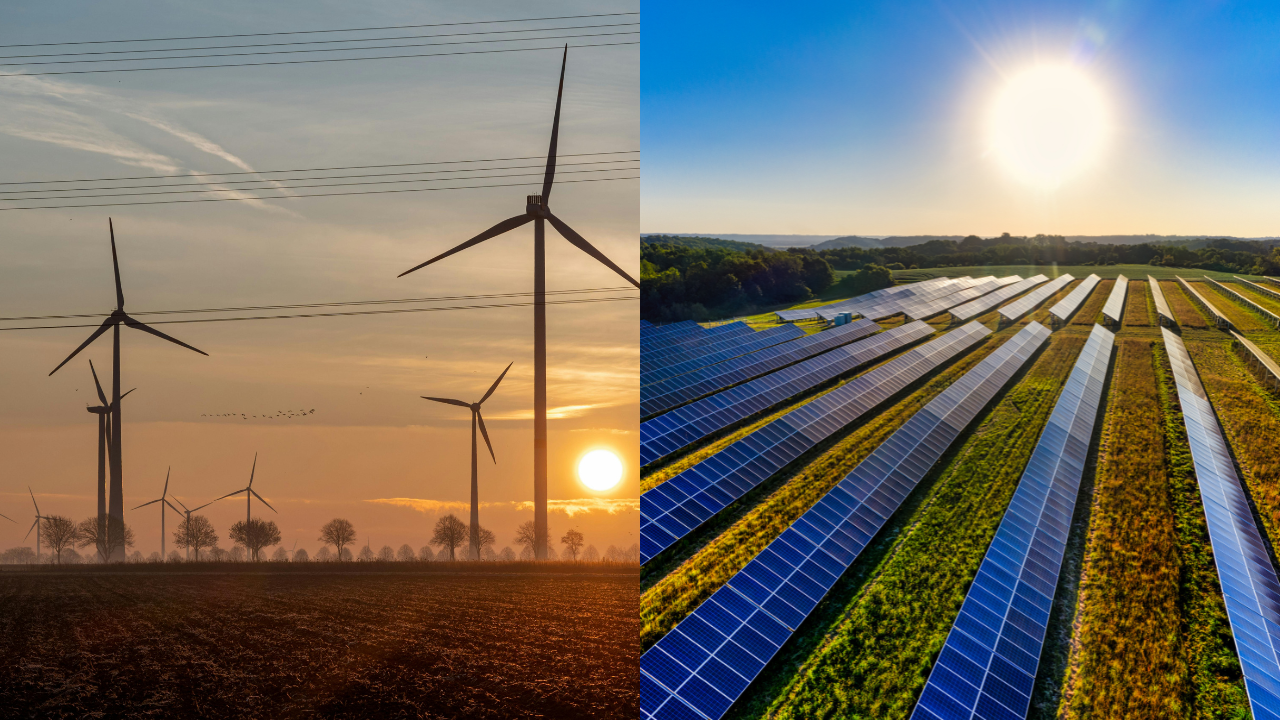
China is pulling off a massive power play that shifts the entire logic of global energy infrastructure. The country isn't just building clean energy within its borders anymore. It's planning a giant overseas renewable energy plant located roughly 4,300 miles away from the Chinese mainland.
This isn't a modest pilot project. We're talking about an infrastructure footprint that features 1,000 wind turbines and millions of solar panels working in tandem.
If you've been watching the energy markets, you know that Beijing has spent the last decade quietly funding solar farms, offshore wind grids, and hybrid power systems across Asia, Africa, and the Middle East. But this new project represents an entirely different level of ambition. It marks a transition from merely supplying equipment or financing local projects to actively designing and controlling cross-border macro-grids on a global scale.
The immediate question is obvious. Why build a massive clean energy hub thousands of miles away from home?
The answer lies in a mix of domestic industrial overcapacity, long-range transmission breakthroughs, and a calculated strategy to lock in international energy dependencies for the next half-century.
The Real Numbers Behind China's Mega Project Strategy
To understand how China can even attempt an overseas installation with 1,000 turbines, you have to look at what they've already built at home. This isn't theoretical engineering. They've spent years practicing on their own geography.
Just months ago, in December 2025, China flipped the switch on the world's largest solar power station in Xinjiang. That single site, the Midong solar project, contains over 5.26 million solar panels. It pumps out billions of kilowatt-hours every year. To get that power from the empty deserts of the west to the megacities on the coast, Chinese state enterprises had to pioneer ultra-high-voltage (UHV) long-distance transmission lines.
Now, they're taking that exact playbook overseas.
Building 1,000 wind turbines in a single region requires an unbelievable volume of hardware. But hardware happens to be China's primary superpower. Right now, Chinese factories produce wind turbine blades over 130 meters long at breakneck speed. A single massive turbine takes just five days to manufacture. Because their supply chains are completely integrated, Chinese manufacturers like Mingyang Smart Energy, Goldwind, and Envision offer utility-scale equipment at prices roughly 45% lower than Western competitors.
When you pair 1,000 turbines with millions of solar panels, you solve the ultimate weakness of renewable energy: intermittency. The sun doesn't always shine, and the wind doesn't always blow. By combining both assets with industrial-scale battery storage, this overseas plant will generate a steady, predictable baseload supply of electricity.
The Geopolitical Play for Global Power Grids
Let's drop the purely environmental narrative for a moment. This overseas clean energy hub isn't just about cutting carbon emissions or hitting climate targets. It's a foundational piece of economic statecraft.
By building and managing a region's primary power generation hub, Beijing secures a massive amount of leverage over global infrastructure. When an emerging economy plugs its cities and industrial zones into a massive power plant owned, built, and operated by Chinese state corporations, that relationship becomes permanent. You don't just swap out a thousand wind turbines or millions of solar panels when political winds change.
Furthermore, this strategy offers a brilliant escape valve for China's domestic factory capacity. European and American markets are busy raising tariff walls against Chinese electric vehicles, solar modules, and lithium batteries. By pivoting to massive, all-in-one infrastructure developments in regions outside Western tariff zones, China ensures its factories keep humming. It's creating its own demand by building the very grids that require its products.
Engineering Realities and the Microclimate Problem
Building an energy system of this scale presents massive technical challenges. The sheer logistics of transporting, assembling, and maintaining thousands of rotating components 4,300 miles away from your primary supply hubs is a nightmare.
Then there's the physics of giant turbines. In May 2026, China deployed a record-breaking 20-megawatt offshore wind turbine near Hainan province. It stands over 240 meters tall with blades stretching 128 meters. While these gargantuan machines produce staggering amounts of electricity, recent data published in Communications Earth & Environment reveals an unexpected complication. Turbines of this size actually alter the local microclimate.
The massive rotors generate significant atmospheric turbulence and wake effects. They can reduce wind and current velocities by up to 20% in the immediate area, causing localized surface warming and shifting air current distributions.
When you cluster 1,000 turbines together, you aren't just harvesting the weather. You're actively modifying it. Managing the atmospheric wake of a mega-scale wind farm so that the front row of turbines doesn't starve the back row of wind requires incredibly complex spatial engineering—something Chinese grid planners are learning on the fly.
What Happens Next for Global Competitors
If you're an international developer, an energy investor, or a policymaker, you can't afford to look at this project as an isolated headline. It's a blueprint for how utility-scale infrastructure will be built throughout the late 2020s and 2030s.
The era of choosing between a localized solar farm or a standalone wind array is over. The future belongs to massive, cross-border hybrid hubs that combine generation, storage, and long-distance transmission under a single management system.
To prepare for this shift, international energy firms need to stop viewing renewables as localized assets. You need to focus on mastering the integration of hybrid systems—specifically how to pair volatile solar and wind inputs with massive storage buffers like high-altitude pumped hydro or megawatt-scale battery banks. Western players won't win on hardware costs; the price gap is simply too wide. Instead, competition will center on grid software, regional ecosystem integration, and transparent environmental impact modeling that accounts for localized microclimate shifts.
The race isn't just about manufacturing the cheapest panel anymore. It's about who owns the master switch for the world's next-generation regional grids.