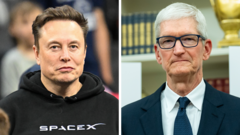
The headlines are breathless. The narrative is set. Elon Musk and Tim Cook are supposedly boarding a plane to Beijing as the high-powered vanguard of a new American trade era. The mainstream press wants you to believe this is a victory lap or a bold expansion play.
They are wrong.
This isn't a growth mission. It’s a funeral procession for the era of globalist dependency. If you think these CEOs are going to China to "unlock markets," you haven't been paying attention to the balance sheets or the supply chain telemetry of the last thirty-six months. This trip is about damage control, hostage negotiation for intellectual property, and the desperate management of a multi-billion dollar exit strategy that nobody wants to trigger too quickly.
The Consensus Is Lazy and Dangerous
The standard take suggests that having the titans of Tesla and Apple on a diplomatic roster signals a thaw in relations. The logic goes: Big Business loves China, Trump loves a deal, therefore the "Art of the Deal" meets the "Supply Chain Kings" to bring back the golden age of 2015.
It’s a fantasy.
The reality is that Cook and Musk are being dragged along because they are the most vulnerable targets of Chinese state leverage. For Apple, China represents nearly 20% of their total revenue and the vast majority of their assembly. For Tesla, the Shanghai Gigafactory is the heart of their production efficiency. They aren't going to China because they are in a position of strength; they are going because they are the biggest corporate "hostages" in the current geopolitical standoff.
Apple’s Supply Chain Is a Golden Cage
Tim Cook is a logistics genius. He built the most efficient machine in human history by tethering Apple’s soul to Chinese manufacturing. But that efficiency has become a liability. When you hear that Apple is "diversifying" to India and Vietnam, look at the actual numbers. Moving 10% of production over five years isn't a pivot; it’s a crawl.
Cook isn't on this trip to sell more iPhones to the Chinese middle class—a demographic that is increasingly switching to Huawei out of nationalistic pride and superior local software integration. He is there to plead for the status quo. He needs to ensure that the transition away from China—a transition that is now mandatory for US national security compliance—doesn't happen so fast that it breaks the company.
Imagine a scenario where a sudden regulatory shift in Beijing halts the export of specialized components for the next iteration of the iPhone. Apple’s market cap would evaporate overnight. This trip is an exercise in preventing a catastrophic decoupling. It’s not about finding "synergy"; it’s about begging for a slower divorce.
Musk’s Two-Front War
Elon Musk occupies a more complex position. He is the only Westerner who has been granted 100% ownership of a car plant in China without a local joint-venture partner. That wasn't a gift; it was a strategic move by Beijing to force local domestic players to innovate faster.
It worked.
BYD, Xiaomi, and Li Auto aren't just competing with Tesla; they are often out-innovating them in terms of "smart cabin" features and battery density. Musk’s presence on this trip is a desperate attempt to maintain the "favored nation" status he enjoyed during the previous decade. But the leverage has shifted. China no longer needs Tesla to teach them how to build EVs. They have the tech. They have the minerals. They have the scale.
Musk’s "contrarian" support of the current administration’s tariffs while simultaneously operating a massive plant in Shanghai is a tightrope walk over a volcano. He is there to ensure that his Chinese assets aren't seized or regulated into oblivion as the US ramps up its own protectionist barriers.
The Myth of the "Trillion Dollar Market"
For decades, the "China Story" was the ultimate bull case for any S&P 500 company. "If every person in China buys one of our widgets, we’re rich."
That era is dead.
China’s demographic collapse is no longer a "future problem"; it’s a present-day reality. The working-age population is shrinking. Consumer confidence is at historic lows due to the real estate crisis. Most importantly, the Chinese government has made it clear: they want "Dual Circulation." They want to be self-sufficient. They don't want your Apple services or your American software. They want the domestic equivalent.
CEOs who ignore this and continue to pitch "China growth" to their boards are committing professional malpractice. The real winners of the next decade won't be the companies that "conquer" China, but the ones that successfully extract themselves from it without going bankrupt in the process.
Why the White House Needs the "Optics"
The administration isn't bringing Cook and Musk because they value their business advice. They are bringing them as props.
By standing these CEOs next to a nationalist trade policy, the government signals to the American public that the "globalists" have been brought to heel. It forces these tech giants to choose a side in a very public way. If you are on the plane, you are part of the "America First" ecosystem, whether you like it or not.
This is a brutal form of corporate conscription. If Cook or Musk refuse to play ball, they risk being labeled as agents of a foreign power in the court of public opinion. If they do play ball, they risk retaliation from the CCP. It is a zero-sum game where the house—Washington—always wins the PR battle.
The Cost of the "Middle Ground"
Many analysts argue that a "balanced approach" is the only way forward. They suggest that these CEOs can act as bridge-builders.
I’ve seen companies blow millions on "bridge-building" only to find the bridge has been rigged with explosives on both ends. There is no middle ground in a cold war. You are either reshoring or you are being liquidated.
The downside of this contrarian view? It’s expensive. Building a factory in Arizona or Ohio is significantly more capital-intensive than building one in Shenzhen. The margins will shrink. The "just-in-time" supply chain will become a "just-in-case" supply chain. Investors who are used to the fat, 40% gross margins enabled by cheap Chinese labor are in for a rude awakening.
But the alternative is worse. The alternative is total asset loss when the geopolitical tension finally snaps.
The Real Question You Should Ask
Instead of asking, "What deals will they sign in Beijing?" you should be asking, "How much of their balance sheet is still trapped behind the Great Firewall?"
The savvy investor shouldn't look at the photo-ops of CEOs shaking hands with Chinese officials as a sign of progress. They should look at it as a sign of extreme fragility. If a company requires the President of the United States to fly their CEO across the world just to keep the lights on in their factories, that company is not "too big to fail." It’s too integrated to survive a transition.
Stop Watching the Handshake
Watch the divestment. Watch the "China Plus One" strategies that are quietly being accelerated behind the scenes. Watch the quiet patents being filed for manufacturing processes that don't rely on Chinese rare earth elements.
The CEOs on that plane aren't there to build a future. They are there to protect a legacy that is rapidly becoming obsolete. They are the last of the Mohicans in a world that has already decided that the era of the "Global CEO" is over.
The smart money isn't betting on the success of this trip. The smart money is betting on the companies that didn't need to be on the plane in the first place.
Get out of the "China Growth" mindset before the door slams shut for good.