The British press is clutching its collective pearls over China’s reaction to the potential nationalisation of British Steel. The media narrative is painfully predictable: Beijing is furious, trade relations are on the brink of collapse, and Westminster is playing a high-stakes game of geopolitical chess.
It is a comforting fantasy. It is also entirely wrong.
I have spent two decades analyzing global supply chains and heavy industry restructuring. I have watched governments throw billions of taxpayer money into the furnace of dying industrial assets just to save face before an election. Here is the uncomfortable truth nobody in London or Beijing wants to say out loud: China’s "outrage" is a carefully choreographed diplomatic performance, and British Steel’s nationalisation is not a bold move to secure domestic sovereignty—it is an expensive act of industrial cosplay.
The Myth of the Strategic Asset
Let us dismantle the foundational lie of this entire debate: that domestic steel production is a critical sovereign capability that the UK cannot afford to lose.
Politicians love to wrap steel mills in the national flag. They talk about "securing our infrastructure" and "national security." But this is 20th-century thinking applied to a 21st-century economy.
- The volume problem: British Steel’s output is a drop in the ocean of global production.
- The technology gap: The UK’s steel sector has lagged behind in the transition to electric arc furnaces (EAFs) and green hydrogen.
- The cost reality: Operating blast furnaces in a high-energy-cost jurisdiction like the UK is a financial suicide mission.
When Beijing "hits out" at the prospect of the UK government taking over these assets, they are not worried about losing market share. They are not trembling at the prospect of a revitalized British industrial giant.
They are laughing.
China’s own steel industry is facing massive overcapacity. They produce more steel in a single month than the UK does in years. For Chinese state-backed firms, holding onto foreign steel assets was never about long-term profitability; it was about diplomatic leverage and securing a footprint in European supply chains. By nationalising, the UK is not "taking back control." It is voluntarily absorbing a massive, loss-making liability and letting foreign investors off the hook.
Why Beijing's Anger is Pure Theatre
To understand why the outrage is fake, you have to look at the balance sheets.
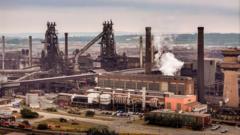
Jingye Group bought British Steel in 2020 for a modest £1.2 million. Since then, they have poured hundreds of millions into keeping the Scunthorpe site alive, repeatedly begging the British government for hundreds of millions more in taxpayer subsidies to fund the transition to greener technology.
Imagine you own a house that is structurally compromised, costs a fortune to heat, and requires constant cash injections to keep from collapsing. Now imagine the local council steps in, expresses deep concern, and offers to take the entire property off your hands—and take on all the future liabilities.
You would pop champagne.
But publicly, you would complain about the council's overreach to ensure you get the absolute best terms on your exit.
That is the game being played here. China’s official complaints about protectionism are a smokescreen. They get to exit a financial money pit, blame British government intervention for the failure, and posture as champions of free trade on the global stage. It is a masterclass in turning an industrial defeat into a diplomatic win.
The Fatal Flaw of Nationalisation
Proponents of nationalisation argue that bringing British Steel under state control will protect jobs and allow for a managed transition to green steel.
Let us look at how state-managed industrial transitions actually play out.
When a government nationalises an uncompetitive heavy industry asset, the incentives instantly warp.
- Economic decisions become political decisions. You cannot close an inefficient line because it will cost votes in a swing constituency.
- Capital allocation degrades. Instead of investing in high-yield R&D or modernizing the grid, capital is burned just to meet the payroll of an outdated plant.
- Innovation dies. State-owned enterprises do not innovate; they survive on the life support of treasury grants.
If the UK government takes full ownership of British Steel, they are not just buying the factories; they are buying the massive carbon liabilities and the staggering cost of decommissioning old coal-fired blast furnaces. We are talking about billions of pounds of public money.
I have seen private equity firms walk away from these deals because the math simply does not work. When the state steps in where private capital flees, it is rarely because the state has a superior vision. It is because the state is the only entity dumb enough to ignore the balance sheet.
What the UK Should Actually Do (But Won't)
If you want to secure the UK's industrial future, saving British Steel is the worst way to go about it. Here is the contrarian blueprint that no politician has the spine to implement:
1. Let the Blast Furnaces Die
The era of coal-fired primary steel production in the UK is over. Accept it. Trying to subsidize or nationalise these ancient assets is like subsidizing typewriter factories in the age of the microchip.
2. Pivot to High-Value Metallurgy
The UK should not try to compete on bulk steel volume. We will never beat China, India, or even the US on scale. Instead, focus entirely on advanced alloy development, aerospace-grade metals, and precision engineering. Let others produce the raw slabs; we should focus on the high-margin, high-tech applications.
3. Build a Circular Steel Economy
Instead of importing raw iron ore and burning coal to refine it, the UK should focus entirely on recycling its own massive scrap steel reserves using electric arc furnaces powered by offshore wind. This is a genuinely sustainable, economically viable model that does not require endless state bailouts.
Stop Romanticizing Industrial Decay
The media’s obsession with China’s reaction to British Steel is a distraction from the real tragedy: the UK’s inability to let go of the past.
Nationalisation is not a strategy. It is an expensive monument to nostalgia. Every pound spent keeping an uncompetitive blast furnace alive is a pound stolen from the industries of the future—from clean energy grids, from advanced materials research, and from genuine infrastructure modernization.
Beijing knows this. They are more than happy to let Britain waste its capital on 20th-century relics while they focus on dominating the global supply chains for lithium, rare earth elements, and advanced semiconductors.
Stop worrying about China’s feelings. Start worrying about Britain’s economic sanity. Let the old steel industry go, face the transition head-on, and stop pretending that a taxpayer-funded bailout of a dying plant is a victory for sovereignty.