Foreign policy circles are gripped by a singular, lazy consensus. They look at Beijing’s massive spending on global media networks, Confucius Institutes, and international film festivals and whisper about a looming cultural hegemony. The conventional wisdom states that for China to truly dominate the global stage, it must master soft power. It must win hearts and minds.
This is a fundamental misunderstanding of how global influence operates.
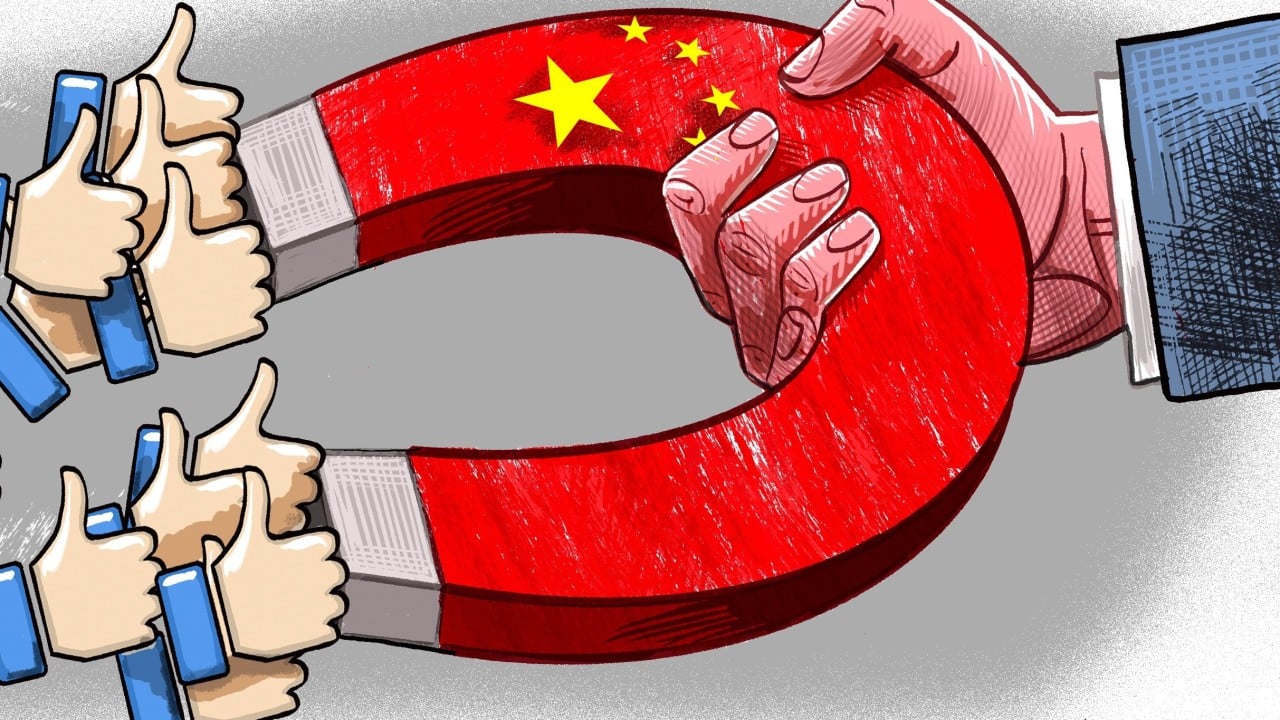
The pursuit of traditional soft power is a strategic dead end for Beijing. The trillions of yuan funneled into projecting a benign, attractive cultural image are not just failing; they are actively counterproductive. While Western analysts wring their hands over TikTok algorithms and state-backed cinematic epics, they miss the actual mechanics of modern geopolitical leverage.
True authority in the twenty-first century does not stem from being liked. It stems from being indispensable.
The Flawed Premise of Cultural Attraction
Joseph Nye coined the term "soft power" in the late 1980s, arguing that true power lies in the ability to alter behavior through attraction rather than coercion or payment. It was a theory built for a unipolar world, viewed through the lens of American cultural dominance. It assumes that because the world eats McDonald's and watches Hollywood movies, the world will naturally align with Washington's foreign policy objectives.
It was wrong then, and it is useless now.
I have spent two decades analyzing trade flows and state-backed investment strategies across Southeast Asia and Sub-Saharan Africa. Do you know what regional leaders discuss behind closed doors? It is never the narrative depth of Chinese television dramas or the philosophical appeal of traditional calligraphic arts.
They talk about deep-water ports. They talk about high-speed rail lines. They talk about dual-use infrastructure that keeps their regimes stable and their supply chains moving.
Consider the data. Over the past decade, Beijing spent billions establishing hundreds of Confucius Institutes worldwide to teach language and culture. The return on investment? Near-universal skepticism across Europe and North America, resulting in mass closures. Meanwhile, the Belt and Road Initiative, purely transactional and unapologetically hard-nosed, secured critical logistics nodes from Piraeus to Hambantota.
The lesson is stark: Nations do not sign historic trade pacts because they appreciate your poetry. They sign them because you control the switches.
The Coercion Paradox: Sharp Power Over Soft Appeal
The term "sharp power" is often used to describe how authoritarian regimes censor speech or manipulate information abroad. Let us strip away the academic jargon. It is not about persuasion; it is about pressure. And it works precisely because it abandons the pretense of trying to be loved.
Look at how international corporate behavior actually changes.
When a global sports franchise or a Western luxury brand steps out of line regarding Beijing’s territorial claims, the response from the mainland is swift, economic, and total. The brand does not apologize because it suddenly finds Chinese cultural arguments compelling. It apologizes because it cannot afford to lose access to 1.4 billion consumers.
This is not soft power. This is the precise application of economic leverage. It is brutal, transactional, and highly effective.
+------------------------------------+------------------------------------+
| The Soft Power Fantasy             | The Sharp Economic Reality         |
+------------------------------------+------------------------------------+
| Building museums to change minds   | Controlling the critical mineral   |
|                                    | processing supply chain            |
+------------------------------------+------------------------------------+
| Subsidizing international art     | Threatening market access to force |
| house cinema                       | immediate corporate compliance     |
+------------------------------------+------------------------------------+
| Hosting global youth forums        | Financing the fiber-optic cables   |
|                                    | that power a continent's internet  |
+------------------------------------+------------------------------------+
The fixation on cultural appeal overlooks the fundamental nature of the Chinese state structure. A centralized, top-down governance model is structurally incapable of producing the spontaneous, chaotic, and rebellious cultural exports that define Western soft power. You cannot manufacture a global counter-culture phenomenon like Hollywood or K-Pop via a committee directive from the Ministry of Culture and Tourism.
Every attempt to sanitize the message kills the very authenticity required for cultural adoption.
The Risk of Buying Your Own Narrative
There is a distinct danger in this contrarian approach, and it is one that Beijing is currently flirting with: strategic overreach.
When you rely entirely on economic dependency and structural leverage, you build a foundation of resentment. If the economic engine slows down, if growth targets are missed, or if domestic debt crises force a pullback on foreign lending, the leverage evaporates. Without a baseline of genuine goodwill, the blowback is immediate and severe.
We are seeing the early tremors of this in nations burdened by unsustainable debt portfolios. When a port is seized due to a defaulted loan, the illusion of partnership vanishes. It reveals the bare gears of empire.
But replacing that hard leverage with more state-funded media broadcasts is a cosmetic fix for a structural problem. A country does not fix a broken balance sheet by exporting more historical dramas.
Dismantling the Public Diplomacy Industrial Complex
If you look at the questions frequently raised by defense analysts and international observers, you notice a recurring theme: "How can China improve its global image?"
The premise itself is flawed. The question assumes that improving a global image is a prerequisite for achieving superpower status. It ignores the history of how empires actually rise. Great powers are rarely loved during their ascendancy; they are feared, envied, and ultimately accommodated.
Think about the actual mechanics of global supply chains.
- Ninety percent of the world's advanced semiconductor packaging relies on regional ecosystems heavily influenced by cross-strait stability.
- More than eighty percent of global electric vehicle battery components are processed within Chinese borders.
- The rare earth supply chain is so heavily consolidated that a single export restriction can halt Western aerospace manufacturing lines.
If a nation controls the inputs required for the next industrial revolution, global opinion polls become irrelevant noise. A European manufacturing hub will continue to import critical components whether their population views the exporting nation favorably or not. Survival dictates procurement.
Stop Funding the Charm Offensive
For corporate strategists and foreign policymakers watching this play out, the directive is clear: stop analyzing cultural output and start mapping dependencies.
If you are a multinational CEO trying to navigate this landscape, ignoring the state-backed cultural initiatives frees up resources to focus on the only metric that matters: structural decoupling or deep integration. Stop trying to read the tea leaves of cultural diplomacy. Focus on the raw geography of the supply chain.
The global influence game is not a popularity contest decided by a panel of international jurors. It is a cold, calculated inventory of who owns the infrastructure, who commands the choke points, and who controls the flow of capital. Everything else is performance art.