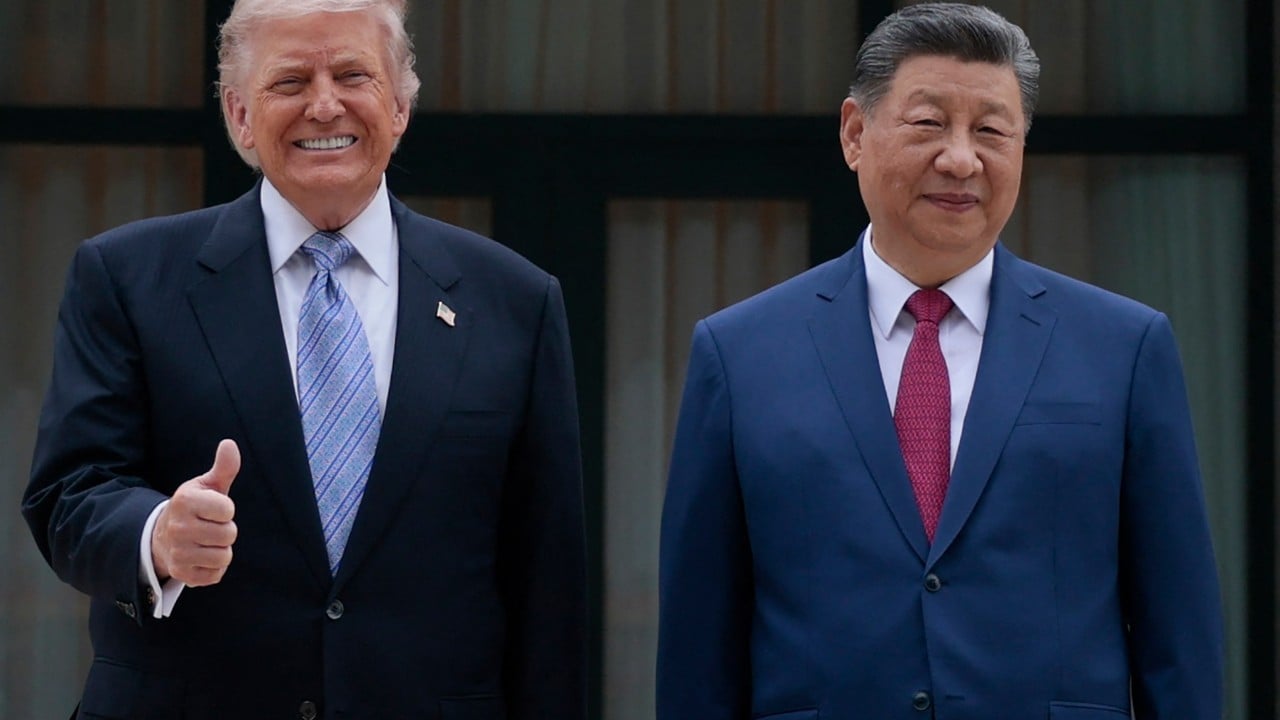
Trade negotiations rarely run on goodwill alone, but the upcoming diplomatic summit in Washington carries a distinct flavor of corporate pragmatism. As President Xi Jinping prepares for his scheduled meeting with President Donald Trump on September 24, backchannel discussions point to an intriguing addition to the traveler manifest. Beijing is actively weighing whether to bring a high-powered delegation of top Chinese corporate executives along for the ride.
This move mirrors the optics from earlier in the year. When Trump visited Beijing, he traveled surrounded by corporate heavyweights like the chief executives of Tesla, Apple, Nvidia, and Boeing. Now, Chinese officials are eyeing a reciprocal setup. It is a strategic effort to ground political talks in commercial reality, shifting the narrative away from pure confrontation and toward managed competition. For an alternative look, check out: this related article.
At the heart of these preparations is the expected renewal of the bilateral trade truce. Originally struck during the Busan summit and reinforced by subsequent diplomatic visits, the existing framework has kept destructive tariff spikes at bay. Both Washington and Beijing recognize the immediate economic dangers of letting the agreement lapse. An extension is virtually guaranteed, but the details remain fiercely contested behind closed doors.
The Tug-of-War Over the Timeline
Agreement on an extension doesn't mean consensus on everything. Washington prefers a straightforward, one-year renewal that keeps ongoing pressure points intact. Beijing wants something much more durable. Similar reporting on the subject has been provided by Financial Times.
Chinese negotiators are pushing to lock the current terms in place for the remainder of Trump’s presidential term. From Beijing's perspective, the current arrangement provides a reliable baseline for manufacturing stability and export predictability. The Busan framework successfully lowered select US tariffs on Chinese goods, paused additional restrictions on Chinese corporate entities, and temporarily froze aggressive rare-earth export controls.
Washington views these concessions differently. The White House prefers maintaining short-term leverage, allowing trade officials to revisit terms annually based on compliance with separate agreements regarding agricultural purchases and supply chain adjustments.
Why Corporate Executives Change the Equation
Bringing a delegation of business leaders to Washington isn't just about photo opportunities. It directly targets the stalled mechanisms of the bilateral investment framework.
During previous high-level talks, both governments agreed to establish a Board of Trade and a Board of Investment to streamline commercial exchanges and evaluate reciprocal tariff cuts on non-sensitive goods capped at thirty billion dollars per side. Progress on those boards hit roadblocks as regulatory friction mounted.
If major Chinese tech, industrial, and investment executives touch down in Washington alongside Xi, it signals a direct push to revive those commercial committees. Companies eager to deploy capital in American markets want a seat at the table to bypass bureaucratic gridlock. It is a tangible way to translate high-level detente into corporate execution.
Persistent Frictions Beneath the Surface
Economic pragmatism exists alongside steady geopolitical friction. Even as trade negotiators finalize the text for the upcoming summit, structural risks haven't vanished.
Regulatory bodies in Washington continue updating restricted entity lists and sanction frameworks that target specific domestic sectors in China. Retaliatory measures, from technological export curbs to restrictions on corporate operations, remain regular tools for both governments.
This duality defines modern economic diplomacy. Governments fight aggressively over critical technology and supply chain dominance while simultaneously carving out fenced-in zones for stable trade.
Expect the upcoming summit to deliver the anticipated truce extension, keeping the worst-case tariff scenarios sidelined for now. Whether the business delegation becomes a permanent fixture of these presidential visits depends entirely on how much room both capitals are willing to give commercial leaders to operate outside the shadow of state security. Keep an eye on final pre-summit announcements from the Ministry of Commerce for confirmation on who actually boards the flight to Washington.