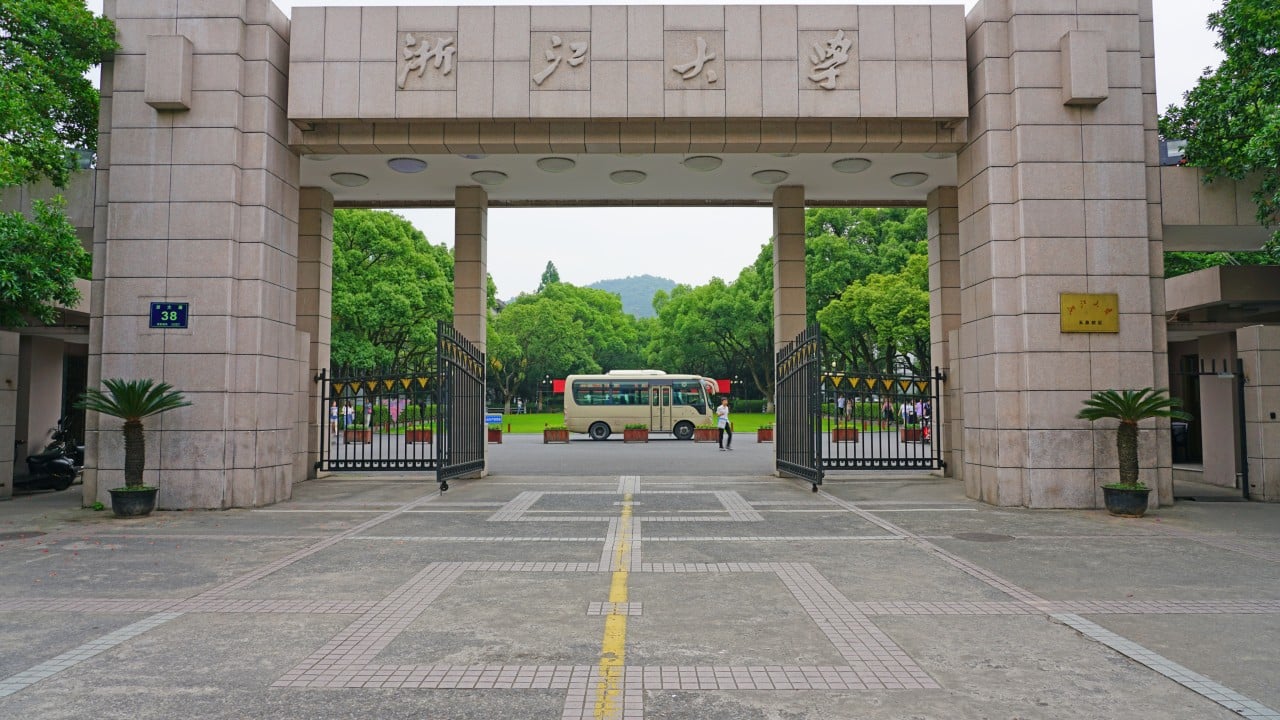
Semiconductor talent migration follows power, not prestige. When Chen Ye, a recognized authority in advanced microelectronics and high-density chip architecture, packed his office to leave foreign laboratories behind for Zhejiang University, the western academic complex treated it as an isolated recruitment coup. They were wrong. This transition exposes a fundamental structural shift in global research dominance. Zhejiang University did not merely hire a prominent academic; they secured a vital node in an indigenous supply chain designed to bypass export restrictions entirely.
Academic rankings are shifting beneath our feet. Metrics that once favored legacy Ivy League institutions now reward sheer output volume, citation velocity, and capital intensity. Zhejiang University recently climbed above Harvard in prominent global chemistry and engineering index rankings, a milestone that triggered polite bewilderment in Cambridge and quiet celebration in Hangzhou. But raw output tables miss the operational reality. Zhejiang operates less like a traditional university and more like a high-speed foundry incubator, backed by provincial capital and direct industrial pipelines.
The Anatomy of the Brain Drain Reversal
Decades of academic gravitational pull drew top-tier Chinese engineering minds toward American and European institutions. Visa pathways, well-funded labs, and open publication networks created a predictable funnel. Chen represents the tail end of that era. Having spent years refining ultra-dense microchip packaging concepts that defy current thermal limits, his choice to return home highlights a calculation familiar to modern principal investigators. Western universities offer historic prestige, but domestic state laboratories offer massive funding acceleration, immediate access to commercial manufacturing partners, and freedom from tightening geopolitical scrutiny.
Look at the mechanics of contemporary microelectronics research. Silicon scaling hits wall after wall. Moore's Law is less of a rule now and more of a ghost story we tell ourselves to justify billion-dollar capital expenditures. Progress relies on heterogeneous integration, chiplets, and advanced packaging techniques that stack circuits vertically rather than etching them denser on a flat wafer. Chen specializes in these exact thermal and electrical routing bottlenecks. When a researcher of this caliber moves, they bring an entire ecosystem of graduate students, postdocs, and proprietary simulation models with them.
The western press frames these moves as state coercion or nationalist recruitment drives. That narrative misses the commercial incentives. Chinese technology firms face severe hardware embargoes on extreme ultraviolet lithography equipment. To compensate for older manufacturing nodes, domestic labs must invent radical architectural workarounds. They need brilliance, and they pay for it with unconstrained checkbooks. Zhejiang University provided Chen with an experimental playground that few western institutions can match under current budget constraints.
Inside the Hangzhou Research Factory
Zhejiang University sits at the epicenter of China's private tech wealth and manufacturing might. Hangzhou is home to Alibaba and an aggressive network of specialized hardware startups. The university functions as a bridge between fundamental physics and commercial silicon fabrication.
- Direct Industrial Pipelines: Research findings transition from lab benches to pilot production lines within months, bypassing traditional bureaucratic tech-transfer offices.
- Capital Density: Provincial and municipal grants dwarf typical American National Science Foundation awards for targeted hardware projects.
- Supply Chain Proximity: Access to domestic chemical suppliers, substrate manufacturers, and testing facilities removes months of logistical friction.
Western observers often assume that state-directed research lacks creativity. History suggests otherwise. The Manhattan Project and the Apollo program proved that concentrated capital and national urgency can compress decades of basic science into years. By treating semiconductor engineering as an existential priority, institutions like Zhejiang University cultivate an environment of hyper-focused urgency. Chen is not teaching introductory logic gates. He is leading a strike team tasked with rewriting the physical limits of chip performance without western tools.
The Global Repercussions of Isolated Ecosystems
Balkanization of the semiconductor industry accelerates every time a visa is denied or a lab is scrutinized. We are witnessing the birth of two parallel technological tracks. On one side, legacy alliances attempt to maintain gatekeeping control over advanced lithography. On the other side, domestic coalitions are forced to innovate past the roadblocks, creating alternative IP portfolios that will eventually compete globally.
When talent stops moving freely across borders, efficiency drops worldwide. Redundancy replaces cooperation. Yet, for nations determined to secure their digital infrastructure, redundancy is a price worth paying. Chen’s relocation to Zhejiang University signals that the domestic talent pipeline has matured to the point where returning scientists no longer sacrifice their research ambitions. They find state-of-the-art facilities waiting for them, paired with an institutional will that treats microchip engineering as national destiny.
The implications extend far beyond university league tables. Every professor who crosses the Pacific back to a Chinese lab brings tacit knowledge that cannot be captured in a patent application. They bring intuition, troubleshooting methodologies, and the ability to train the next thousand engineers locally. Harvard can keep its endowment and its historic library stacks. The real engineering of the next decade is happening in places like Hangzhou, where the money is loud, the labs are new, and the incentives align perfectly with survival.