The Bab el-Mandeb Strait measures just eighteen miles across at its narrowest point. That is a forty-minute drive on a clear highway. Yet across this sliver of water—the "Gate of Tears"—flows nearly twelve percent of all global seaborne trade.
To understand what happens when a rebel group threatens to seal off a geographic artery, do not look first at cabinet meetings or naval headquarters. Look instead at the navigation deck of a 200,000-ton container ship idling off the coast of East Africa, where a captain weighs the price of fuel against the price of panic.
When Yemen’s Houthi movement declared a maritime blockade against commercial vessels connected to Saudi Arabia and international shipping lanes, the pronouncement was delivered in political rhetoric. The impact, however, was immediately mechanical.
Steel hulls halted. Maritime insurance underwriters recalculated risk algorithms in real-time. Supply chains thousands of miles away began to fray.
Steel, Salt, and Sabotage
Consider a hypothetical commercial vessel named the Marlies. She carries three thousand shipping containers loaded with everything from industrial components to supermarket electronics. Under normal conditions, her route through the Red Sea and up through the Suez Canal is an exercise in precise, predictable logistics.
Then comes the warning.
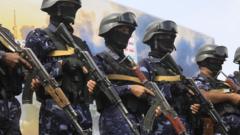
A radio message crackles through the bridge. Drones have been spotted. Anti-ship ballistic missiles—weapons once restricted to state militaries—are now in the hands of a insurgent force positioned along the desert coastlines.
The choice facing the ship owner is stark. Risk the gauntlet, or turn around.
Turning around means taking the long way: circum-navigating the entire continent of Africa by routing around the Cape of Good Hope.
That single decision adds ten to fourteen days to the journey. It consumes hundreds of metric tons of additional heavy fuel oil. It burns through operational budgets and delays factory assembly lines in Rotterdam, Hamburg, and Newark.
Multiplying that single vessel’s detour by thousands of ships reveals how local asymmetric warfare transforms into global economic friction.
The Anatomy of an Asymmetric Threat
How does a regional militia hold international commerce hostage? The answer lies in the shifting nature of modern military hardware.
For decades, controlling the seas required a blue-water navy: aircraft carriers, guided-missile cruisers, and nuclear submarines. A nation needed billions of dollars to project power over ocean trade routes.
The Houthis upended that equation.
Using low-cost loitering munitions, sea drones, and imported missile tech, a relatively small force can threaten billion-dollar fleets from land-based launchers hidden in coastal terrain. They do not need to sink every ship. They only need to demonstrate that any ship can be hit.
Risk is a contagious dynamic in global shipping. When war risk premiums jump by several hundred percent overnight, the economic viability of a transit route evaporates long before a missile hits a hull. Insurance companies, not naval commanders, often decide when a sea lane is effectively closed.
The Human Cost Behind the Statistics
Disruptions to global trade are usually discussed using dry metrics: spot freight rates, twenty-foot equivalent units (TEUs), and crude oil benchmark prices.
These numbers conceal the human reality aboard those vessels.
Seafarers, often hailing from developing nations, sign contracts to spend six to nine months at sea. They are not combatants. They carry no weapons. Yet suddenly, their daily routine shifts from monitoring fuel purifiers and maintaining engine manifolds to scanning the horizon for incoming suicide drones.
The stress on these crews is invisible but acute. Sleeping in steel cabins while transiting high-risk waters, knowing that an anti-ship missile carries a shaped warhead designed to penetrate heavy armor, changes the psychological reality of maritime labor.
When ports refuse to allow crew changes due to rerouted schedules, these men and women remain stranded at sea, collateral damage in a conflict they have no stake in.
The Domino Effect on Land
The ocean is not isolated from the mainland. Every delay at sea cascades into daily life ashore.
When a container ship arrives two weeks late to a European port, the impact ripples inward:
- Trucks arrive at empty loading docks, wasting driver hours and logistics capacity.
- Manufacturing plants slow production lines while waiting for delayed microchips or specialized fasteners.
- Retailers face inventory shortages, driving up spot prices for consumer goods.
Energy markets feel the shockwave fastest. Saudi Arabia and neighboring Gulf nations rely on unhindered access to maritime corridors to export crude oil and liquefied natural gas. When shipping lanes become hazardous, energy buyers hedge their positions, driving up prices at the fuel pump half a world away.
This is the true force of a maritime embargo. It does not require a physical wall built across the sea. It relies on the fragile nature of just-in-time logistics, where even a slight delay creates systemic failure throughout the entire chain.
Navigating the Uncharted Ocean
Navies from major powers have deployed destroyers and carrier strike groups to escort merchant vessels and intercept incoming threats. Yet defensive operations carry an inherent math problem: firing a two-million-dollar interceptor missile to destroy a twenty-thousand-dollar drone is not financially sustainable over time.
The Red Sea crisis proves that geographic chokepoints remain the Achilles' heel of the global economy. As long as trade relies on narrow waterways bounded by unstable shores, the threat of maritime blockades will linger over global commerce.
The water in the Bab el-Mandeb remains warm and blue, looking no different today than it did centuries ago when wooden dhows rode the monsoon winds. But below the horizon, the math of global trade has changed forever, written in the wake of cargo ships taking the long way home.