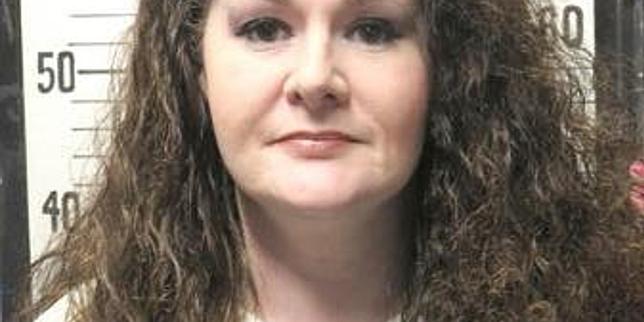
When the state tries to kill someone and fails, the machinery of capital punishment doesn't just look cruel—it looks completely broken. On September 30, 2026, Tennessee attempted to execute Christa Pike, the only woman on the state's death row. Instead of a swift execution, the procedure dissolved into a multi-hour medical disaster. Pike survived the botched lethal injection, waking up days later in a hospital on a ventilator. She was riddled with physical pain, chronic respiratory trouble, and severe trauma.
This catastrophic failure forced an immediate pause on executions in Tennessee and reignited a fierce legal and ethical brawl. But beyond the headlines, the incident exposes deep systemic cracks in how states carry out capital punishment. When execution teams struggle for over an hour, puncture veins with ten needles, and leave an inmate conscious while drugs are pushed, it raises an uncomfortable reality. Capital punishment is increasingly reliant on amateur execution teams using clandestine pharmaceutical supply chains.
The Anatomy of a Botched Execution
To understand why Christa Pike's execution went wrong, you have to look at the chaotic timeline inside the chamber at Riverbend Maximum Security Institution. Witnesses watched the process drag on far past schedule. Behind closed curtains, execution team members wrestled to secure intravenous access. According to legal filings from her defense team, staff used roughly ten needles across multiple sites on both of her arms.
Medical professionals watching from the outside were quick to call out what they saw. Experts noted that forcing drugs through compromised or ruptured veins turns a lethal injection protocol into a painful medical charade. When pentobarbital was finally administered, Pike remained conscious, blinked, smiled, kicked off her sheets, and could be heard audibly snoring while trapped on the gurney.
The state's protocol demanded a second dose, but that only prolonged an agonizing ordeal that ultimately required emergency court interventions and an emergency transfer to an off-site hospital. Governor Bill Lee responded by halting all remaining executions for the year and ordering a third-party independent review. Yet the state's Department of Correction faced immediate fallout, including the resignation of its commissioner.
The Legal and Judicial Deadlock
The aftermath left courts scrambling to figure out what happens next to an inmate who survived her own execution. Christa Pike was originally sentenced to death for the 1995 murder of her 19-year-old classmate, Colleen Slemmer. Decades later, her botched execution has created an unprecedented legal vacuum.
Her lawyers petitioned the courts to preserve all evidence, including syringes, intravenous equipment, and leftover pentobarbital. But the legal battle quickly turned defensive. Tennessee state attorneys moved aggressively to block Pike's legal team from testing or inspecting the execution drugs. The state argued that revealing details about the drug's composition could expose their anonymous supplier, potentially cutting off future access to lethal chemicals.
This secrecy highlights a core paradox of modern capital punishment. States want the absolute power to execute prisoners, but they rely on secretive, unregulated, underground pharmaceutical networks to get the drugs. When those drugs fail, transparency is stonewalled to protect the supply chain. Meanwhile, public officials are divided on the path forward. Incoming leadership has floated exploring alternative methods like the electric chair, while defense attorneys argue that subjecting a person to a botched execution constitutes cruel and unusual punishment, demanding her sentence be commuted to life in prison.
Why the Impossible Debate Isn't Going Away
The public reaction to Pike's survival is starkly polarized. Polls indicate that a significant portion of the public supports a second attempt at executing her, driven by the brutal nature of her original crime. On the other side, abolitionists and legal experts point to the execution chamber as proof that the state cannot manage capital punishment safely, humanely, or competently.
When medical professionals refuse to participate due to ethical oaths, states are forced to rely on undertrained personnel. The result is a repeating cycle of technical failures, legal scrambling, and endless appeals.
Christa Pike remains behind bars, dealing with the physical and psychological fallout of a night that was supposed to end her life. Whether the courts allow Tennessee to schedule a second execution attempt or force a commutation, the broader question remains entirely unresolved. Capital punishment is supposed to offer clinical finality. Instead, cases like this prove that the system is entirely dependent on flawed protocols, hidden vendors, and a process that frequently breaks down when faced with human reality.