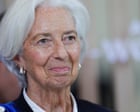
European Central Bank President Christine Lagarde’s decision to step down nine months before her non-renewable eight-year term expires in October 2027 is not a routine retirement. It is a calculated political maneuver designed to insulate Frankfurt’s top job from the rising tide of European populism and the volatile French presidential election calendar. By vacating the seat early, Lagarde ensures that the current centrist coalition in Brussels, Paris, and Berlin—rather than a potentially nationalist successor government in France—controls who takes over the eurozone’s monetary steering wheel.
Surface-level market commentary tends to treat central bank transitions as technocratic formalities. Veteran observers of European institutional politics know better. In the eurozone, monetary policy is never purely about inflation targets, yield curves, or liquidity facilities; it is the ultimate arena for geopolitical horse-trading among member states.
The French Electoral Trap
To understand the timing of Lagarde’s early exit, look directly at the political calendar in Paris. Under standard European Union treaties, the President of the European Central Bank serves a single, non-renewable eight-year term. Lagarde took office on November 1, 2019, meaning her mandate was legally slated to run through October 31, 2027.
That original end date placed the succession battle right in the middle of a political minefield. France is scheduled to hold its next presidential election in the spring of 2027. Emmanuel Macron, barred by constitutional term limits from seeking a third consecutive presidency, will leave the Élysée Palace months before Lagarde’s scheduled departure.
For decades, an unwritten rule of Brussels power-sharing has dictated that the ECB presidency rotates among the bloc’s largest economies, with France and Germany exercising informal veto power over any candidate. If Marine Le Pen’s National Rally or another populist, Euroskeptic faction captures the French presidency in early 2027, the entire architecture of European financial governance faces an immediate crisis. A nationalist government in Paris could weaponize its seat on the European Council to block mainstream candidates, demand looser fiscal oversight, or push for a central bank chief willing to subordinate price stability to domestic political spending.
By stepping aside nine months early—pushing the transition window back into early 2027 or late 2026—Lagarde effectively deprives a future populist French administration of that veto. It allows the outgoing French establishment, working alongside German Chancellor Friedrich Merz and the current European Commission, to lock in a successor before ballots are cast in Paris.
This is not without precedent in Brussels. European leaders frequently manipulate institutional calendars to outflank domestic electoral threats. When Jean-Claude Trichet succeeded Wim Duisenberg at the ECB in 2003, the transition was similarly governed by backroom political agreements rather than strict adherence to original mandate dates. Lagarde, a former French finance minister and managing director of the International Monetary Fund, is a consummate political operator first and a central banker second. She understands that timing is the only real currency in European diplomacy.
The Structural Flaws of Lagarde’s Tenure
Beyond the political calculus, Lagarde’s early departure closes the book on one of the most turbulent and controversial eras in the history of the single currency. Her critics inside the Bundesbank and across northern European financial circles will argue privately that her exit is long overdue.
When Lagarde arrived in Frankfurt in 2019, she lacked a formal background in monetary economics. Her supporters pitched this as an asset. After Mario Draghi’s technocratic dominance, the ECB supposedly needed a consensus-builder who could bridge the widening chasm between northern "hawks" (who prioritize strict inflation control and fiscal discipline) and southern "doves" (who favor accommodative monetary policy to support heavily indebted economies).
In practice, that consensus-building often looked like drift.
Consider the ECB’s response to the post-pandemic inflation surge. Throughout 2021 and early 2022, Lagarde and the Governing Council clung stubbornly to the narrative that rising consumer prices were "transitory," driven solely by temporary supply chain bottlenecks. While the Federal Reserve began pivoting toward aggressive tightening, Frankfurt hesitated. By the time the ECB finally raised interest rates in July 2022—its first hike in over a decade—eurozone inflation was already spiraling toward double digits, peaking at 10.6% in October of that year.
The subsequent tightening cycle was the fastest in the institution’s history, pushing the deposit facility rate from negative territory up to 4%. That abrupt reversal inflicted severe collateral damage across the bloc:
- Industrial Stagnation: High borrowing costs compounded the energy shock triggered by Russia’s invasion of Ukraine, pushing Germany’s manufacturing-heavy economy into prolonged stagnation.
- Commercial Real Estate Distress: European property markets, addicted to a decade of zero and negative interest rates, suffered sharp valuation corrections and refinancing crunches.
- Fragmentation Risks: Rapid rate hikes threatened to blow out sovereign bond spreads between Germany and heavily indebted nations like Italy, forcing the ECB to invent yet another emergency bond-buying mechanism—the Transmission Protection Instrument (TPI)—to prevent a repeat of the 2012 sovereign debt crisis.
Lagarde’s defenders point out that she successfully navigated the existential threat of the COVID-19 lockdowns via the €1.85 trillion Pandemic Emergency Purchase Programme (PEPP), keeping sovereign borrowing costs low when governments had to shut down their economies. That achievement is real. Yet it also deepened the central bank’s entanglement with national fiscal policies, blurring the line between monetary stability and sovereign debt monetization.
Mission Creep in Frankfurt
Under Lagarde, the ECB aggressively expanded its mandate beyond its primary treaty obligation of maintaining price stability. This institutional overreach alienated conservative economists and created deep internal friction within the Governing Council.
During her 2021 strategy review, Lagarde championed the integration of climate change considerations into the ECB’s monetary policy operations. The bank began tilting its corporate bond purchases toward companies with better climate scores and adjusting its collateral frameworks to penalize carbon-intensive assets.
To progressive policymakers in Brussels, this was forward-thinking leadership. To traditional central bankers, it was a dangerous violation of market neutrality. Central banks are unelected technocratic bodies granted independence precisely because their mandate is narrow and clearly defined. When unelected monetary officials begin allocating capital based on environmental or social criteria, they step directly into the realm of elected parliaments. Every step a central bank takes into political territory invites political retaliation.
Simultaneously, Lagarde pushed hard for the digital euro, a central bank digital currency (CBDC) designed to counter the dominance of private US payment networks like Visa and Mastercard, as well as foreign stablecoins. While framed as a vital step toward European strategic autonomy, the project has faced fierce pushback from commercial banks, privacy advocates, and lawmakers who question whether a state-backed digital wallet solves any genuine consumer problem or merely threatens financial stability by encouraging deposit flight during crises.
The Succession Battlefield
Vacating the presidency early triggers an immediate, high-stakes scramble among Europe’s power brokers. Replacing the head of the world’s second-most-important central bank is never a meritocratic search; it is a geopolitical balancing act involving nationality, gender, ideological alignment, and institutional horse-trading.
Several factions are already positioning their preferred candidates, and the battle lines are drawn squarely between northern monetary orthodoxy and southern flexibility.
| Candidate | Nationality | Current / Recent Role | Ideological Profile | Key Political Hurdle |
|---|---|---|---|---|
| Joachim Nagel | Germany | Bundesbank President | Hawkish; strict inflation focus, skeptical of fiscal dominance. | Germany has never held the ECB presidency, which works in his favor, though southern states fear excessive austerity. |
| Klaas Knot | Netherlands | Former De Nederlandsche Bank President | Pragmatic hawk; respected consensus builder across factions. | Dutch officials have historically held top EU finance posts, raising regional balance concerns. |
| Pablo Hernández de Cos | Spain | Former Bank of Spain Governor | Centrist dove; strong academic credentials, technically sharp. | Spain already holds the ECB Vice Presidency (Luis de Guindos), making a back-to-back Spanish top official unlikely. |
| François Villeroy de Galhau | France | Bank of France Governor | Moderate centrist; fluent in German, deeply connected in Frankfurt. | Replacing a French president with another French national violates Brussels’ unwritten rotation rules. |
The central tension revolves around Germany. Despite being Europe’s largest economy and the primary financial anchor of the eurozone, a German has never served as President of the European Central Bank. Wim Duisenberg was Dutch, Jean-Claude Trichet was French, Mario Draghi was Italian, and Christine Lagarde is French.
Berlin’s political establishment has long viewed this omission as an insult, especially given that the ECB was explicitly modeled on the German Bundesbank and headquartered in Frankfurt to reassure skeptical German voters when they gave up the Deutsche Mark. In 2019, Berlin sacrificed its claim to the ECB presidency so that Ursula von der Leyen could secure the presidency of the European Commission.
With Lagarde stepping down early, German Chancellor Friedrich Merz faces intense domestic pressure to finally claim the Frankfurt throne for a German candidate like Joachim Nagel. However, installing a traditional Bundesbank hawk at the helm of the ECB carries enormous risk for heavily indebted eurozone members. France’s own public debt has surged past 110% of GDP, and its chronic budget deficits have already drawn reprimands from Brussels and credit rating downgrades. Paris needs an ECB president who understands the fragility of sovereign debt markets, not an ideological purist eager to shrink the central bank’s balance sheet at all costs.
What an Early Exit Means for Markets and the Euro
Financial markets hate uncertainty, yet investors have largely priced in the reality that the ECB’s era of experimental monetary policy is drawing to a close. Regardless of who replaces Lagarde, the incoming president will inherit a fundamentally different macroeconomic environment than the one that defined the 2010s.
For more than a decade after the global financial crisis, the ECB’s primary challenge was fighting deflation and weak growth. That world is gone. Structural shifts—including Europe’s aging demographics, the massive capital expenditure required for defense rearmament, supply chain reshoring, and the green energy transition—create persistent inflationary pressures.
The next ECB chief will not have the luxury of keeping interest rates at zero while buying trillions of euros in government bonds. Instead, they will face three immediate, unforgiving realities:
- Quantitative Tightening Friction: The ECB is still actively unwinding the massive bond portfolios accumulated during the Draghi and Lagarde eras. Allowing those bonds to roll off the balance sheet forces private markets to absorb unprecedented volumes of European sovereign debt. If bond yields spike in Paris or Rome, the new president will immediately be tested on whether they are willing to deploy emergency bond-buying tools—or let markets discipline reckless governments.
- Transatlantic Divergence: With trade tensions flaring and US fiscal deficits running high, the Federal Reserve’s interest rate path may diverge sharply from Europe’s sluggish growth trajectory. If the ECB cuts rates aggressively to revive stagnant European industry while the Fed holds steady, the euro will weaken against the dollar, importing inflation through higher energy and commodity costs.
- Political Interference: Central bank independence is eroding globally. Across Europe, populist parties on both the left and the right openly question why unelected central bankers should dictate borrowing costs while national governments struggle to fund healthcare, pensions, and defense. Lagarde’s successor will spend far more time defending the institution’s legitimacy in national parliaments than she ever did.
The End of the Political Central Banker
Christine Lagarde’s early departure marks a quiet admission that the model of the overtly political central banker has reached its limit. Brought in to manage the politics of the eurozone rather than its mechanics, she leaves behind an institution with a bloated balance sheet, a blurred mandate, and deeply divided internal governance.
Her final act—timing her exit to outmaneuver the French electoral calendar—is entirely consistent with her career. It is a deft piece of institutional statecraft designed to protect the European project from democratic disruption. Yet no amount of calendar manipulation in Frankfurt can solve the eurozone’s underlying contradiction: a single currency shared by nations with vastly different economic competitiveness, demographic trajectories, and fiscal discipline. Whoever takes the chair nine months early will quickly discover that changing the timing of the transition does nothing to fix the structural fault lines beneath the currency itself.