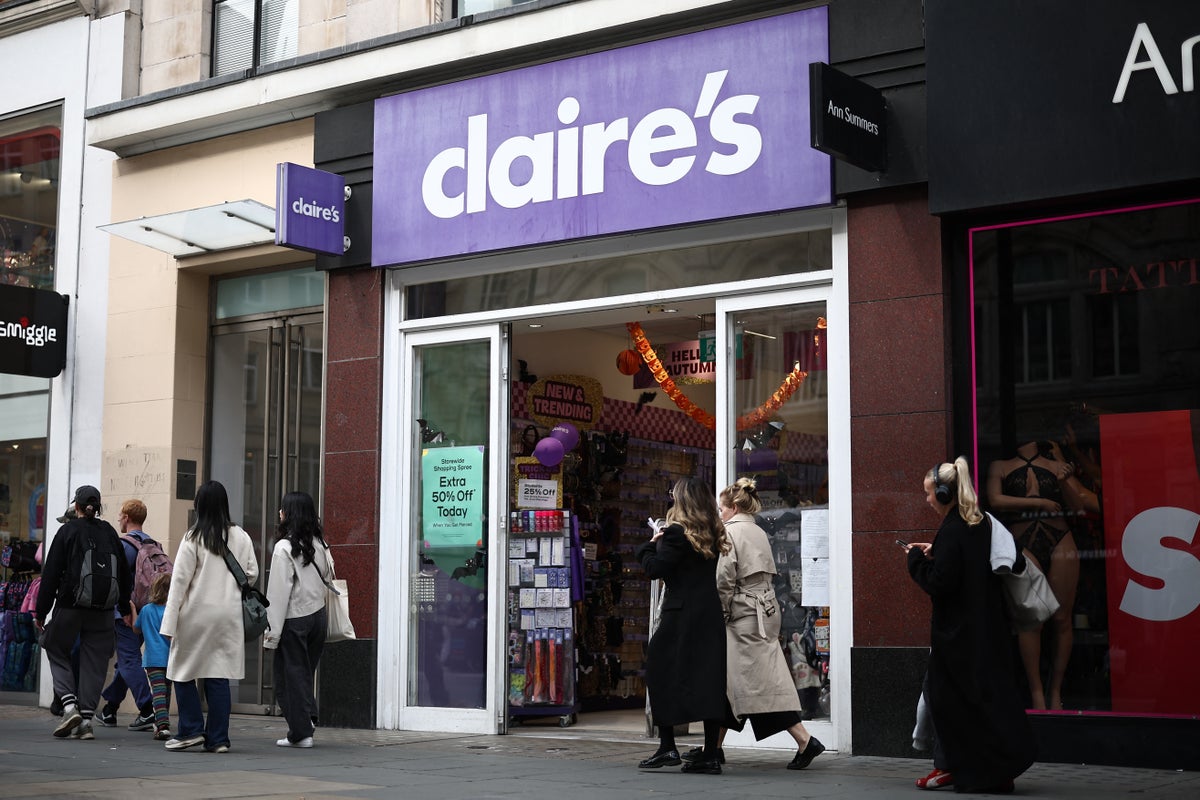
The retail press is fawning over Claire’s expanding its footprint into 7,000 major retail locations, including mass-market giants like Walmart and CVS. The consensus narrative is predictable. Pundits are calling it a brilliant omnichannel masterstroke, a distribution triumph that meets the consumer wherever they happen to be.
They are entirely wrong.
This isn’t a aggressive expansion from a position of strength. This is a quiet, margin-destroying retreat disguised as growth. When a brand famous for its mall-based experiential retail decides to dump its inventory onto the shelves of pharmacies and grocery stores, it isn’t winning. It is diluting its brand equity, abandoning its core differentiator, and entering a race to the bottom that mass merchants always win.
I have watched consumer brands pull this exact lever for two decades. When corporate leadership faces stagnating mall traffic and mounting debt obligations, the temptation to plug the revenue hole with massive wholesale volume is intoxicating. But wholesale volume is a narcotic. It gives you a quick, top-line high while slowly killing your margins and your relationship with the consumer.
The Illusion of Ubiquity
Retailers often confuse availability with desirability. They assume that making a product accessible in thousands of new locations automatically scales the business.
It does not. It commoditizes it.
The entire value proposition of Claire’s historically rested on the mall ecosystem. It was a destination. The rite of passage of getting a first ear piercing, the chaotic treasure hunt of glittering plastic jewelry, the social experience of pre-teens gathering outside a physical store—this was the actual product. The earrings and hair clips were just souvenirs of the experience.
[Mall Destination Model] ---> High Margin + High Engagement + Brand Loyalty
[CVS Aisle Endcap Model]  ---> Low Margin + High Friction + Price Sensitivity
When you strip away the neon storefront and reduce the brand to an endcap display tucked between cough syrup and deodorant at a local CVS, you strip away the magic. You are no longer selling an experience. You are selling commodity plastic.
In that arena, you are no longer competing against other teen brands. You are competing against the ruthless efficiency of Walmart’s private label supply chain and the infinite, cheaper scroll of ultra-fast-fashion e-commerce platforms.
The Wholesale Margin Trap
Let’s look at the brutal mechanics of wholesale economics that the mainstream retail analysts completely ignore.
When Claire’s sells an item in its own dedicated storefront, it captures the full retail margin. It controls the pricing, the presentation, and the data. When it shifts its strategy toward third-party retail distribution, the financial dynamic shifts violently against them.
- Gross Margin Compression: Mass merchants do not offer shelf space out of charity. They demand deep wholesale discounts, often squeezing supplier margins down to the bone.
- The Cost of Compliance: Selling to a behemoth like Walmart requires massive investments in logistics, EDI compliance, and supply chain infrastructure. A single labeling error or late shipment can result in crippling chargebacks and fines.
- Inventory Risk Shift: In many modern concession or wholesale arrangements, the brand still carries the financial risk of unsold inventory or markdowns if the product fails to rotate quickly enough.
Imagine a scenario where a pair of earrings costs $2 to manufacture and retails for $12. In a corporate store, Claire’s pockets a gross profit of $10. In a wholesale arrangement, Walmart might buy that same pair for $5. Claire’s gross profit plummets to $3, out of which they must now fund massive distribution networks, complex logistics, and marketing to support those 7,000 locations.
To maintain the same dollar-profit, Claire’s has to sell more than triple the volume. That requires massive production scaling, which increases operational risk and ties up vast amounts of working capital in inventory. It is a treadwheel that spins faster and faster while the actual returns diminish.
Dismantling the Convenience Narrative
A common defense of this strategy is the "convenience" argument. Pundits ask: Why shouldn't busy parents be able to buy Claire's accessories while picking up a prescription?
This question fundamentally misunderstands why teenagers buy things.
Teenagers do not want convenience; they want status, community, and discovery. Convenience is for toilet paper and milk. No fourteen-year-old girl gets excited about a brand her mother grabbed on a whim while waiting for a flu shot. By embedding itself into the mundane routines of adult grocery shopping, Claire’s kills its cool factor. It transforms from a youth culture staple into a parental impulse buy.
When you look at the queries surrounding this move, the disconnect becomes glaringly obvious.
Why is Claire’s opening inside Walmart?
The public assumes it is for footprint expansion. The reality is real estate mitigation. Class B and C malls are dying across America. Foot traffic is evaporating. Claire’s is trapped in long-term leases or facing declining revenues in its primary distribution channel. Moving into big-box retail is an emergency life raft to maintain volume, not a strategic choice born of innovation.
Is Claire’s still doing ear piercings at these new locations?
This is the operational Achilles' heel. Ear piercing is Claire’s ultimate customer acquisition tool. It is a high-margin, service-based hook that cannot be easily replicated online. While they are attempting to bring piercing stations to select big-box locations, executing a highly regulated, hygienic, service-oriented offering in the middle of a chaotic CVS aisle is an operational nightmare. You cannot easily maintain service standards, staff training, and liability control when you do not own the four walls of the establishment.
The Lessons of Retail History
We have seen this movie before. The retail graveyard is filled with brands that thought wholesale ubiquity was the path to salvation.
Consider Liz Claiborne. In the 1980s and 1990s, it was a dominant fashion powerhouse. Driven by a thirst for volume, the brand expanded aggressively into every mid-tier department store it could find. It became ubiquitous. Suddenly, the consumer could find Liz Claiborne everywhere, which meant it was no longer special anywhere. The brand lost its premium allure, suffered massive margin erosion, and was eventually sold off in pieces.
The same pattern played out with brands like Michael Kors and Coach when they over-indexed on outlet malls and department store distribution. It took years of painful store closures, inventory buybacks, and deliberate artificial scarcity for Coach to rebuild its brand equity. Claire's is running headfirst into the exact trap these luxury and mid-tier brands spent billions trying to escape.
The High Cost of Losing Direct Consumer Data
When a consumer walks into a Claire’s store and makes a purchase, the brand captures invaluable first-party data. They know what trends are hitting in real-time, what colors are moving, and who the consumer is. They can test small product batches in select markets and iterate within weeks.
When you sell through Walmart or CVS, that data stream is choked off.
You receive aggregated POS reports weeks later. You lose visibility into the micro-behaviors of your shopper. In an era where fast-fashion algorithms dictate production schedules within days, giving up your direct data pipeline to rely on the clunky, slow-moving reporting of legacy mass merchants is a form of corporate blindness. You are outsourcing your most valuable asset—your customer relationship—to a third-party intermediary who views you as nothing more than a SKU on a spreadsheet.
The Unconventional Path Forward
If wholesale saturation is a trap, what should they be doing instead?
Instead of expanding outward into 7,000 generic retail shelves, Claire's should be shrinking inward to dominate digital culture and highly curated, exclusive physical experiences.
Stop trying to compete on physical footprint. You will never out-distribute the internet. Instead, double down on the premiumization of the experience.
- Shrink the Footprint, Elevate the Location: Close the underperforming mall locations and open high-concept, highly photogenic flagship studios in premium urban corridors where Gen Z and Gen Alpha actually hang out.
- Monopolize the Piercing Market: Transform the ear-piercing service from a cheap mall-kiosk event into a premium, sterile, highly personalized body-art experience. Make it an upscale ritual that commands premium pricing, rather than a loss-leader tucked next to the pharmacy counter.
- Scarcity Over Ubiquity: Run the streetwear playbook. Drop limited-edition collections that sell out in hours online and in flagship stores. Create artificial scarcity to drive intense demand and high margins, rather than flooding the market with millions of identical plastic headbands that eventually end up in a clearance bin.
This approach is harder. It requires patience. It requires telling Wall Street that top-line revenue might dip while bottom-line health improves. But it is the only way a legacy retail brand survives in the current economic climate.
flooding the market with thousands of low-margin distribution points is the classic playbook of private equity looking for a short-term volume bump before the structural rot sets in. It looks impressive on a press release. It satisfies shareholders looking for quick growth metrics. But as a long-term strategy for brand survival, it is a suicide mission.
You cannot save a brand by making it common. Stop chasing volume. Fix the core.