Late summer in Manhattan carries a specific kind of electricity. The air hums with yellow cabs, humid asphalt, and the low, constant rumble of millions of lives brushing against one another in narrow concrete canyons. But every September, that kinetic energy shifts into something sharper. The United Nations General Assembly arrives, turning the city into a global chessboard where world leaders, diplomats, and protestors converge under a canopy of high-stakes security.
This year, the chessboard is already smoking months before the first motorcade rolls down First Avenue. If you liked this piece, you might want to read: this related article.
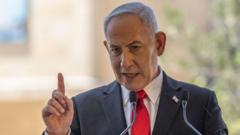
At the center of the storm stands New York City Mayor Zohran Mamdani and Israeli Prime Minister Benjamin Netanyahu. What began as a fiery campaign promise—a bold declaration that the city's police force should execute an International Criminal Court arrest warrant if the Israeli leader set foot in the five boroughs—has metastasized into a sprawling, multi-continental collision between municipal authority, federal sovereignty, and the raw nerves of a deeply fractured populace.
Consider the ordinary commuter standing on a subway platform in Midtown, scrolling through a smartphone headline about the latest rhetorical volley. The distance between the devastation of Gaza and the turnstiles of a local subway station feels impossibly vast, yet the shockwaves of distant geopolitical tragedies now ripple directly into daily neighborhood life. For another perspective on this development, see the latest update from The Washington Post.
When Mamdani initially floated the prospect of detaining Netanyahu over war-crimes allegations tied to the conflict, it was cheered by anti-war activists as a long-overdue moment of moral clarity. To his supporters, the International Criminal Court’s charges—focusing on mass casualties, systemic destruction of infrastructure, and the restriction of humanitarian aid—demand concrete action, not diplomatic handshakes.
But reality has a way of crashing through political rhetoric.
After active consultations with the city's Law Department, the administration hit an unmovable wall. Local mayors do not command foreign policy. The United States is not a signatory to the Rome Statute that created the International Criminal Court, and federal law explicitly protects visiting foreign heads of state from local interference. Realizing he lacked the independent legal authority to enforce the warrant, Mamdani shifted his stance, calling instead on the federal government to execute the arrest and declaring that Netanyahu was simply not welcome in the city.
Netanyahu did not hesitate to fire back. Speaking from the international stage, the Israeli prime minister dismissed the charges as entirely bogus, pointing to institutional controversies surrounding the court while leveling heavy accusations against the mayor himself. Netanyahu accused Mamdani of fomenting hate and trying to pit communities against each other in a city that boasts the largest Jewish population outside of Israel. Prominent federal figures, including President Donald Trump—who flatly stated that Netanyahu will never be arrested on American soil—along with bipartisan lawmakers, rushed to condemn the mayor's statements as reckless political theater.
The tension spilled out from television studios and press conferences into the streets. Critics and community organizations pointed to a volatile climate where heated rhetoric from political leaders threatens to tear fragile communities apart, arguing that demonizing foreign leaders inevitably trickles down to ordinary citizens navigating a rising tide of bigotry.
Yet, the mayor remains unapologetic, framing his stance not as an attack on a faith, but as a hard-edged critique of political accountability and state-level violence.
As September draws closer, the confrontation transforms from a theoretical debate into a logistical and psychological reality for New York. The impending arrival of the General Assembly guarantees a clash of symbols, where millions of eyes will watch to see what happens when unstoppable political forces meet immovable legal boundaries.
The motorcades will come. The speeches will be delivered. And the city will hold its breath, caught in the crossfire of history.