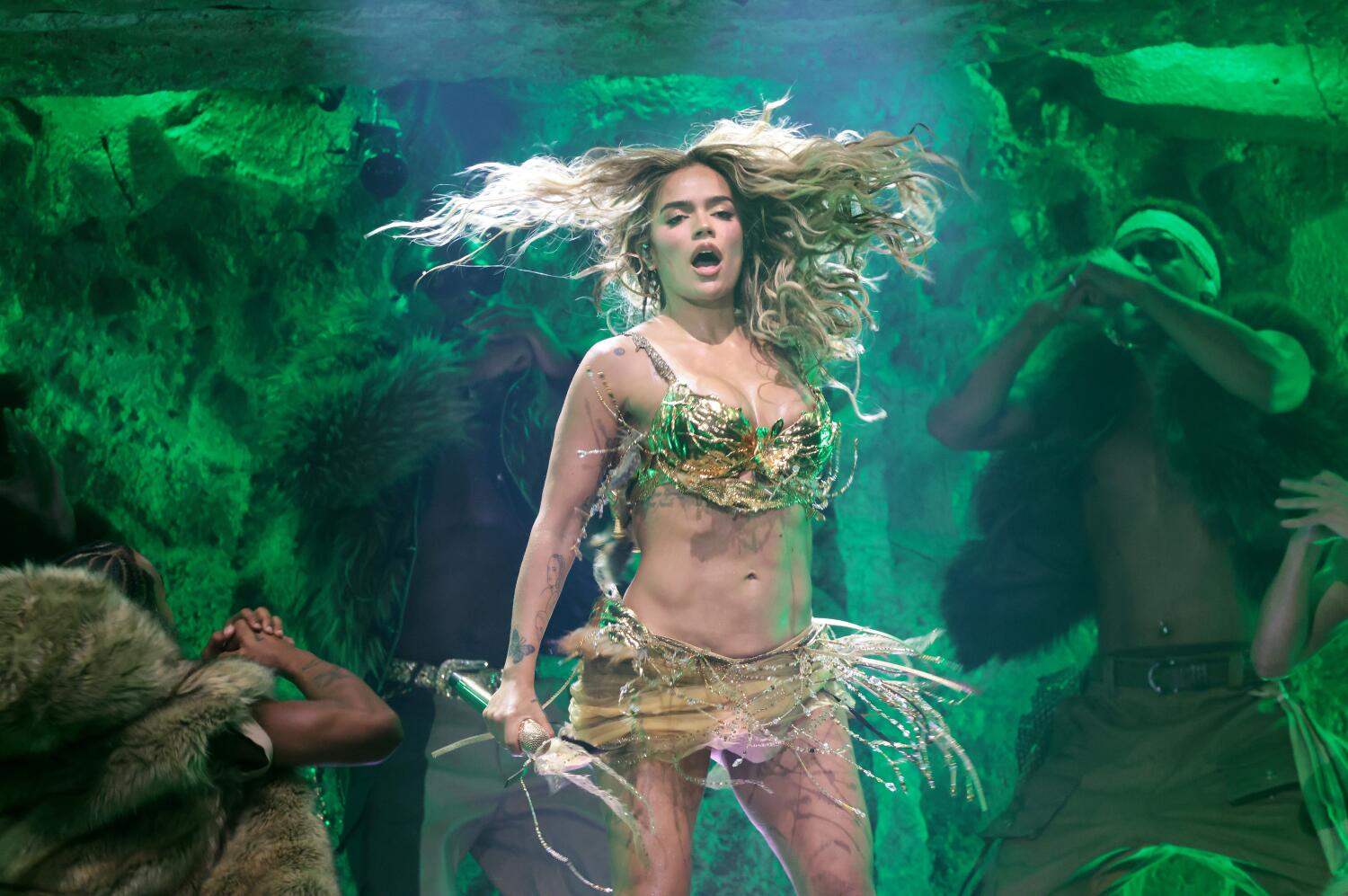
The festival circuit is addicted to a narrative of "firsts." Every year, the press releases churn out the same tired scripts about glass ceilings, representation, and the historic weight of a specific performance. When Karol G took the stage at Coachella, the media went into a fever dream. They called it a watershed moment. They framed her "Don't feel fear, feel pride!" mantra as a revolutionary act of cultural reclamation.
They missed the point.
The industry celebrates the "Latina Headliner" label because it’s easier to market than the reality: global pop has flattened into a singular, polished machine where identity is a curated aesthetic rather than a disruptive force. If we want to talk about the power of Latin music, we need to stop pretending that a 90-minute set at a high-priced desert playground for influencers is a victory for the people.
The Myth of the Milestone
The "first Latina headliner" headline is a classic PR sleight of hand. It suggests a linear progress toward equality, as if the booking agents at Goldenvoice are civil rights activists. In reality, the booking is a lagging indicator of market dominance.
By the time Karol G hit that stage, Latin music was already the fastest-growing segment in the industry, outstripping legacy genres in streaming growth year-over-year. To frame her performance as a moment of overcoming "fear" ignores the cold, hard math of the Billboard charts. The fear didn't belong to the artists; it belonged to the promoters who took a decade too long to realize where the money was moving.
We keep praising these festivals for "giving a platform" to diverse voices. That is a fundamental misunderstanding of the power dynamic. These voices built the platform themselves on TikTok, Spotify, and YouTube. Coachella didn't "break" Karol G; they rented her credibility to stay relevant in a global market that is rapidly moving past the Anglo-centric indie rock of the 2010s.
Pride is a Product
"Don't feel fear, feel pride!" sounds great on a highlight reel. It’s the kind of quote that gets plastered across Instagram stories with heart emojis. But in the context of a corporate-sponsored mega-festival, "pride" is a commodified emotion.
When an artist tells a crowd of thousands to feel pride, they are often performing a version of identity that is palatable to a mass audience. It’s "identity-lite." It focuses on the aesthetic markers—the flags, the colors, the language—while stripping away the grit of the actual culture.
I’ve spent years watching how labels package "authenticity." They want the flavor of the barrio without the friction. They want the "Latina" label because it sells tickets, but they want the sound to be polished enough to play in a Starbucks in Omaha. When we celebrate "pride" as a headline achievement, we are settling for a version of culture that has been sanitized for suburban consumption.
The Problem with Representative Burden
There is a massive, unspoken cost to being the "first." The industry forces these artists to carry the weight of an entire demographic.
Imagine a scenario where a white male rock band from Ohio plays Coachella. No one asks them to represent the "Midwestern experience." No one analyzes their setlist for signs of cultural progress. They just play their songs.
But for Karol G, or any artist tagged with the "Latina" qualifier, every note is scrutinized for its social significance. They aren't allowed to just be musicians; they have to be symbols. This "representative burden" actually stifles creativity. Instead of taking risks, artists feel pressured to deliver the "quintessential" cultural experience. They play the hits, they wave the flags, and they stay within the lines of what the industry expects "Latina pride" to look like.
The Global Pop Machine is Borderless (and Boring)
The real truth that the industry hides behind the "pride" narrative is that global pop is becoming a monolith.
Whether an artist is from Medellín, Seoul, or London, the production teams often overlap. The songwriting camps use the same data-driven formulas to maximize "hooks per minute." We are told that these performances are celebrations of specific cultures, but if you strip away the lyrics, the sonic architecture is increasingly identical.
The "reggaeton" you hear on the main stage is often a hyper-processed version of the genre, designed to work in a mix with EDM and trap. By the time it reaches the headline slot at Coachella, the rough edges—the things that made the music dangerous and exciting in the first place—have been sanded down.
We aren't seeing the rise of Latin culture in its rawest form; we are seeing the assimilation of Latin aesthetics into the Global Pop Machine. That’s not a revolution. That’s an acquisition.
Stop Asking for a Seat at the Table
The obsession with "headlining Coachella" as the ultimate metric of success is a relic of an old mindset. It assumes that the "Table" is set by a handful of Western curators and that our goal should be to be invited.
That’s a loser’s game.
The real disruption isn't happening on the main stage of a festival where tickets cost $600 plus fees. The real cultural shifts are happening in the decentralization of music. When Bad Bunny or Karol G dominates the charts without needing the traditional gatekeepers, that is the victory.
By the time they get to Coachella, the battle is already over. The festival is just the victory lap. And yet, we treat the victory lap as the race itself. This focus on "firsts" keeps us looking for validation from systems that were never designed for us.
The Nuance of the "Latino" Label
The competitor article treats "Latino fans" as a singular, monolithic block. This is the ultimate industry laziness.
The "Latino" experience is not one thing. It is a complex web of different nationalities, races, and economic backgrounds. A fan from a wealthy neighborhood in Bogota has a vastly different relationship to Karol G’s music than a first-generation immigrant in Los Angeles.
When the media uses phrases like "Latino pride," they erase this nuance. They flatten a vibrant, often contradictory set of cultures into a single marketing demographic. This makes it easier for brands to sell sponsorships, but it does a disservice to the actual depth of the music.
If we really want to celebrate this music, we should stop talking about "The Latino Market" and start talking about the specific, local scenes that actually drive innovation. But you won't see that in a Coachella recap because it doesn't fit the "grand unified theory of representation" that editors love.
The Economics of Inclusion
Let's talk about the money, because that’s the only thing the industry truly cares about.
Coachella’s move toward "diverse" headliners isn't a moral choice. It’s a survival strategy. The traditional rock and indie pool is drying up. The bands that used to headline these festivals are either aging out or failing to draw the numbers required to justify the massive production costs.
Latin music, K-Pop, and African genres are where the growth is. The "pride" narrative is the wrapping paper on a cold transaction. The industry needs these artists to keep their festivals from becoming museums for Gen X.
I’ve seen the internal decks. I’ve seen the data. The push for "representation" is driven by a desperate need to capture the Gen Z and Millennial dollar, which is increasingly non-white and globally focused. The artists are doing the work, but the system is taking the credit for "being inclusive."
The Actionable Truth
If you want to support the culture, stop looking to the desert for validation.
- Ignore the "First" Headlines: They are a distraction from the actual work being done.
- Look for the Friction: Seek out the artists who aren't being played in the VIP lounges. The ones who are too loud, too political, or too "niche" for a headline slot.
- Stop Celebrating Permission: An artist being "allowed" to headline a corporate festival isn't progress. An artist building their own ecosystem is.
The next time a major festival announces a "historic" booking, ask yourself: Who benefits more from this? The artist who already has billions of streams, or the festival trying to prove it's still relevant?
The pride shouldn't come from being invited to the party. The pride should come from the fact that you built a party so big they had no choice but to show up and ask for a ticket.
Stop waiting for the industry to tell you that you’ve arrived. If you’re looking at a headline at Coachella, you’re looking at the past, not the future. The real movement is happening where the cameras aren't looking.
Don't feel pride because a gatekeeper opened the door. Feel pride because you're the reason the door had to be taken off its hinges.