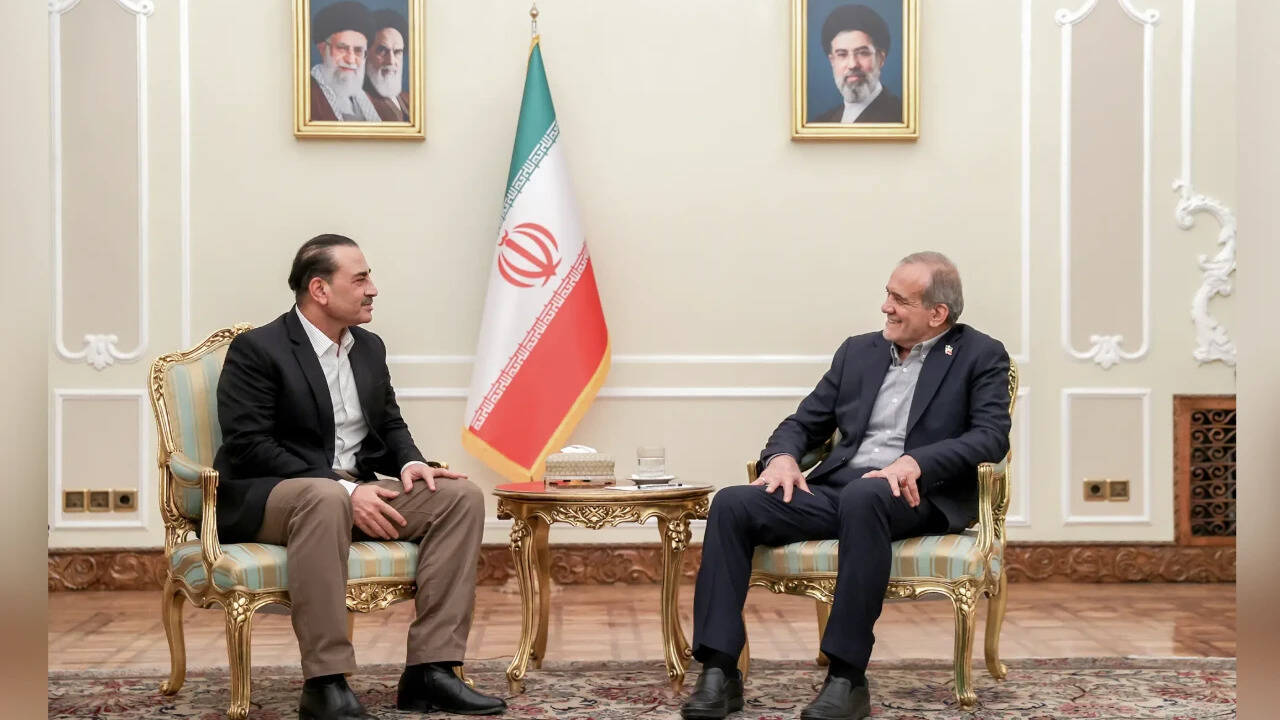
When Iranian President Masoud Pezeshkian sat down with Pakistan Army Chief Field Marshal Asim Munir in Tehran, he didn't mince words. Washington needs to change its tone. Fast.
The meeting happened against a backdrop of rising friction between Tehran and Washington, particularly surrounding the 14-point Memorandum of Understanding (MoU) brokered through diplomatic channels. With a crucial 60-day window for negotiations expiring, the fate of any comprehensive agreement hangs by a thread. Pezeshkian made it crystal clear that relying on maximum pressure, threats, and intimidation is a dead-end strategy that only breaks diplomatic pipelines. In similar developments, take a look at: Why Netanyahu Loves the New US Sanctions on Iran.
If you want to understand why Middle Eastern diplomacy remains trapped in a perpetual state of crisis, you have to look past the headlines and examine how international pressure campaigns routinely backfire.
The Breakdown of Modern Diplomacy
Diplomacy requires two parties willing to respect basic international norms. When one side treats negotiations as an exercise in submission, talks stall. Pezeshkian pointed directly to this dynamic during his talks with Munir, emphasizing that Washington must honor its commitments under international standards rather than defaulting to economic sanctions and political arm-twisting. The Guardian has provided coverage on this important subject in great detail.
The core issue isn't just a disagreement over text on a page. It is a fundamental clash of philosophies.
- The Western Playbook: Relying on economic isolation, shadow fleet crackdowns, and financial chokeholds to force compliance.
- The Iranian Response: Doubling down on domestic solidarity, regional alliances, and alternative trade channels to absorb the shock.
History shows that heavy-handed tactics rarely yield the desired political concessions. Instead, they empower hardliners within the targeted country, shrinking the political space for moderates who advocate for engagement. Tehran's message to the White House is simple: coercion complicates the execution of any agreement. You cannot bully a nation into a sustainable treaty while simultaneously trying to dismantle its economy.
The Regional Chessboard and Pakistan's Role
Munir’s visit to Tehran wasn't just a routine military handshake. Islamabad has quietly taken on a critical mediating role, trying to bridge the massive gap between Washington and Tehran. Pakistan shares a long, complex border with Iran and has a vested interest in stopping regional instability from boiling over.
During their discussions, both leaders touched upon the 14-point MoU, looking for ways to keep communication lines open. Munir noted that achieving a comprehensive framework requires absolute precision and meticulous attention to detail. Yet, those diplomatic gears grind to a halt whenever new economic penalties or military threats are introduced from the West.
Regional neighbors are increasingly tired of bearing the collateral damage of US-Iran hostilities. By rallying support among Islamic nations and neighboring states, Tehran is actively trying to build a diplomatic shield against external pressure. Pezeshkian framed this unity as the ultimate deterrent against hostile foreign agendas, signaling that Iran will look inward and toward its neighbors if Western doors remain shut.
What Happens When Pressure Fails
Sanctions and threats create an environment of permanent suspicion. When the United States approaches talks with a take-it-or-leave-it attitude, Iranian leadership faces immense domestic pressure not to look weak. Concessions made under duress are political suicide in Tehran.
This dynamic explains why deadlines come and go without resolution. The recent expiration of the 60-day negotiation window proves that structural distrust cannot be bombed or starved away. Until policymakers in Washington realize that respect and adherence to international law are prerequisites for progress, regional tensions will continue to cycle through periods of acute crisis.
If genuine stability is the goal, the playbook has to change. Bullying might feel satisfying in domestic political speeches, but on the ground in Tehran, it just closes doors.