The sea off the northern coast of Hokkaido does not care about diplomacy. It rolls in with a heavy, grey monotony, smelling of salt, rotting kelp, and a distant, unforgiving chill that drifts down from the Sea of Okhotsk. Standing on a windswept dock near Wakkanai, the wind does not merely blow; it strips the warmth from your bones, reminding you precisely how close you are to a world that feels permanently frozen in time.
Look out across that water on a clear day, and you can almost make out the silhouette of Sakhalin. To Tokyo, it is an administrative line on a map, a reminder of unfinished business from a war that ended eighty years ago. To the locals who fish these waters, it is a haunting neighbor.
This summer, that grey stretch of water became a mirror reflecting a much deeper, older anxiety.
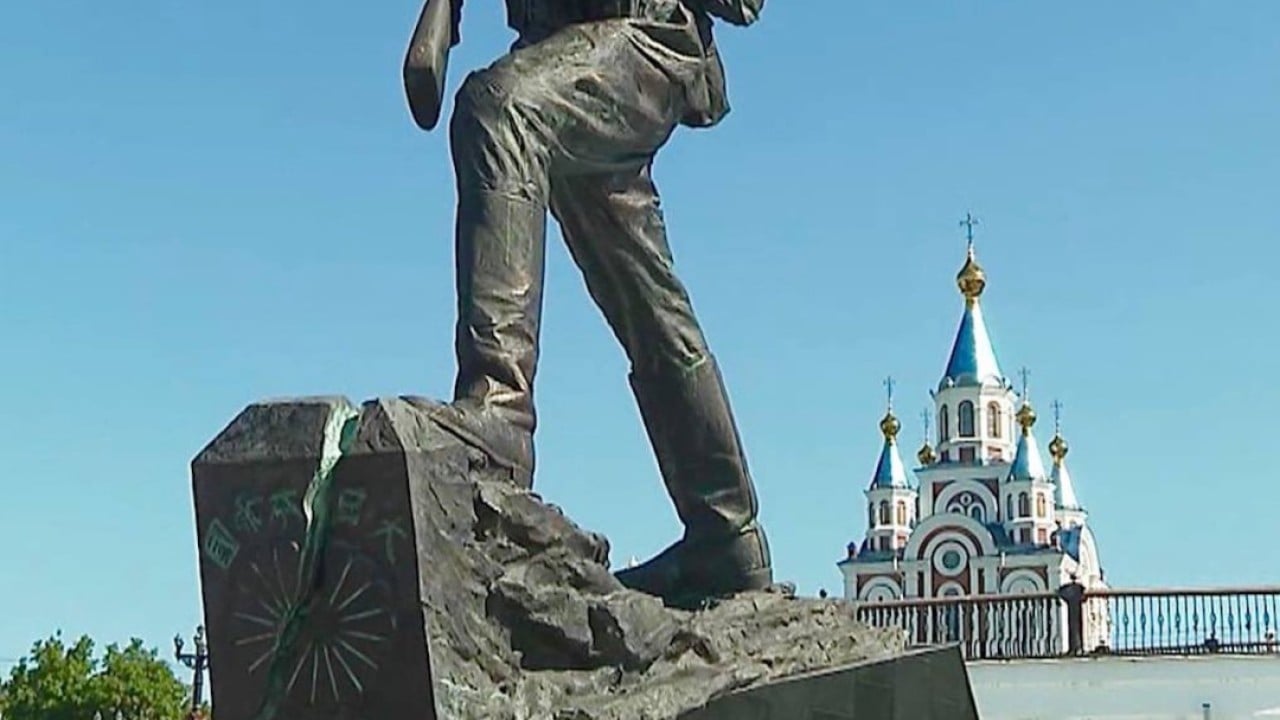
Let us step into a quiet municipal office in Hokkaido. Imagine an official—let us call him Kenji, though his name could be any of the thousands who watch the geopolitical weather patterns shift with dread. Kenji sits beneath a humming fluorescent light, staring at a diplomatic protest note. The ink is fresh, but the grievance is ancient. The issue is not trade tariffs or fishing rights. It is a statue. A monument to a Soviet soldier, erected thousands of miles away, yet casting a long, icy shadow over Japanese soil.
To understand why a piece of bronze or stone thousands of miles away can make a seasoned diplomat in Kasumigaseki grind their teeth, you have to understand the geography of grievance. Japan and Russia have never signed a peace treaty following the Second World War. The Kuril Islands—or the Northern Territories, depending on which side of the water you are standing on—remain an unhealed scar. Every monument, every raised flag, and every official commemoration is read by both capitals not as history, but as a live broadcast of intent.
When a Russian soldier statue becomes the center of a diplomatic brawl during what pundits have prematurely labeled a summer of tension, we are witnessing the weaponization of the past.
History is rarely left to the historians. It is rented out to the present, dressed in uniform, and sent to the front lines of public relations.
Consider what happens next in this chain reaction. A statue is unveiled or restored in a Russian region or a disputed zone. Local media covers it with archival footage of heroic red army advances. In Tokyo, intelligence desks flag the imagery. Foreign Ministry officials draft a formal statement of regret. Moscow responds with dismissive defiance, invoking the sacred blood spilled in the Great Patriotic War. The cycle spins. It is a ritual dance of mutual antagonism, performed with robotic precision.
But behind the sterile language of diplomatic protests lies a human cost that gets lost in the ticker tape.
Walk through the old neighborhoods of Nemuro or Wakkanai, and you will meet people whose grandparents were born on islands they cannot visit without a Russian visa—a humiliating concession for families whose ancestral graves lie just over the horizon. When a statue goes up or a protest is lodged, it reopens doors that aging survivors spent decades trying to gently latch shut. It is personal. It is the persistent refusal of history to stay buried.
We often talk about international relations as if it were a game of chess played by grandmasters in soundproof rooms. It is not. It is more like a crowded subway car where everyone is nursing an old injury. One sudden movement, one perceived slight, and elbows fly.
The summer heat of 2026 has been heavy, but the political climate is glacial.
Why do monuments hold this kind of magic? Because they are anchors for narratives. A nation builds a statue to say: This is who we were, and this is who we intend to remain. When that monument sits in a contested theater, it becomes a provocation. It says: We remember the victory, and we remember your defeat.
Japan’s recent protest was not merely about bronze or granite. It was about the narrative monopoly over the twentieth century. In an era where the global order is fracturing along fault lines we thought were paved over, every symbol matters. Every bronze boot stepping onto a pedestal is interpreted as a precursor to something darker.
And yet, if you walk down to the harbor in Wakkanai as the sun dips below the horizon, painting the slate-grey water in bruised shades of violet and orange, the geopolitical theater feels impossibly distant. An old fisherman mends his nets, his hands calloused and scarred by decades of wrestling with the tide. He does not look toward Moscow. He does not look toward Tokyo. He looks at the horizon, checking the wind, waiting for the dawn.
The statues will stand. The diplomats will draft their notes. The protests will be logged, filed, and forgotten by all save the historians. But the sea remains, indifferent to the bronze we sink into the earth, waiting quietly to outlast us all.