The absolute cardinal rule of sports is dead.
For a century, every athlete from little league to the pros knew the single quickest way to get banned for life. You don't bet on your own team. It is the ultimate boundary, the one rule designed to keep games from looking like scripted theater. Learn more on a related subject: this related article.
A Texas judge just threw that rule into a woodchipper.
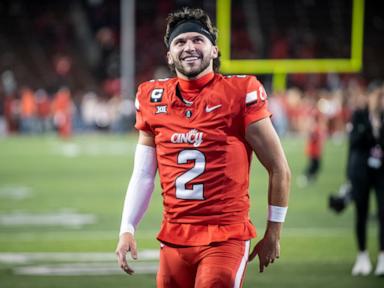
Texas Tech quarterback Brendan Sorsby admitted to making thousands of impermissible sports bets totaling at least $90,000. Some of those wagers were on his own football team during his freshman year at Indiana. Under standard NCAA bylaws, that is an open-and-shut case resulting in a permanent lifetime ban. More reporting by Bleacher Report explores similar perspectives on this issue.
Instead, Sorsby won a temporary injunction in a Lubbock court. He will sit out exactly two games against Abilene Christian and Oregon State before taking the field for the rest of the 2026 season.
The NCAA is panicking. Athletic directors are furious. The legal precedent set here doesn't just bend the rules; it completely breaks the governing body's ability to protect the integrity of college sports. If a player can bet on his own locker room and use a local courtroom to avoid a suspension, the NCAA has officially lost control of the game.
The Loophole That Ruined the Rulebook
How does a player admit to betting on his own team and get away with a two-game slap on the wrist?
Sorsby’s legal team, led by veteran sports attorney Jeffrey Kessler, used a strategy that completely bypassed the sports argument. They reframed the entire scandal as a medical and labor dispute. The lawsuit argued that Sorsby suffered from a severe gambling addiction and anxiety disorder. According to his lawyers, the NCAA’s strict eligibility rules failed to account for his mental health struggles, essentially punishing him for a medical compulsion.
The defense also noted that Sorsby was a redshirt freshman at Indiana when he placed those specific bets, mostly wagering small amounts between $5 and $50 for his teammates to succeed or for Indiana to win. He wasn't traveling with the team or shaving points.
Lubbock District Judge Ken Curry bought the argument. He ruled that Sorsby would suffer "imminent and irreparable injury" if he missed the 2026 season.
This creates an incredibly dangerous playbook for every future athlete caught in a gambling sting. The defense strategy is clear. Step one, get caught. Step two, check into a treatment facility. Step three, sue the NCAA under the guise of disability or mental health discrimination to secure an injunction before kickoff.
Florida Athletic Director Scott Stricklin didn't mince words about the ruling, calling betting on your own team the "unpardonable sin" of sports. He noted that everyone in America grew up understanding this boundary.
Now, that boundary is optional.
The Hypocrisy of the Modern Campus
You can't talk about this scandal without looking at the absurd double standards maintained by the universities themselves.
Texas Tech aggressively backed Sorsby’s legal push to get back on the field. Yet just six months prior, Texas Tech was part of the voting majority of NCAA Division I schools that rescinded a proposal to loosen gambling rules. The school literally voted to keep strict bans on pro sports betting for college athletes, then immediately turned around and shielded their starting quarterback when he violated those exact rules.
College athletic departments love the revenue that modern sports culture brings, but they want zero accountability when the dark side of that culture hits their roster.
Consider what a coach or an athletic director faces. They are trapped between a desire for institutional integrity and the desperate need to win games to keep their multi-million dollar contracts. When a starting quarterback is sidelined, integrity usually loses. Texas Tech chose the wins.
The system is completely fractured. We have created an environment where athletes are constantly bombarded with sportsbook advertisements, point spreads, and prop bets during every broadcast, yet we expect teenagers to maintain pristine moral isolation.
Why the Legal System Keeps Crushing the NCAA
The NCAA is currently undefeated when it comes to losing in court. Over the last several years, judges have repeatedly stripped the organization of its power, viewing it as an illegal cartel restricting player freedom and earning potential.
The problem is that courts view college football players as workers, not amateurs. When the NCAA tries to enforce an eligibility ban, a judge doesn't see a sports league maintaining competitive balance. A judge sees a massive corporation preventing a young person from accessing a multi-million dollar career path.
The NCAA has filed an accelerated appeal with the 7th District Court of Texas to overturn the injunction, but the clock is ticking. The season starts on September 5. The legal process moves slow, while football moves fast. Even if the NCAA eventually wins the legal battle, the final trial date isn't scheduled until February 8, 2027.
By that time, Sorsby will have played his entire final college season. He will likely be preparing for the NFL draft. The punishment will arrive long after the crime has ceased to matter.
NFL insider Daniel Jeremiah summarized the frustration shared by many league observers. He pointed out that while paying players is perfectly fine, betting on your own sport and team crosses a line that sets an incredibly dangerous precedent. He noted that it leaves college football with virtually zero enforceable rules.
The Real Danger of No Consequences
When you remove the penalty for cheating the integrity of the game, you ruin the product.
If fans look at a dropped pass, a missed field goal, or a late-game turnover and genuinely wonder if a player had money on the under, college football dies. The entire enterprise relies on the absolute certainty that both sides are trying their hardest to win.
We aren't talking about players taking under-the-table cash from boosters anymore. We are talking about the actual validity of the box score. If a local judge can block an eligibility ban for a player who wagered on his own school, the NCAA can no longer police its own sport.
If you are an athletic director, a coach, or a compliance officer trying to manage a program right now, you need to throw out the old playbook. Relying on the NCAA rulebook to keep your locker room clean is a losing strategy.
First, programs have to shift resources from reactive compliance to proactive, internal mental health screening. If gambling addiction is the new legal shield against suspensions, athletic departments must identify and treat these compulsions before a state gaming board flags an athlete's account.
Second, conferences need to bypass the NCAA entirely. The Big 12, the SEC, and the Big Ten need to write collective bargaining agreements or specific conference-level contracts that dictate immediate, un-appealable roster removal for inside sports wagering. If the NCAA's umbrella rules can't survive a local courtroom, the conferences must enforce the rules through private organizational contracts.
The era of the NCAA acting as the ultimate moral authority in college sports is over. The courts have made it clear that the old rules no longer apply. If college sports wants to save its integrity, individual programs and conferences need to stop looking to Indianapolis for help and start policing themselves. Because right now, the ultimate sin is officially unpunished.