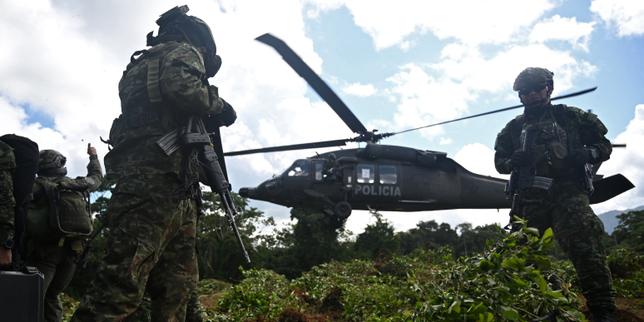
Geopolitics rarely shifts overnight, but Bogotá just redrew the drug war map.
If you think you know how South American security policy works, think again. Colombia just authorized joint anti-drug operations with the United States. It's a massive policy pivot. It flies in the face of recent diplomatic friction. It alters the entire dynamic of the Andes. Meanwhile, you can find other developments here: Why Tehran is Betting on a Long War Until Trump Leaves Office.
People miss the real story here. They see a simple military agreement. They assume it's business as usual for Washington and Bogotá. They're wrong. This decision arrives after years of strained relations, shifting political priorities in Latin America, and soaring cocaine production numbers that refuse to drop.
Let's unpack what's actually happening on the ground. To explore the bigger picture, we recommend the excellent analysis by NPR.
The Breaking Point Behind the New Policy
You have to look at the numbers. Coca cultivation didn't magically vanish while diplomats argued over strategy. It expanded. Record harvests choked the rural provinces of Nariño, Cauca, and Catatumbo.
Local security forces tried holding the line alone. They faced severe budget constraints, logistical nightmares, and deeply entrenched cartels. The cartels adapted. They diversified shipping routes, embraced synthetic precursors, and weaponized local communities against state intrusion.
Bogotá ran out of easy options.
President Gustavo Petro came to office promising total peace. He wanted to negotiate with armed groups. He wanted to move away from forced eradication. Critics called it naive. Drug enforcement data from recent years proved them right, at least regarding immediate production metrics. Without aggressive interdiction, labs churned out white powder faster than customs agents could seize it.
So, pragmatism won. The state needed aerial support, intelligence sharing, and immediate tactical assistance. Washington had those resources waiting.
What Joint Operations Actually Mean on the Ground
Forget the Hollywood versions of drug wars. There won't be squads of foreign commandos kicking down doors in downtown Medellín. That era ended decades ago.
Modern anti-drug cooperation looks like a high-tech chess match. It involves real-time radar tracking of semi-submersibles off the Pacific coast. It means satellite imagery tracking clandestine jungle airstrips. It translates to encrypted communication networks passing intelligence from US surveillance planes to Colombian tactical units within seconds.
This partnership is built on data.
When a drug boat leaves a remote Colombian estuary heading for Central America, the US southern command spots it. They ping the Colombian navy. Interception happens hundreds of miles out at sea. Without that radar coverage, the boat slips away in the dark.
Yet, tensions always loom over sovereignty. No Latin American leader survives political life by looking like a puppet of Washington. That's why the framing of these new operations matters so much. They are billed strictly as collaborative, co-equal operations. Colombian commanders call the shots on the sovereign territory. US assets provide the eyes and ears.
The Regional Domino Effect
Look north and south of Colombia. Ecuador is fighting a brutal internal war against cartels that use Colombian supply chains. Peru watches nervously as production spills across its borders.
When Colombia opens the door to renewed US anti-drug coordination, the shockwaves hit every neighboring capital.
Guayaquil feels the pressure immediately. If Colombian ports and jungle routes tighten up due to effective joint tracking, trafficking networks will mutate. They will look for softer borders. They will try to bribe new officials elsewhere.
You cannot view Colombian drug policy in a vacuum. It's the central engine of the Andean drug trade. If Bogotá changes its posture, the whole regional calculus changes with it.
Navigating the Political Minefield
Petro faces an angry domestic left. Many of his core supporters view any alignment with the Pentagon as a betrayal of national sovereignty. They remember the dark days of Plan Colombia in the early 2000s, when militarized eradication caused severe human rights displacement and fueled rural resentment.
To survive the backlash, the administration is stressing a different approach this time.
The focus isn't just chemical spraying or burning peasant crops. The stated goal is targeting high-level finance networks. It's about seizing shell companies, freezing cryptocurrency accounts used by cartel brokers, and arresting the white-collar criminals who launder drug profits through Miami and Madrid.
Does that actually happen? Sometimes. Often, corruption shields the big fish. But the intent marks a evolution from past strategies.
Practical Takeaways for Understanding the Shift
If you track international security or invest in regional markets, you need to watch three specific metrics over the next twelve months.
- Monitor the seizure rates of semi-submersible vessels in the eastern Pacific. An uptick means joint radar sharing is working.
- Watch extradition requests between Bogotá and Washington. It's the ultimate litmus test for security trust.
- Track rural eradication numbers versus asset forfeiture data. If seizures of cartel bank accounts outpace crop destruction, the strategy has genuinely modernized.
The drug war is messy. It's brutal. It rarely yields clean victories. But Colombia just decided that fighting it alone is a luxury the country can no longer afford. Keep your eyes on the Pacific coast. That is where this new policy will either succeed or collapse.


