Power changes hands in Cali, and explosions immediately tear through the highways. You don't get a honeymoon period when you win an election on a hardline security platform. Abelardo de la Espriella wanted a dramatic inauguration in the country's southwest to signal a new era. Dissident guerrillas answered him with drones and dynamite before the champagne glasses even stopped clinking.
This isn't just standard political unrest. It's a brutal collision between a newly elected right-wing administration and armed factions that spent years expanding their territory. If you want to understand why Latin America's drug wars are shifting into a more volatile phase, look closely at what happened during the first forty-eight hours of this presidency.
The Reality on the Ground in Cali and Cesar
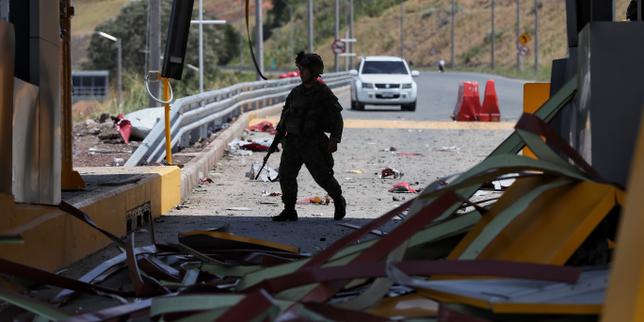
The new administration barely took office before the violence hit. Two distinct attacks shattered any illusion of a peaceful transition. In the northern department of Cesar, an explosive-laden drone struck a police station, killing an officer. Simultaneously, thousands of miles away near Cali, FARC dissidents blew up a toll plaza under construction along the Pan-American highway.
Security guards suffered injuries, but the symbolic damage was much worse. Infrastructure attacks send a direct message. They target mobility, commerce, and state presence. De la Espriella reacted instantly on social media, promising zero refuge and zero impunity for the groups responsible. He made it clear that striking public infrastructure means attacking the progress of millions of Colombians.
Why the Peace Process Collapsed Into This Violence
How did the country reach this boiling point? Years of weak enforcement and stalled dialogue changed the balance of power. Under former president Gustavo Petro, the government tried a total peace approach. Armed groups sat at negotiation tables while continuing to traffic cocaine and protect their smuggling routes.
Experts point out that these factions used the ceasefire windows to regroup and recruit. When you offer negotiations without demanding immediate disarmament, criminal networks view it as weakness. Figures like Iván Mordisco, who leads the most dangerous FARC dissident faction in the Cauca region, grew bolder. They rejected the historic 2016 peace accord entirely and kept building their illicit revenue streams.
Now, the political pendulum has swung hard in the opposite direction. De la Espriella campaigned on a promise of absolute firmness. He wants to abandon peace talks that go nowhere and bring back aggressive military pressure.
What Comes Next for the New Administration
You can't govern a fractured country by simply issuing tough statements on the internet. De la Espriella faces an immediate test of state capacity. The military faces thousands of seasoned fighters embedded in mountainous terrain where coca cultivation drives the local economy.
Traditional troop deployments won't stop drone-based attacks or roadside sabotage. The state has to cut off the financial pipelines of these cartels while protecting vulnerable rural communities from retaliation. Ordinary citizens, like the local residents and firefighters near Cali who live under constant tension, are caught in the middle.
The new president promised a clean break from past policies. He wanted a confrontation with the criminal underworld to define his mandate from day one. He got his wish much sooner than expected. How he handles the next few weeks will dictate whether Colombia plunges into a deeper spiral of conflict or finally forces these armed groups back into submission.
Colombian Security Forces Foil Terror Plot, Seize Explosives Ahead Of Presidential Oath Ceremony
This video provides background context on the security operations and explosive seizures that preceded the high-profile presidential inauguration and subsequent attacks in Colombia.


