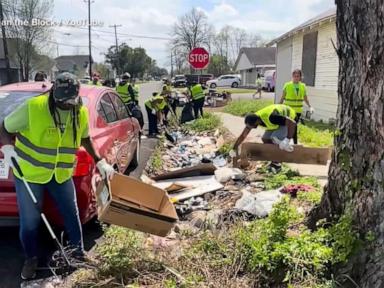
Every weekend, local news outlets run the exact same feel-good broadcast. A smiling guy in a high-visibility vest stands knee-deep in urban brush, hauling old tires out of a dry creek bed. The headline practically writes itself: Local Hero Inspires Community Cleanup.
Cue the applause. Cue the B-roll of neighborhood kids picking up plastic wrappers with oversized grabbers. Cue the mayoral quote praising civic pride.
It makes for great television. It also makes for terrible public policy.
I have spent the better part of two decades watching well-intentioned citizens waste their weekends scrubbing graffiti off concrete walls and bagging aluminum cans in empty lots. I have seen countless municipal governments rely on these amateur weekend warriors to cover up structural institutional failure.
We do not have a litter problem. We have an accountability problem. And every time a neighborhood organizes a volunteer cleanup, they are subsidizing the exact systemic negligence that caused the mess in the dark.
The Feel-Good Trap That Exonerates City Hall
Let us look at the mechanics of urban filth. Trash does not materialize in vacant lots by immaculate conception. It arrives via specific vectors: municipal budget cuts to sanitation services, delinquent commercial property owners who abandon their footprints, and zero enforcement of illegal dumping laws.
When a group of civic volunteers steps in to clear two tons of debris from a drainage ditch, they achieve two distinct outcomes. First, the ditch is temporarily clean. Second, the city department responsible for code enforcement and waste management gets off scot-free.
Why would a city council allocate funds for robust, 24-hour surveillance or increased trash collection routes in neglected zip codes when free labor keeps stepping up to do the job for the price of a complimentary donut and a pat on the back?
You are not helping your community by cleaning up its streets for free. You are doing unpaid labor for a municipal government that has failed its basic contract with taxpayers.
Imagine a scenario where every single neighborhood volunteer organization went on strike for six months. No weekend sweeps. No plastic bag brigades. No DIY brush clearing. Within forty-five days, the public infrastructure crisis would become so acute, so visually undeniable, that city halls would be forced to reallocate budgets, hire sanitation workers, and actually enforce the municipal codes already sitting on the books.
Instead, we let them off the hook with a heartwarming human-interest story on the six o'clock news.
Why Volunteer Sweep Operations Fail Basic Economics
The economics of trash collection rely on scale, permanence, and enforcement. Weekend sweeps rely on enthusiasm, donated trash bags, and temporary guilt.
Economics dictates that when you lower the cost of a negative externality, you get more of it. When a city fails to punish illegal dumping, dumping increases. When volunteers clean up an illegal dump site every month without any corresponding police enforcement, citation issuance, or camera installation, the dumpers learn a predictable lesson.
They learn that the municipal authorities do not care, and that a rotating cast of naive citizens will happily sweep up their mess for free, saving them the cost of proper commercial waste disposal.
You are incentivizing the polluters.
I watched a commercial landlord in a major metropolitan area use a nearby volunteer group as his personal landscaping crew for three straight years. Every spring, when weeds choked his vacant perimeter and discarded couches piled up against his chain-link fence, he simply waited for the neighborhood association's annual "Spring Sparkle Day."
Volunteers cleared his private property line for free. The landlord saved thousands of dollars in commercial hauling fees. The city collected property taxes while abdicating its mandate to fine absentee owners. And the volunteers went home feeling like local heroes.
It is a racket. And the only people who do not see it are the ones holding the trash bags.
The Myth of Civic Pride as a Substitute for Municipal Competence
We love to talk about community engagement as if it possesses some mystical healing property. If we just care enough, the theory goes, the broken windows will fix themselves.
This is romanticized nonsense.
Civic pride is a byproduct of a functional city, not a replacement for one. You cannot organize your way out of structural abandonment. When a neighborhood lacks adequate street lighting, reliable waste bins, frequent municipal pickups, and functional zoning enforcement, litter is not the disease. It is a symptom.
Treating the symptom while ignoring the systemic rot ensures that the cycle repeats every single weekend, forever.
Ask yourself a brutal question: why are these cleanup drives always concentrated in lower-income zip codes? You rarely see a viral news segment about wealthy suburbanites hauling couches out of exclusive cul-de-sacs. Why? Because wealthy neighborhoods have functional homeowner associations, responsive city council members, and tax bases that actually command municipal services.
When trash accumulates in affluent areas, the city responds within hours because the residents know how to weaponize their tax dollars and political access. When trash accumulates in working-class neighborhoods, the city tells them to wait for the next volunteer coalition.
By participating in these uncompensated cleanups without demanding systemic policy overhauls, you are implicitly endorsing a two-tiered system of municipal maintenance.
What You Should Do Instead of Holding Another Cleanup
If you genuinely care about the health, safety, and cleanliness of your city, stop buying contractor trash bags and stop organizing Saturday morning sweeps. Pivot your energy toward tactics that actually force structural change.
1. Weaponize Code Enforcement
Stop picking up the trash and start documenting the source. Learn your city's municipal code inside and out. File formal, legally binding complaints for every single code violation on abandoned properties, commercial lots, and illegal dumping sites. Force the city to issue citations. Make inaction legally risky for local bureaucrats.
2. Demand Infrastructure, Not Photo Ops
When local politicians show up to your neighborhood cleanup with a shovel for the cameras, block them. Refuse the photo op. Hand them an itemized list of missed municipal trash collection routes, broken public cans, and unlit alleys in your district. Demand a timeline for permanent municipal solutions, not temporary volunteer Band-Aids.
3. Target the Commercial Polluters
Most urban debris does not come from careless individuals dropping candy wrappers. It comes from commercial entities cutting corners on waste management, construction contractors dumping leftover drywall, and landlords ignoring their perimeters. Go after their business licenses. File injunctions. Hit them where it hurts their balance sheet.
4. Build Accountability Loops
If you must organize, organize a watch group focused entirely on identifying and prosecuting illegal dumpers. Install private, low-cost security cameras in chronic dumping hotspots. Hand the footage directly to the local prosecutor with demands for public prosecution. One high-profile criminal conviction for illegal dumping deters fifty people; a thousand weekend cleanups deter zero.
The next time you see a local news segment praising a group of citizens for spending their precious Saturday picking up other people's garbage, do not smile.
Realize that you are watching a symptom of institutional failure being celebrated as a triumph of the human spirit.
Stop doing the city's job for free. Make them do it themselves.