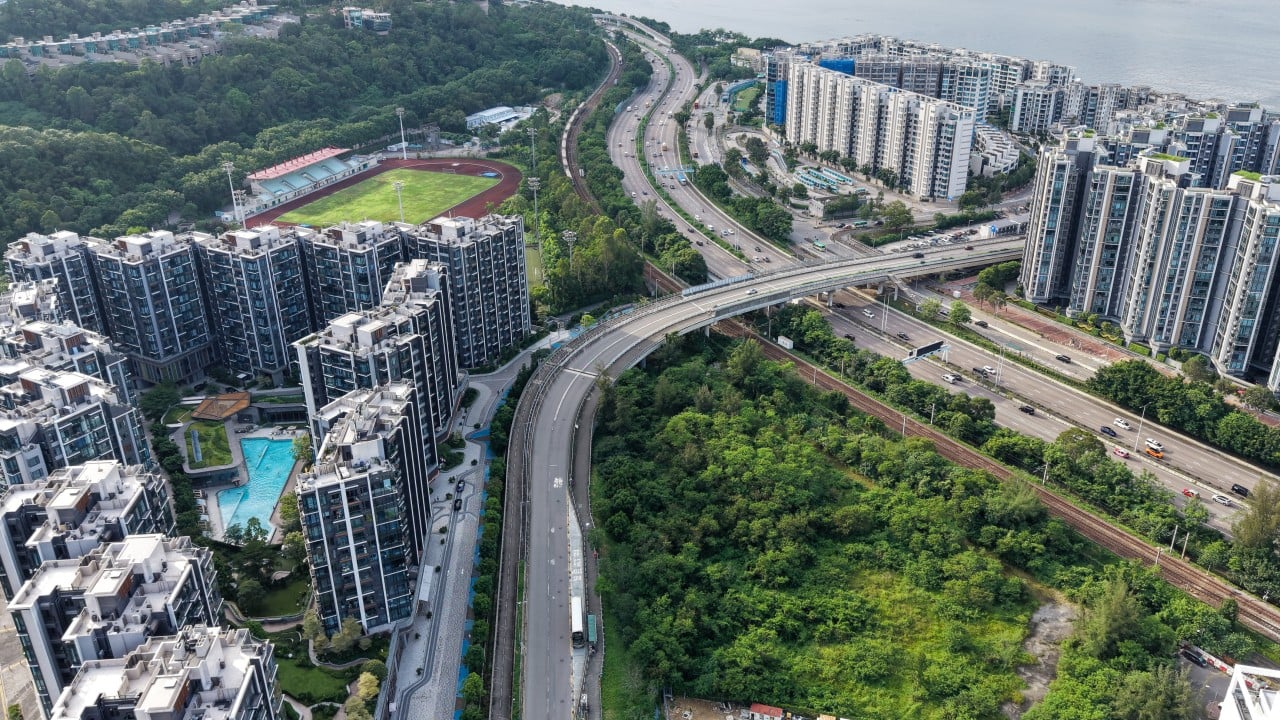
The platform at University Station during the morning rush hour is not a place for the faint of heart. It is a crushing sea of shoulders, the sharp scent of damp umbrellas, and the rhythmic, urgent beep of train doors closing on the Hong Kong East Rail line. Every morning, thousands of people living in the high-rise clusters of Pak Shek Kok squeeze themselves into this precise bottleneck. They walk, they take short minibus rides, they scramble. They do whatever it takes just to reach the threshold of the city’s transit spine.
Now, look at a map of Science Park. The glass-and-steel monoliths house the brightest minds in biotechnology and robotics, sitting right on the edge of the Tolo Harbour. It is a hub of futurism built on a foundation of daily, analog frustration. For years, the people who live and work here have shared a collective, unspoken daydream: a station of their own.
That daydream finally has a deadline. It is a date that feels both tantalizingly close and agonizingly distant.
To a corporate planner, nine years is a standard infrastructure timeline. To a parent watching their toddler take their first steps in a Pak Shek Kok apartment, 2033 is the year that same child will walk into a high school classroom. Infrastructure operates on geological time; human lives do not.
The Anatomy of a Missing Link
The gap between intention and execution in urban planning is rarely about a lack of will. It is about the terrifying complexity of changing a tire while the car is speeding down the highway at eighty miles per hour.
The East Rail line is not just any railway. It is a historic artery, a century-old corridor connecting the urban heart of Kowloon and Hong Kong Island to the mainland border. It is already operating at near-capacity during peak hours. Dropping a brand-new station right into the middle of this active, high-speed ecosystem is an engineering puzzle that borders on surgical.
Consider what happens next when the government commits to a project of this scale. You cannot simply stop the trains for a year to pour concrete. The work must happen in the dead of night, during the golden, fleeting window between 2 a.m. and 4:30 a.m. when the tracks fall silent. Workers scramble onto the ballast under the glare of floodlights, racing against a clock that ends with the first morning commuter train. Two and a half hours a night. That is the rhythm of progress.
This explains why the project, greenlit after extensive feasibility studies, carries a timeline that raises eyebrows among residents. The construction involves reclaiming a slice of land, reconfiguring existing tracks, and building a multi-level station without disrupting the daily lives of hundreds of thousands of passengers who rely on the line. It is a dance of millimeters.
The Hidden Cost of the Wait
Let us walk in the shoes of someone who actually lives this timeline. We can call her Michelle.
Michelle moved to a residential complex near the Science Park waterfront three years ago. She was drawn by the promise of sea breezes, lower density, and a modern community. She knew the transit situation was imperfect, but she believed the whispers that a railway station was just around the corner.
Every morning, Michelle faces a choice. She can queue for a green minibus that winds its way through local roads to Shatin or University Station, watching the digital clock on her phone tick closer to her meeting time. Or she can hail a taxi, watching the meter rise alongside her stress levels as traffic jams form near the Tolo Highway interchange.
When news broke that the Pak Shek Kok station would open as early as 2033, Michelle did the math. She is thirty-two now. She will be over forty when the first train pulls into her neighborhood.
"You realize your life is being measured in project phases," she says, looking out at the reclaimed land where the station is slated to rise. "It changes how you think about your home. Do I stay here and wait for the future, or do I move somewhere that functions right now?"
This is the emotional friction that data points ignore. When an official report states that a project is "progressing according to schedule," it doesn't capture the thousands of small, exhausting compromises families make in the interim. It doesn't capture the parents who miss dinner because a bus was stuck on the highway, or the researchers at Science Park who choose to live in crowded urban centers across the harbor simply because they cannot face the daily commute to the north.
The Ripple Effect on the Silicon Harbor
The stakes extend far beyond Michelle’s morning routine. Pak Shek Kok is the residential anchor for Hong Kong’s technology ambitions. The Innovation and Technology Bureau has poured billions into making Science Park a regional powerhouse. Yet, a tech hub without a dedicated mass transit link is like a high-powered computer running on a dial-up internet connection.
International talent is notoriously fluid. A developer from San Francisco or a researcher from London evaluates a job offer not just on the salary, but on the livability of the ecosystem. If they discover that working at Science Park means an hour-long, multi-leg trek from Central, the appeal begins to sour.
The realization of the 2033 station is structurally tied to the broader northern development strategies. It is part of a massive jigsaw puzzle that includes the Northern Metropolis and deeper integration with Shenzhen. The station is not an isolated luxury; it is a critical valve designed to relieve pressure on an overburdened transit network and unlock the economic potential of the entire district.
But a valve that takes nearly a decade to install leaves a lot of pressure building up in the pipes.
Bridging the Nine-Year Chasm
What happens to Pak Shek Kok in the meantime? The neighborhood cannot simply freeze in carbonite until the ribbons are cut in 2033.
The immediate challenge shifts to transport authorities and district councils to devise creative, stop-gap solutions. We are already seeing the expansion of franchised bus routes and the introduction of smart transit trials, but these are band-aids on a wound that requires stitches. The real test will be whether the local government can maintain the community's trust during the long silence of the construction phase.
There is a distinct vulnerability in admitting that a city known for its hyper-efficiency cannot build a train station overnight. Hong Kong constructed an entire airport on an artificial island in the 1990s with breathtaking speed. To hear that a single station requires a decade feels, to the average citizen, like a step backward.
The difference lies in the landscape. The airport was built on a blank slate of sea and rock. Pak Shek Kok station is being woven into a living, breathing, hyper-dense urban fabric. The caution is necessary. The delays are protective. A single miscalculation on the East Rail line could paralyze the economic movement of the entire territory.
The View from 2033
Picture the morning rush hour on a crisp October day in 2033.
The glass facade of the new Pak Shek Kok station reflects the morning sun hitting Tolo Harbour. The turnstiles click with the smooth, hypnotic rhythm of thousands of Octopus cards. A young professional, perhaps someone who is still in high school today, steps onto the platform, glances at their watch, and boards a train that arrives exactly on time.
For that commuter, the station will feel like it has always been there. It will be an invisible, taken-for-granted part of the city's bones. They will not think about the late-night engineering shifts in 2026, the fierce debates over budgets, or the residents who spent a decade of their prime waiting for a platform that existed only on blueprints.
The true value of infrastructure is that once it arrives, it erases the memory of its own absence. The struggle to build it fades into the background, leaving behind only the quiet, unremarkable miracle of a city that keeps moving forward. Buyers who bought apartments at a discount in 2024 will suddenly find themselves sitting on prime real estate. The long, frustrating bus queues will dissolve into history.
Until then, the people of Pak Shek Kok will continue to look out their windows at the empty plot of land by the tracks, watching the slow, deliberate machinery of the future grind into motion, one midnight shift at a time.



