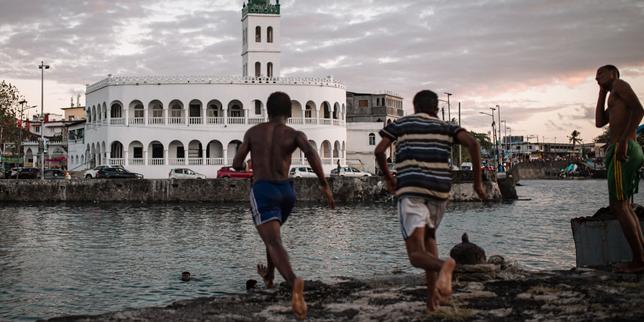
Six historic medinas across the Comoros archipelago have officially secured Unesco World Heritage status, marking a monumental milestone for Indian Ocean conservation. Yet, behind the celebratory press releases lies a stark, unsettling reality. Official recognition protects nothing on its own. Without immediate, heavy capital investment and a radical overhaul of local governance, these centuries-old stone labyrinths face a rapid descent into commercialized decay.
The Comorian government and international cultural bodies want the public to view this designation as a definitive victory. Decades of erosion, structural neglect, and creeping modernization have battered the historic urban fabrics of Iconi, Itsandra, Moroni, Mutsamudu, Domoni, and Fomboni. Unesco protection changes the legal framework overnight. It places these coral-stone architecture masterpieces on the global map. But parchment protection does not stop a leaking roof, halt salt-water intrusion, or fund the stabilization of collapsing sea walls.
For anyone who has walked the narrow, winding alleys of Mutsamudu on Anjouan or gazed at the ancient carved doors of Domoni, the diagnosis is clear. The heritage is breathtaking. The financial runway to protect it is virtually nonexistent.
The Weight of Stone and Salt
Coral-stone architecture is notoriously fragile. Unlike granite or kiln-fired brick, the traditional masonry used throughout the Comorian medinas breathes with the environment. It absorbs moisture from the tropical air and the surrounding ocean.
When maintenance is continuous, this material holds up for centuries. When maintenance stops, deterioration accelerates at a terrifying pace. Over the past fifty years, economic instability across the Union of the Comoros pushed historic preservation far down the national priority list. Families moved out of ancestral multi-story stone houses because they could not afford the specialized labor required to repair lime mortar and mangrove-beam ceilings. They built concrete blocks outside the historic cores instead.
The Unesco inscription creates an immediate tourist magnet. Tour operators are already printing brochures. Airlines are looking at route expansions.
Influxes of foreign visitors sound wonderful for economic development metrics. In practice, an unmanaged tourism surge acts like a slow-burning match dropped inside an ancient archive. Drainage systems designed for modest residential populations cannot handle sudden commercial density. Narrow alleyways crumble under increased foot traffic. Real estate speculators eye crumbling coral mansions, waiting for impoverished owners to sell off fragments of history for a fraction of their cultural value.
Iconi provides a case study in vulnerability. Perched on the cliffs of Grande Comore, its defensive walls and ancient palaces overlook a dramatic coastline. The site carries immense historical weight, recalling the heroic defense of Comorian queens against invaders. Today, sections of those very walls slide closer to the ocean every rainy season. Unesco status brings prestige, but it does not automatically dispatch engineers or dump trucks filled with non-reactive aggregates to shore up the cliffs.
The Governance Vacuum
Who actually runs these sites? That question exposes the fault lines in the current conservation model.
National ministries in Moroni issue decrees and sign international treaties. Municipal councils struggle with basic sanitation and waste management. Local traditional leaders hold the ultimate social authority over neighborhood boundaries and ancestral property rights. When these three power centers fail to coordinate, heritage management collapses into a bureaucratic turf war.
International heritage funding rarely flows directly to local craftsmen. It filters through layers of international consultants, national agencies, and regional administrators. By the time a project breaks ground on a restoration site, a significant percentage of the budget has vanished into administrative overhead.
Meanwhile, master masons who understand the exact composition of traditional coral lime plaster are aging out of the workforce. Young people migrate to France or seek employment in the capital rather than mastering a low-paying, highly specialized craft with zero institutional support. Unesco recognition alone will not reverse this brain drain. Preserving a medina requires keeping the people who know how to build it inside the community.
Domoni on Anjouan illustrates the tension between living communities and museumification. This is not a static archaeological park buried in the desert like Pompeii. It is a breathing, crowded city where families cook, children play soccer in small courtyards, and merchants trade goods daily. Treating these spaces like glass-case exhibits alienates the residents who own the homes. If locals feel that international designation brings severe building restrictions without financial compensation, they will view Unesco not as a savior, but as an occupying bureaucracy.
Moroni's old quarter faces a different threat entirely. Commercial pressure. As the national capital expands, the ancient medina sits right next to the modern commercial port zone. Land values spike. Business owners want to tear down deteriorating historical structures to build modern retail spaces and concrete apartment blocks. Local zoning laws exist on paper, but enforcement is weak, corruptible, and easily bypassed when cash changes hands.
Funding Realities and Foreign Aid
Let us talk about money. Conservation requires relentless, unglamorous cash flow.
The European Union, the French Development Agency, and various multilateral funds routinely pledge support for heritage projects in the Global South. Yet, these funds often come with strings attached. They require extensive feasibility studies, foreign auditing firms, and strict procurement processes that delay emergency interventions for years.
When a historic mosque roof collapses during cyclone season, a two-year grant approval process is useless. The building remains exposed to the elements. The timber rots further. The coral walls dissolve in the tropical downpours.
Furthermore, relying primarily on foreign aid creates a dependency trap. What happens when the donor country experiences a political shift or shifts its aid priorities to another crisis zone? The Comorian medinas cannot rely on the shifting whims of international philanthropy for their survival. They need self-sustaining revenue models generated directly from cultural tourism and national taxation reinvestment.
Revenue generation, however, requires infrastructure. Visitors need clean water, reliable electricity, decent boutique accommodations, and clear safety standards. Right now, infrastructure across the islands remains erratic. Power outages are frequent. Waste management in historic quarters is rudimentary at best. A high-end heritage traveler expects a certain standard of service. If the Comoros wants to capture tourist dollars to fund medina preservation, the state must first fix basic public utilities.
The Risk of Displacement
There is another dark side to heritage status. Gentrification.
Once an international body brands a collection of neighborhoods as world treasures, property values shift. Real estate investors from the diaspora or foreign nations begin buying up prime historical properties. They convert them into luxury guesthouses or private vacation homes.
Local families whose ancestors built and maintained these houses for generations get priced out. They are forced to relocate to informal settlements on the peripheries of the cities. The medina becomes a sanitized, hollowed-out stage set for tourists, stripped of the vibrant social fabric that made it worth preserving in the first place.
A city is its people. Without the traditional social networks, the local dialect nuances, the neighborhood associations, and the daily communal rhythms, a medina is just a collection of empty stones waiting for the next earthquake or tropical storm.
The Comorian government must enact strict rent-control and property-ownership protections specifically tailored to these six heritage zones. Without legal shields for current residents, Unesco recognition will accelerate the very cultural erasure it aims to prevent.
Shifting from Preservation to Regeneration
To save Iconi, Itsandra, Moroni, Mutsamudu, Domoni, and Fomboni, authorities must abandon the passive preservation mindset.
First, establish a decentralized conservation fund managed jointly by municipal leaders, traditional elders, and independent financial auditors. Eliminate the bureaucratic middlemen who siphon off funds before they reach the masonry sites.
Second, institute an apprenticeship program immediately. Pay young Comorians a living wage to study traditional building arts under the remaining master craftsmen. Make heritage preservation a high-status, well-compensated career path rather than an afterthought.
Third, enforce strict zoning laws that penalize illegal demolition while offering tax incentives to families who restore their ancestral homes using traditional materials. Property owners must feel that keeping history alive is financially viable.
Fourth, regulate tourism flow. Implement visitor caps, eco-taxes, and strict architectural guidelines for any commercial enterprise operating within the buffer zones of the six medinas. Do not let uncontrolled mass tourism devour the authenticity that drew visitors in the first place.
The Unesco designation is a starting pistol, not a finish line. The historical soul of the Comoros now hangs in the balance between bureaucratic inertia and commercial exploitation. The stones will hold their ground only if the people standing behind them are given the tools, the money, and the power to defend them.


