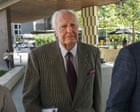
Peter Hollingworth died in Melbourne at the age of 91. His passing closes a dark, deeply uncomfortable chapter in modern Australian history. If you look back at the early 1990s, you'll see a man who was genuinely revered. He was the golden boy of Australian social justice. He fought poverty, championed the disadvantaged, and secured the title of Australian of the Year in 1991.
Fast forward a decade, and that exact same man became a symbol of systemic institutional failure.
When Prime Minister John Howard appointed Hollingworth as the 23rd Governor-General of Australia in 2001, it was meant to be the pinnacle of a life dedicated to service. Instead, it triggered a constitutional crisis that permanently altered how Australians view authority, accountability, and the intersection of church and state. Hollingworth didn't just resign; he was forced out after exposing how deeply the Anglican Church had failed victims of child sexual abuse under his watch.
From Poverty Fighter to Vice-Regal Disgrace
Hollingworth spent 25 years with the Brotherhood of St Laurence. He wasn't just a bureaucrat in a collar. He was on the ground, actively screaming for the rights of the poor, the homeless, and the forgotten. He was an early supporter of the ordination of women. He looked like the progressive change-maker the country needed.
That reputation evaporated during his 11-year tenure as the Anglican Archbishop of Brisbane.
Peter Hollingworth's Career Trajectory:
1964: Joins Brotherhood of St Laurence (Social Justice Advocacy)
1989: Named Anglican Archbishop of Brisbane
1991: Awarded Australian of the Year
2001: Appointed 23rd Governor-General of Australia
2003: Resigns in disgrace over child abuse cover-up findings
2023: Formally stands down from ministry to "end distress"
2026: Dies in Melbourne aged 91
By 2002, the public learned that Hollingworth had consistently protected the institution over vulnerable children. A formal church board of inquiry eventually confirmed the worst. As archbishop, he knew about severe allegations against predatory priests Donald Shearman and John Elliot. He didn't fire them. He didn't go to the police. He allowed them to remain in the church, giving them continued access to children.
The institutional rot wasn't accidental. It was a choice.
The Crisis That Broke the Vice-Regal Office
Australians expect the Governor-General to be a stabilizing force, a neutral figurehead above the political fray. Hollingworth's presence in Yarralumla did the opposite. Every single day he stayed in office, the moral authority of the position eroded further.
John Howard desperately tried to protect his pick. He argued that removing a Governor-General would cause a "constitutional earthquake." But public anger wasn't something you could legislate away. Survivors spoke out. The media refused to drop the story.
Then came a separate allegation that Hollingworth had raped a woman in the 1960s. He vehemently denied it, and the civil claim was ultimately withdrawn after the complainant tragically passed away. But the damage was absolute. You can't run a country's highest office from a defensive bunker.
On May 25, 2003, Hollingworth quit. He spent less than two years in the job. He remains the only Australian Governor-General forced to resign due to personal and professional misconduct.
No Real Justice for Survivors
If you think Hollingworth's resignation brought immediate accountability, you're wrong. For two decades after leaving office, he retained his massive taxpayer-funded pension, which sat at roughly $357,000 a year. He kept his church titles. He kept his status as a bishop.
Survivors spent years fighting to have him defrocked. It took until 2023 for a church inquiry to officially find him guilty of misconduct. Even then, the internal church body incredibly ruled that he was still "fit for ministry."
The tone-deaf nature of that ruling caused a massive public outcry. Recognizing that his presence was an ongoing wound for survivors, Hollingworth finally announced later that year that he would stop practicing as a priest. He admitted he made mistakes he couldn't undo, but the apology always felt late, legalistic, and empty to those who suffered under his leadership.
Upon his death, the current Anglican Archbishop of Brisbane, Jeremy Greaves, issued an unreserved apology for the church's past failures and the harm caused by its inability to respond with integrity. It's a stark reminder that the institution is still cleaning up the mess Hollingworth left behind.
Where We Stand Today
The death of Peter Hollingworth shouldn't just be an obituary about a former official. It needs to be treated as a case study in what happens when institutions prioritize self-preservation over human lives.
If you want to understand the modern secular shift in Australia, look no further than this saga. It fundamentally broke the public's trust in religious leaders as moral arbiters. It forced the government to completely rethink who gets vetted for high public office.
Don't let the polite political press releases fool you. Hollingworth's true legacy isn't the social work of his youth or the medals on his lapel. It's the bravery of the survivors who refused to be silenced by a bishop, a prime minister, or the highest office in the land.