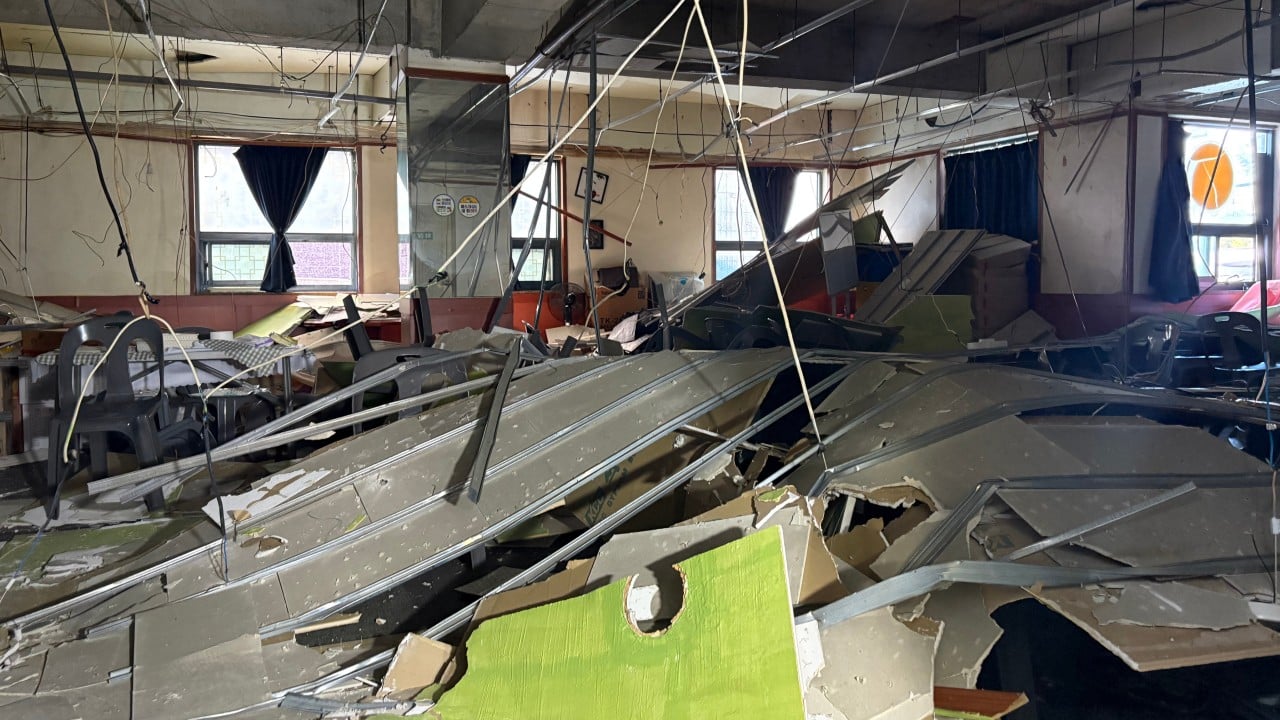
Thirty-eight people walked into a routine household goods sales event in Daegu expecting bargains. They walked out with contusions, lacerations, and a terrifying reminder of how thin the line is between modern commercial convenience and structural failure. When the suspended ceiling of a second-floor event space in Gwaneum-dong gave way, it triggered more than just a local emergency response. It exposed a pervasive, under-reported vulnerability lurking inside thousands of aging mid-rise commercial buildings across urban centers.
The incident occurred on a mid-morning when sixty-six shoppers, predominantly older adults drawn to discounted kitchenware, packed into an 892-square-meter venue. Over the span of roughly ten seconds, the plaster and panel finishings suspended beneath the primary concrete slab peeled away and collapsed in succession. While emergency services managed to avert fatalities—treating thirty-eight individuals for minor injuries and hospitalizing a subset for observation and shock—the structural autopsy reveals systemic municipal blind spots.
This was not an act of God. It was a collision of architectural aging, lax oversight of short-term commercial leases, and the invisible degradation of interior modifications executed decades after initial construction.
The Anatomy of a Forgotten Decade
Built in 1994, the four-story commercial structure in Daegu's Buk-gu district belongs to a massive generation of South Korean commercial architecture. These buildings went up during a period of breakneck economic expansion, where speed often overshadowed long-term material resilience. Over three decades, the property shifted hands and functions. The second floor, which once housed a billiards hall, sat vacant for a spell before a short-term vendor rented it for a monthlong promotional blitz.
Herein lies the structural hazard that safety inspectors routinely miss. Commercial real estate churns rapidly. Vendors move in, set up dense displays, draw crowds, and clear out within weeks. Every time a tenant alters a space—whether through minor ceiling repairs, the hanging of heavy promotional rigs, or the installation of new lighting grids like the ten LED fixtures recently mounted above the event space—cumulative stress is applied to aging anchor points.
Suspended ceilings are deceptive engineering elements. They rely on a web of wire hangers, light-gauge steel framing, and drywall or acoustic tiles anchored to a primary concrete slab. They are designed to carry their own dead weight and little else. When a high-density crowd gathers beneath them for a promotional event, vibrations, minor floor flexures, and the accumulated fatigue of decades can compromise corroded anchor wires.
Police booking the vendor on professional negligence charges addresses immediate culpability, but it treats the symptom rather than the systemic decay. Blaming a short-term tenant for failing to spot microscopic corrosion in a 1994 ceiling grid is an exercise in administrative deflection.
Municipal Blind Spots and Short-Term Leases
Urban planning authorities face an enforcement nightmare when dealing with low-tier commercial properties. High-profile skyscrapers and massive multi-use complexes are subject to rigorous, automated building management schedules. They employ dedicated engineering staffs and computerized maintenance management systems.
Neighborhood commercial blocks operate under a different set of economic realities. Property owners often minimize operational expenses, delegating day-to-day management to aging family members or third-party brokers. Municipal inspection cycles target fire suppression systems, primary egress routes, and major structural load-bearing columns. They rarely mandate invasive pre-occupancy audits for interior non-structural finishes every time a commercial lease changes hands.
When a vendor signs a one-month rental agreement, no structural engineer is called to verify whether the ceiling can support the foot traffic, the vibration, or the dense arrangement of inventory. The system relies on the assumption that if a building stands, its interior is monolithic. Physics proves otherwise. Materials fatigue, adhesives dry out, and steel hangers rust silently inside closed plenums.
The Human Cost of Neglected Infrastructure
The demographic profile of the victims in Daegu highlights a darker socioeconomic reality. Promotional sales events targeting older consumers are staples of urban retail, offering discounted household goods to populations living on fixed incomes. These shoppers are uniquely vulnerable when panic strikes. Narrow evacuation routes, the sudden plunging of overhead debris, and the sheer psychological shock of a structural collapse produce immediate stampede risks and trauma.
When public officials like Daegu Mayor Choo Kyung-ho promise intensive inspections of aging facilities that slip through regulatory cracks, the pledge is a necessary fire-fighting measure. Yet, inspections are reactive. They happen after the plaster falls, after the ambulances clear the street, and after public trust takes another quiet hit.
Preventing future collapses requires a fundamental shift in how municipalities treat non-structural interior modifications. Building codes must begin to mandate that any commercial space changing occupancy type—shifting from a recreational billiards hall to a high-density retail sales floor—undergo an mandatory engineering review of its ceiling and hanging infrastructure. Landlords must be held legally accountable for maintaining the baseline integrity of interior finishes, regardless of who occupies the floor for thirty days.
Until municipal authorities close the gap between major structural safety laws and the micro-architecture of everyday commercial interiors, ceilings will continue to drop on unsuspecting crowds.
South Korean Shopping Mall Ceiling Collapses During Sale, 38 Injured; President Lee Jae-myung Ord...
This video report captures the immediate aftermath and emergency response following the commercial building ceiling collapse in Daegu.