For years, the crossing at Huanggang felt less like a border and more like a test of endurance.
Ask anyone who has ever stood in the predawn damp, waiting for the iron gates to shift, and they will tell you about the weight in the air. Luggage handles cutting into palms. Exhaust fumes mingling with the heavy mist
The Concrete Vein That Beat the Wait
travel, news, business
Ask anyone who has ever stood in the suffocating humidity of a border crossing at dawn what time feels like, and they will tell you it has weight. It presses down on your shoulders. It smells of hot diesel exhaust, damp asphalt, and stale coffee from a vending machine that hasn't been cleaned in a decade.
(Note: This is a composite reconstruction of the psychological landscape faced by cross-border commuters, drawn from decades of documented transit patterns.)
For years, the crossing at Huanggang felt like a pressure cooker. It was an institutional bottleneck where tens of thousands of human stories—business owners rushing to morning meetings, parents visiting relatives across a invisible geographical line, students hauling heavy backpacks—met a hard, unyielding wall of bureaucratic friction. You arrived early. You waited. You watched the seconds bleed away on a cracked digital clock above a turnstile.
Then came the concrete shift.
Upgrades rolled out quietly, stripped of the usual corporate fanfare. The physical infrastructure of the Huanggang crossing was overhauled, revamped, given a new heartbeat. The reopening arrived with what officials termed a satisfactory rhythm, a dry descriptor for a profound mechanical and human relief. But numbers on a spreadsheet do not capture the actual sound of progress.
Consider what happens when a bottleneck widens.
The air clears slightly. The shoulder drops an inch.
To understand why the Huanggang revitalization matters, you have to look past the steel beams and the fresh coats of paint. You have to look at the geometry of modern movement. Modern borders are not merely checkpoints; they are psychological valves. When they are constricted, anxiety spikes across an entire regional economy. When they open, commerce and human connection breathe easier.
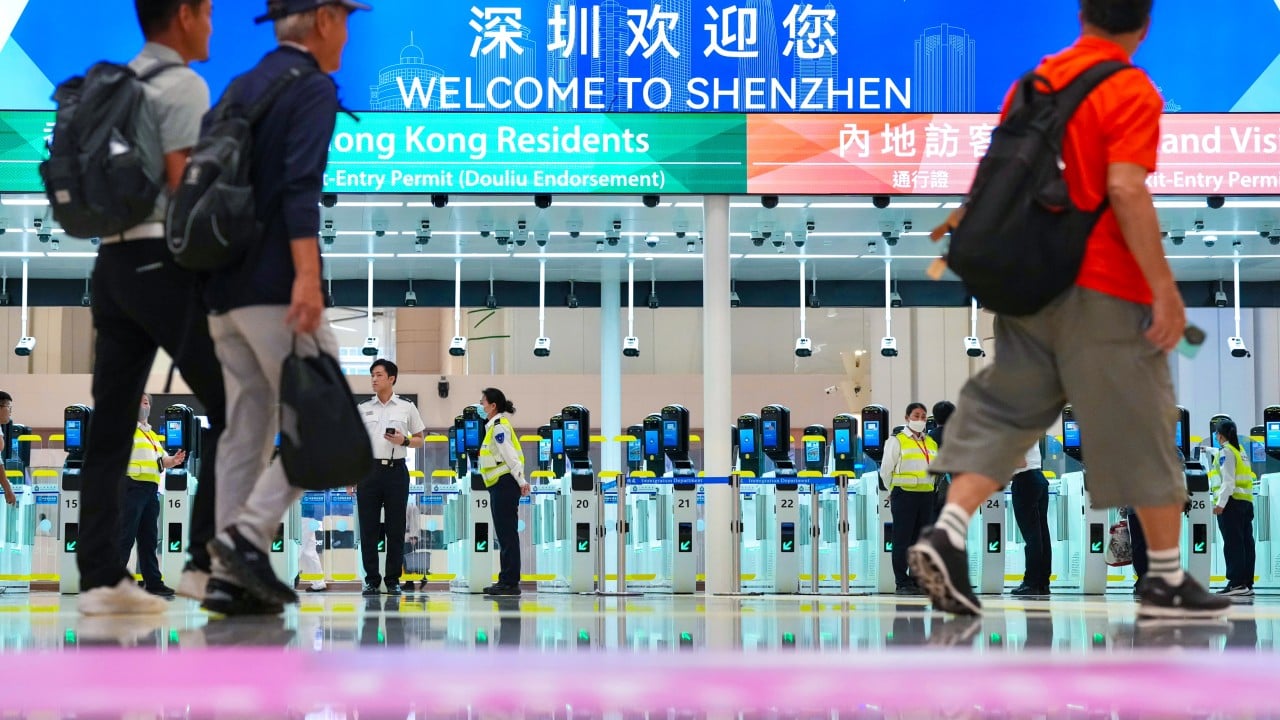
The revamped crossing introduces a streamlined architectural flow designed to handle immense throughput without the traditional friction points. Imagine walking through a space where your passport is scanned, verified, and cleared almost before you register the motion of the gate. That is the promise of modern transit engineering. It is not just about moving cars or pedestrians faster; it is about respecting the finite nature of human attention and time.
For the cargo truck driver hauling fresh produce from Shenzhen deep into the regional distribution networks, those saved minutes mean the difference between crisp vegetables and spoiled inventory. For the corporate strategist who splits a working week between two distinct financial hubs, those minutes mean catching a child's bedtime story instead of staring at a brake light in a seemingly endless queue of stationary vehicles.
Critics often dismiss these infrastructure projects as mere utilitarian upgrades, cold slabs of concrete poured to satisfy political metrics. They miss the poetry of logistics. Every efficient border crossing is an act of trust between municipalities, a declaration that geography should not be a permanent tax on ambition.
When Huanggang reopened with its revamped architecture, the initial reports used the word "satisfactory." It is a deceptively modest term. In the lexicon of civil engineering, satisfactory means the machinery works. It means the friction is gone. It means the invisible gears of civilization are turning precisely as intended, allowing the people who power the region to get back to what matters most.
The line moves. The gate lifts.
And somewhere out there in the morning mist, a life resumes its momentum without pause.