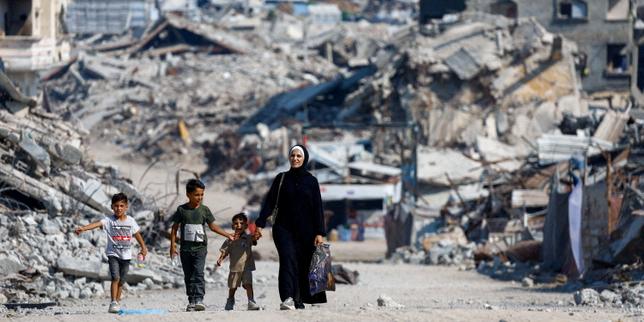
The bombs stopped falling on that specific block in Gaza-ville, but the concrete remembered. When a six-story residential building finally buckled under its own compromised weight, it turned dozens of lives into a statistical update. You see headlines about immediate casualties, but you rarely hear about the secondary disaster. Ruined structures across the strip are turning into slow-motion traps.
Let's look at what actually happens when structural integrity vanishes. A building takes direct hits during active military operations, fracturing steel reinforcement bars and splitting load-bearing columns. Weeks or months later, human desperation collides with physics. Families move back into cracked apartments because alternative shelter simply doesn't exist. They ignore the sagging ceilings and the groaning pillars. They don't have a choice.
The Physics of Delayed Collapse
Structural engineers will tell you that concrete structures damaged by explosive blasts lose their load capacity exponentially over time. Micro-fractures widen with every tremor, wind gust, or vibration from nearby traffic. When that six-story block gave way, it didn't just collapse downward; it pancaked, compressing floors into tight layers of debris that emergency services struggled to penetrate.
The local defense civil teams are fighting an impossible math problem. They face massive rubble fields with broken hand tools, minimal heavy machinery, and zero reliable communication grids. By the time regional assistance like heavy equipment arrives from external partners, hours have bled into days. Air pockets crush shut. The survival window closes before the first excavator reaches the site.
Why Returning to Damaged Homes Remains a Fatal Necessity
People ask why anyone would sleep inside a ruined structure. The answer is brutal displacement. With vast swaths of the enclave flattened and reconstruction stalled, housing options hit absolute zero. You weigh a statistical risk against immediate exposure on the street. People pick the roof over their heads, even if that roof is hanging by fractured rebar.
This creates a hidden crisis of structural safety management. International humanitarian bodies note that hundreds of similar compromised buildings loom over neighborhoods like vertical coffins. Without comprehensive engineering assessments and controlled demolitions, every heavy rainstorm or minor earth tremor threatens another catastrophic pancake failure.
The Broader Humanitarian Toll
The numbers coming out of Gaza tell a grim story of infrastructure failure. Beyond the direct toll of ongoing conflicts, thousands of injured structures now pose daily lethal hazards to civilians. Medical facilities remain overwhelmed, emergency responders lack basic fuel, and communities live in the constant shadow of their own collapsing neighborhoods.
Clearing these sites requires specialized urban search-and-rescue operations that current local resources cannot sustain alone. Until heavy engineering units gain safe, continuous access to stabilize or safely drop dangerous facades, the rubble will keep claiming lives long after the smoke clears.