Stone does not negotiate.
Walk down the National Mall in Washington, D.C., on a freezing Tuesday morning in January, and you can feel that truth radiating straight up through the soles of your boots. The granite of the Lincoln Memorial absorbs the winter chill and holds onto it until May. The marble of the Washington Monument catches the pale morning sun and turns blindingly white against a gray sky. Every square inch of that grass and limestone was fought over by architects, senators, grieving families, and furious taxpayers for decades before a single shovel broke the dirt.
Now picture a crane swinging a forty-ton slab of gilded concrete over Pennsylvania Avenue.
For months, a seductive little piece of political theater has been making the rounds in opinion pages and late-night conversations. The pitch goes like this: give Donald Trump his triumphal arch. Build the monument he has mused about, let him have his Roman-style victory gate, let him cut the ribbon with gold scissors, and then—come January 2029—throw a massive national block party and tear the whole thing down. Treat it like a pop-up art installation. Let the demolition crew serve as the closing act of an era.
It sounds clever. It feels cathartic. Honestly, if you have spent the last several years feeling exhausted by the relentless churn of breaking news, the idea of turning civic architecture into a giant, erasable whiteboard carries a wicked appeal. You get to avoid a brutal political fight today and promise yourself a cinematic victory lap tomorrow.
There is just one problem with that plan.
It completely misunderstands how cities, money, and human psychology actually work.
The Myth of the Temporary Monument
To understand why a "temporary" triumphal arch is a fantasy, we need to leave Washington for a second and imagine a guy named Arthur. (Arthur is a hypothetical composite, drawn from the civil engineers and municipal planners who spend their lives dealing with the aftermath of political vanity projects.)
Arthur works for the National Park Service. His entire job revolves around maintaining stone structures that were supposed to be simple and turned out to be bottomless pits of engineering complexity. When Arthur hears someone casually suggest building a massive neoclassical arch in the heart of the federal district—only to demolish it three or four years later—he doesn't laugh. He reaches for his antacids.
You do not simply drop a monument onto the spongy, reclaimed riverbed of Washington, D.C., like a plastic lawn chair. The capital sits on what used to be a literal swamp. To keep a multi-story stone or reinforced-concrete arch from sinking unevenly and cracking in half within eighteen months, engineers have to drive steel-and-concrete pilings sixty to eighty feet down into the bedrock. You have to reroute ancient water mains, fiber-optic trunk lines, and high-voltage electrical conduits that spiderweb beneath the asphalt.
That foundational work alone takes years of environmental reviews, soil core testing, and federal permitting under the Commemorative Works Act of 1986. Congress passed that law specifically to stop presidents and wealthy donors from cluttering the capital with impulsive monuments. Under current federal rules, a commemorative work cannot even be considered until at least ten years after the end of the event or the death of the person being honored. Bypassing those guardrails requires a direct act of Congress, tearing up forty years of bipartisan preservation law just to pour concrete faster.
And what happens to the bill?
Even a modest civic archway—stripped of gold leaf, built on an accelerated timeline, and engineered to modern seismic and security standards—easily clears fifty to one hundred million dollars once you factor in site preparation, security bollards, lighting, and surrounding roadwork. Tearing it down four years later isn't free, either. Demolishing reinforced concrete in the middle of a dense urban corridor without shattering the windows of neighboring federal buildings requires precision diamond-wire sawing, hazardous dust containment, nighttime street closures, and tens of millions more in hauling and site restoration costs.
You end up burning over a hundred million taxpayer dollars to leave behind a patched-over square of asphalt.
History Never Signs a Lease
Even if you ignore the engineering nightmare and the eye-watering price tag, there is a much deeper trap waiting inside the "build it now, tear it down in 2029" argument.
History does not do pop-ups.
Think about the Eiffel Tower. When Gustave Eiffel pitched his wrought-iron lattice tower for the 1889 World's Fair in Paris, the city's cultural elite loathed it. Writers and painters signed an angry manifesto calling it a "gigantic black smokestack" that would humiliate Notre-Dame and the Louvre. The city only agreed to let it stand because the permit came with a strict twenty-year expiration date. In 1909, the scrap metal dealers were supposed to move in and dismantle the eyesore piece by piece.
Look at a postcard of Paris today. Once iron and stone go up in the center of a capital city, they develop gravity. They alter traffic patterns. They become the backdrop for tourist selfies, protest marches, and network television broadcasts. Within ten years, the thing people swore was temporary becomes the thing nobody has the political will to remove.
Consider what happens next if an arch goes up in Washington:
- The Sunk-Cost Trap: By 2029, the public will have already paid for the structure. A future administration facing inflation, infrastructure decay, or healthcare shortfalls will have to explain to voters why it is spending another thirty million dollars on wrecking balls instead of fixing bridges.
- The Martyrdom Effect: Nothing turns a tacky piece of political branding into a sacred relic faster than sending bulldozers after it. The moment cranes arrive to dismantle the arch, it stops being an eyesore and instantly becomes a rallying cry for millions of aggrieved voters who view the demolition as cultural erasure.
- The Precedent Problem: Once you establish that every incoming administration can erect a massive monument to itself and every successor can tear it down, the National Mall ceases to belong to the American people. It becomes a seasonal set design for whoever currently holds the lease on the White House.
I used to think civic architecture was mostly about aesthetics—about whether a building looked dignified or gaudy. Then I spent a rainy afternoon standing in front of the Vietnam Veterans Memorial, watching an older man press a piece of cheap notebook paper against the black granite and rub a pencil back and forth over a single carved name. His hands were shaking so badly he tore the paper twice. Around him, twenty strangers stood in complete, unbroken silence.
That wall works because it wasn't built as a punchline, a bargaining chip, or a temporary distraction. It was built with the terrifying knowledge that whatever we put into the earth of our capital is going to outlive every single one of us.
The Architecture of Distraction
Why, then, are so many smart, well-meaning people tempted by the idea of giving in on a monument just to stage a demolition party later?
Because fatigue makes us bargain with reality.
When political conflict feels endless, symbolic gestures start looking like shortcuts. It is exhausting to argue about judicial appointments, regulatory rollbacks, tax policy, and voting rights day after day. Those battles are slow, technical, and deeply unglamorous. You cannot wrap a tax code revision in red, white, and blue bunting, and you certainly cannot knock it down with a wrecking ball on live television.
Offering up a monument as a sacrificial lamb feels like an easy way to appease an ego while keeping your eye on the bigger picture. Let him have his shiny arch, the logic goes. It's just concrete. It doesn't hurt anybody.
Except it does.
Public space is not a neutral backdrop; it is a physical curriculum. Every statue, arch, and plaque in a city quietly teaches the next generation what that society values, what it fears, and who holds power. When we treat monumental architecture like disposable party favors, we train ourselves to see democracy itself as something temporary—a four-year rental property where nobody bothers to take care of the walls because the next tenant is just going to repaint them anyway.
Look at how Roman emperors actually used triumphal arches. The Arch of Titus and the Arch of Constantine were never built as democratic compromises or temporary art projects. They were permanent stone billboards designed to project absolute, unchallengeable dominance over public space. They forced every citizen walking down the road to physically pass beneath the ruler's shadow. You did not negotiate with an arch; you submitted to its scale.
Building one in a modern republic—even with a wink and a calendar reminder set for 2029—imports that exact visual language straight into the heart of a system that was explicitly designed to reject kings.
What Actually Endures
If you want to understand the difference between political vanity and genuine civic pride, you don't need a degree in urban planning. You just need to look at what survives when the cameras turn off.
In 1939, Marian Anderson, one of the greatest contraltos in the world, was barred from singing at Constitution Hall in Washington because she was Black. Instead of staging a stunt or building a temporary stage to mock her critics, she walked up the marble steps of the Lincoln Memorial on Easter Sunday and sang to seventy-five thousand people standing around the Reflecting Pool, with millions more listening on the radio.
Nobody built a triumphal arch for Marian Anderson that afternoon. No one poured a single yard of concrete. Yet eighty-seven years later, if you stand on that exact marble landing and look out toward the water, the air still feels charged with what happened there. The monument didn't make the moment; the courage of the people standing on its steps gave the stone its meaning.
True national confidence doesn't need seventy feet of gilded masonry to announce itself. It shows up in libraries that stay open late, bridges that don't rust through, clean water coming out of kitchen taps in forgotten towns, and laws that protect the minority from the whims of the majority. Those things rarely get commemorative ribbons, and nobody throws a demolition party when they work.
They just hold the country together.
The Empty Lot
Imagine it is January 2029.
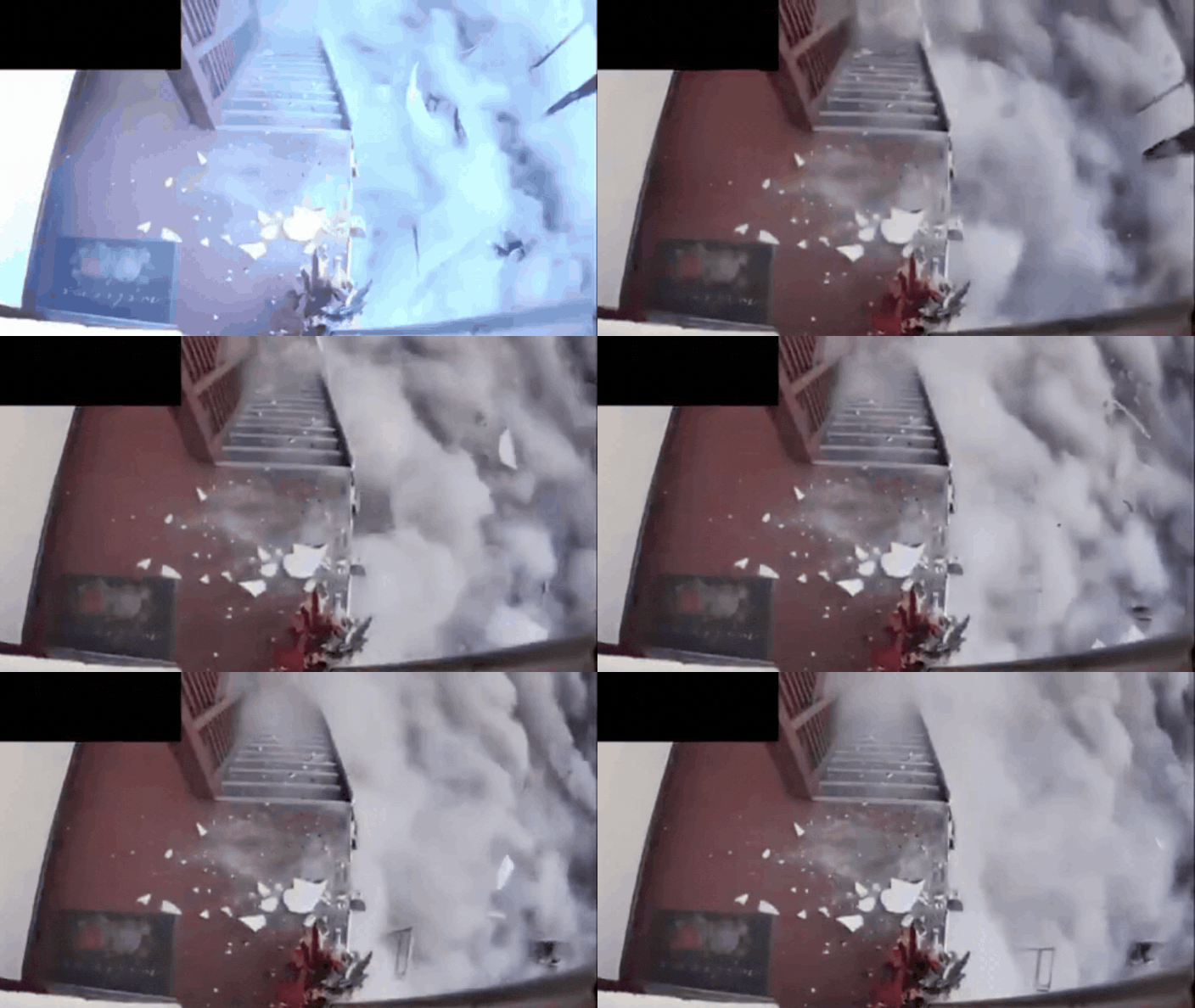
The winter wind is whipping off the Potomac River, rattling the bare branches of the elms along Constitution Avenue. A crowd has gathered—not around a pile of rubble, not cheering as a crane swings a steel wrecking ball into freshly cured concrete, and not watching millions of tax dollars dissolve into a cloud of choking gray dust.
Instead, they are standing in front of an open, uninterrupted stretch of green grass and old pavement. The view from the Capitol dome straight down to the Lincoln Memorial remains completely unbroken, just as Pierre L'Enfant sketched it over two centuries ago. No politician's name is carved above their heads. No concrete shadow falls across the avenue.
The strongest thing a republic can build is the restraint to leave the space empty.