Six months into an Ebola response in the Democratic Republic of the Congo, the virus continues to spread because medical containment strategies are colliding with active armed conflict, deep-seated community distrust, and collapsing local infrastructure. Standard public health playbooks rely on rapid contact tracing, safe burials, and isolated treatment centers. In eastern Congo, those tools fail when militia violence forces health workers to evacuate, when local populations view foreign medical teams with suspicion, and when mobile populations carry the virus across porous borders before epidemiologists can map a single transmission chain.
The headlines usually blame the pathogen. They focus on case fatality rates and viral hemorrhagic mechanics. That framing misses the operational reality on the ground. Ebola is a known quantity. Virologists understand how it transmits—through direct contact with the blood, secretions, organs, or other bodily fluids of infected people, and with surfaces and materials contaminated with these fluids. Epidemiologists know how to stop it. Yet every prolonged outbreak in the DRC follows a depressingly familiar trajectory where the biology of the virus becomes secondary to the sociology and security of the region. If you enjoyed this post, you might want to check out: this related article.
The Illusion of the Purely Medical Response
Public health agencies often arrive at an outbreak zone with an engineering mindset. They bring personal protective equipment, mobile laboratories, experimental therapeutics, and ring-vaccination protocols. They set up triage tents and chlorination stations. On paper, the logistics look formidable.
In practice, an Ebola treatment center is useless if sick people refuse to enter it. For another look on this story, refer to the latest update from World Health Organization.
When an outbreak drags past the six-month mark, the primary bottleneck is rarely a shortage of vaccines or hospital beds. It is community resistance. In regions like North Kivu and Ituri, which have endured decades of state neglect and brutal violence from dozens of armed groups, the sudden arrival of well-funded international responders triggers immediate skepticism. Residents ask a rational question. Why did the world ignore them while militias burned their villages and killed their neighbors, only to pour millions of dollars into the region when a virus threatened to cross international borders?
That resentment curdles into active resistance. Rumors spread faster than the pathogen. Some locals believe Ebola is a political fabrication designed to disenfranchise voters or justify military occupation. Others suspect that treatment centers are places where patients go to have their organs harvested, a perception reinforced when loved ones enter opaque plastic tents and never come out, their bodies immediately sealed in heavy bags and buried by strangers in hazmat suits.
When Safe Burials Trigger Violence
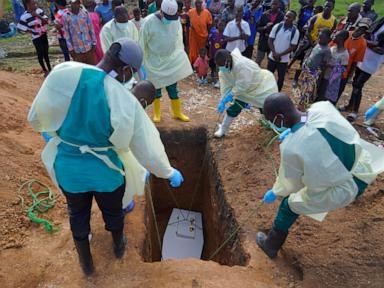
Traditional funeral practices in much of Central Africa involve washing, touching, and kissing the body of the deceased to show respect and ensure a peaceful transition to the afterlife. From an epidemiological standpoint, a fresh Ebola corpse is a biological bomb, carrying an extraordinarily high viral load. Safe and dignified burial teams are therefore essential to breaking transmission chains.
Yet the mechanics of a safe burial often look like desecration to grieving families. When outsiders arrive in protective gear, spray chlorine over a relative's body, and forbid the family from approaching, the intervention feels hostile. Without painstaking negotiation with local elders, religious leaders, and youth groups before a death even occurs, burial teams become targets. Stones are thrown. Vehicles are burned. Health workers are assaulted or killed, forcing international agencies to suspend operations for days or weeks at a time. Every suspension gives the virus an uncontested window to double its case count.
The Security Trap in Conflict Zones
Fighting Ebola in a stable country requires immense coordination. Fighting it in an active war zone requires a miracle.
The eastern DRC is home to over a hundred distinct armed militias, alongside national army units and United Nations peacekeepers. In previous major outbreaks, such as the 2018–2020 Kivu epidemic—the second-largest in history—security incidents routinely paralyzed the response. Gunfire near treatment centers forces staff into bunkers. Roadblocks erected by rebel factions cut off supply lines and prevent surveillance teams from reaching rural health zones.
This creates a lethal feedback loop. Security threats force responders to travel with armed military escorts. Seeing health workers arrive alongside uniformed soldiers confirms the worst suspicions of local residents, who already view state security forces as predators rather than protectors. The medical mission loses its neutrality. Once community members perceive doctors and contact tracers as extensions of a hostile military apparatus, cooperation evaporates.
Consider a hypothetical scenario illustrating how a single transmission chain escapes control under these conditions. A trader in a rural market develops a fever and muscle pain. Because the symptoms mimic malaria or typhoid, he visits a local, unregulated clinic where needles are reused and staff lack gloves. Before anyone suspects Ebola, a militia raid forces the entire village to flee into the surrounding forest or toward a crowded urban center. Thirty people exposed at the clinic scatter across three different health zones. By the time a surveillance team regains safe access to the area two weeks later, those thirty contacts have already infected their own households, seeding multiple new clusters that have no obvious epidemiological link to the original patient.
The Blind Spots of Contact Tracing
Contact tracing is the backbone of outbreak containment. The rule is straightforward. Identify every person who came into contact with a confirmed patient, monitor their temperature twice a day for 21 days—the maximum incubation period for Ebola—and isolate them the instant they show symptoms.
At six months into an uncontrolled outbreak, contact tracing begins to collapse under its own weight.
- Incomplete Contact Lists: Families terrified of the stigma associated with Ebola, or fearful of being forcibly taken to an isolation ward, frequently hide sick relatives and lie to investigators about who visited the home.
- Hyper-Mobile Populations: Traders, miners, and displaced families move constantly across vast distances using informal footpaths and motorbikes, bypassing official health checkpoints set up along main highways.
- Nosocomial Amplification: Small, private health clinics—often run by traditional healers or undertrained nurses—act as silent amplifiers. Sick patients seek care there first to avoid the formal system, inadvertently infecting health workers and other patients before the virus is ever detected.
When epidemiologists report that a high percentage of new cases are occurring outside known contact lists, it means the response has lost visibility. Responders are no longer chasing the virus ahead of its spread. They are merely counting the casualties weeks after transmission has already occurred.
Vaccines Are Tools Not Magic Bullets
The deployment of the rVSV-ZEBOV vaccine fundamentally changed the mathematics of Ebola containment. Clinical trials and field deployments demonstrated high efficacy, allowing responders to use a ring vaccination strategy. Teams vaccinate the contacts of a confirmed case, and the contacts of those contacts, creating an immune buffer around the infection.
Six months into a sprawling outbreak, ring vaccination hits severe operational limits.
First, the vaccine requires an ultra-cold chain, needing storage at minus 60 to minus 80 degrees Celsius until shortly before use. Maintaining that temperature in regions with no reliable electrical grid, impassable mud roads, and frequent security evacuations demands massive logistical muscle.
Second, ring vaccination depends entirely on accurate contact tracing. You cannot build a ring of immunity around a patient if you do not know who that patient interacted with, or if the contacts refuse the injection out of fear. In prolonged outbreaks, responders often have to pivot to geographic vaccination—immunizing entire neighborhoods or villages—which consumes vaccine stockpiles rapidly and stretches field teams to the breaking point.
The Structural Rot of the Local Health System
International emergency responses operate like high-intensity sprint teams. They flood an area with cash, vehicles, and expatriate specialists, pay local staff salaries that dwarf normal government wages, and focus exclusively on a single pathogen.
This parallel economy breeds deep dysfunction. Local nurses and doctors abandon their regular posts in maternal health, malaria treatment, and routine childhood immunizations to take lucrative jobs with international Ebola agencies. Meanwhile, children continue to die of measles, cholera, and malaria at rates that often exceed the mortality of the Ebola outbreak itself.
Local communities notice the disparity immediately. When a child dying of malaria is turned away from a clinic because all resources are diverted to an Ebola triage tent, public trust disintegrates. People conclude that the international community cares only about containing a disease that might threaten wealthy nations, while remaining completely indifferent to the everyday killers plaguing Congolese families.
The Funding Cliff and Response Fatigue
By the sixth month, institutional fatigue sets in across every layer of the operation. Frontline workers—many of whom are local Congolese staff working grueling shifts under constant threat of infection and violence—suffer severe psychological trauma. Burnout leads to lapses in infection prevention protocols, resulting in tragic infections among healthcare workers themselves.
Simultaneously, international donor attention begins to drift. Emergency pledges made during the initial panic of the outbreak declaration are slow to materialize or start drying up just as the response needs sustained funding to penetrate hard-to-reach rural areas. Without predictable cash flow, local contractors go unpaid, strike actions erupt among burial and sanitation teams, and the entire containment apparatus stalls.
What Actually Breaks a Prolonged Outbreak
History shows that an entrenched Ebola epidemic does not end because international agencies deploy more sophisticated technology or issue stern warnings. It ends when the response fundamentally shifts ownership from external crisis managers to local social structures.
Successful containment in the DRC has consistently required three painful adjustments:
- Decentralizing Surveillance and Care: Moving testing and treatment closer to communities through small, locally staffed transit centers rather than forcing patients into massive, intimidating regional facilities.
- Integrating Basic Healthcare: Offering free treatment for malaria, respiratory infections, and maternal emergencies alongside Ebola screening so communities see immediate, tangible benefits from engaging with health teams.
- Empowering Local Mediators: Stepping back and letting trusted community figures—church leaders, women's associations, youth representatives, and even local militia commanders—negotiate access, explain burial protocols, and lead contact tracing in their own neighborhoods.
Until responders stop treating local resistance as an irrational obstacle to be overcome and start addressing it as a rational reaction to decades of abandonment and violence, the virus will continue to find safe harbor. A pathogen that spreads through human intimacy and care cannot be defeated by outsiders acting without consent.