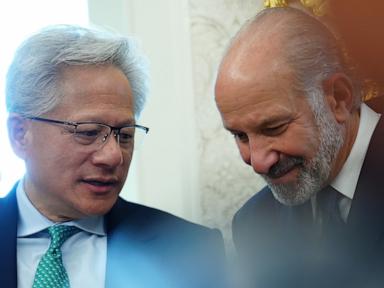
Congressional Republicans are demanding public testimony from Commerce Secretary Howard Lutnick and Nvidia CEO Jensen Huang over how advanced artificial intelligence processors are reaching restricted markets and whether federal export enforcement has kept pace with commercial reality. At the center of the push is a fundamental clash between national security hawks on Capitol Hill and the commercial machinery driving the global semiconductor boom. Lawmakers want answers on licensing decisions, third-party transshipment loopholes, and the balance between maintaining American corporate dominance and preventing strategic rivals from acquiring high-end compute power.
Washington has spent the last several years trying to draw a clean regulatory line across a notoriously messy global supply chain. It has not worked as cleanly as policymakers hoped. Every time the Department of Commerce tightens technical thresholds on chip performance or interconnect bandwidth, hardware engineers redesign products to sit just beneath the ceiling, while gray-market brokers find new transit corridors through third-party countries. Now, with Howard Lutnick leading the Commerce Department and Jensen Huang steering the most valuable semiconductor company on earth, House Republicans are moving from behind-the-scenes letters to demands for sworn public scrutiny.
To understand why this hearing request carries weight, you have to look past the political theater of a Capitol Hill committee room. Subpoenas and hearing invitations are rarely just about a single news cycle. They represent an institutional power struggle over who actually controls American technology policy during a period of intense geopolitical competition.
The Architecture of Export Controls and Their Built-In Friction
Export controls on advanced semiconductors were never designed to be static rules. They operate more like a rolling blockade. When the Bureau of Industry and Security (BIS) within the Commerce Department restricts a specific chip architecture, the agency defines the boundary using measurable hardware metrics—typically processing speed, memory bandwidth, and chip-to-chip interconnect speeds.
That technical specificity creates an immediate market response. Chip designers treat regulatory limits as engineering specifications. If a rule bars the export of a processor above a certain performance density, Nvidia and its competitors build compliant variants engineered to hit 95 percent of that cap. From a legal standpoint, these modified chips follow the letter of federal law. From a national security standpoint, critics argue they still allow foreign data centers to cluster thousands of compliant processors together to achieve frontier-level training runs.
The friction intensifies once those chips leave the loading dock. Nvidia does not sell bare silicon directly to every end user around the globe. Instead, the company sells to original equipment manufacturers, server integrators, cloud service providers, and authorized distributors. Those partners assemble complete server racks and deploy them across data centers in Singapore, Malaysia, the Middle East, and Europe.
Once a server rack enters a third-party data center, tracking its physical location—or even more difficult, tracking who remotely rents compute cycles on those servers—becomes an enforcement nightmare. Commerce Department investigators rely heavily on end-user checks, corporate compliance audits, and intelligence tips. Yet the sheer volume of global server shipments dwarfs the staffing levels of federal export enforcement teams.
Why Howard Lutnick Is in the Crosshairs
Howard Lutnick arrived at the Commerce Department with a reputation as an aggressive Wall Street dealmaker and a vocal proponent of using tariffs and trade policy as blunt negotiating instruments. For congressional Republicans focused on export enforcement, his leadership presents a complex dynamic.
On one hand, hawks expect an uncompromising posture toward strategic adversaries. On the other, the Commerce Department is explicitly tasked with promoting American business interests abroad while simultaneously policing those same businesses when national security is at stake. Those two mandates collide daily inside the Herbert C. Hoover Building.
Lawmakers pressing for Lutnick to testify want clarity on several operational fronts:
- Licensing backlogs and approvals: Which companies are receiving special export licenses for advanced computing hardware, and what verification standards apply before those approvals are granted?
- Enforcement staffing and funding: Does BIS have the technical auditors and overseas enforcement officers needed to inspect foreign data centers in real time?
- Cloud compute loopholes: How does the Commerce Department plan to regulate remote access, where a restricted foreign entity does not import a single physical chip but trains models via cloud servers hosted in a permitted country?
- Allied coordination: Are treaty allies in Europe and Asia enforcing matching restrictions on semiconductor manufacturing equipment and high-end accelerators, or are American firms losing market share while foreign competitors fill the void?
Putting the Commerce Secretary under oath forces the administration to put its enforcement philosophy on the public record. Written responses from agency legislative affairs offices are routinely scrubbed of specifics and delayed for months. Live questioning under camera lights removes that buffer.
Jensen Huang and the Corporate Tightrope
If Lutnick represents the regulatory apparatus, Jensen Huang embodies the commercial engine that Washington cannot afford to stall. Nvidia sits at the center of modern artificial intelligence infrastructure. Its graphics processing units, paired with its proprietary CUDA software ecosystem, form the foundational computing layer used by hyperscalers, defense contractors, biomedical researchers, and sovereign AI initiatives worldwide.
For Huang, the political calculus is unforgiving. Comply too passively with sweeping export bans, and Nvidia forfeits billions of dollars in quarterly revenue while handing foreign competitors an incentive—and a captive customer base—to build alternative chip architectures. Push back too aggressively against Washington's national security establishment, and the company risks alienating the lawmakers who control federal research funding, defense procurement, and antitrust oversight.
Consider a hypothetical example of how this tension plays out in practice. Imagine a regional cloud provider based in Southeast Asia orders 10,000 high-end AI accelerators through an authorized server integrator. The buyer passes every standard Know Your Customer check, maintains a clean corporate registry, and operates legitimate enterprise data centers. Six months later, a portion of that computing capacity is subleased through nested shell companies to a restricted foreign research institute. Under current commercial structures, how much visibility does the chip designer actually have into who runs code on those servers after the hardware is delivered and paid for?
Republicans pushing for Huang to testify want to test the limits of corporate responsibility. They are asking whether hardware manufacturers should be required to build technical telemetry, geographic verification, or cryptographic licensing controls directly into future silicon architectures—a concept often referred to as on-chip governance.
The Hidden Mechanics of Hardware Diversion
To appreciate why lawmakers are frustrated, you have to look at how physical diversion actually happens in the semiconductor trade. Contrary to popular imagination, diversion rarely involves smugglers sneaking briefcases of processors across borders. Most diversion occurs through routine commercial paperwork.
High-end AI servers are heavy, power-hungry machines requiring specialized cooling and enterprise networking gear. Moving them requires freight forwarders, customs declarations, insurance policies, and commercial financing. Diversion networks exploit gaps between jurisdictions. A shell company registered in a transshipment hub purchases server systems legitimately, claims they are destined for local enterprise deployment, and then re-exports the hardware—or strips the GPUs out of the chassis—before shipping them onward to a restricted destination.
Another increasingly common method bypasses physical transport entirely. Rather than moving the hardware, brokers move the data. By leasing bare-metal server clusters inside compliant jurisdictions, restricted entities gain full root access to top-tier compute clusters over fiber-optic cables. Because no physical good crosses a customs border, traditional export control mechanisms struggle to flag the transaction.
Lawmakers have repeatedly questioned whether existing export laws, written largely for an era of physical industrial goods and munitions, are structurally capable of policing virtual compute access.
The Counter-Argument From Silicon Valley and Free-Market Economists
Not everyone on Capitol Hill or in the technology sector believes that tighter controls and public grillings of tech executives will protect American leadership. In fact, a quiet but fierce counter-argument runs beneath the surface of these hearings.
Industry analysts and several former trade officials argue that overly broad export restrictions backfire over a five-to-ten-year horizon. Their reasoning rests on three core points:
- Revenue fuels research and development. Nvidia reinvests massive sums of cash into next-generation chip design, advanced packaging, and software tooling. Cutting off major international revenue streams shrinks the capital pool available to keep American silicon generations ahead of foreign rivals.
- Scarcity accelerates foreign self-sufficiency. When foreign tech giants are denied access to American chips, their governments pour state subsidies into domestic foundries and local chip designers. Even if those domestic alternatives start out two generations behind, guaranteed local demand gives them the cash flow and engineering feedback loops needed to close the gap.
- Global standards depend on ubiquity. When developers worldwide build on American hardware and software stacks, the United States sets the technical standards for the global economy. Forcing the rest of the world onto non-American compute platforms fractures that ecosystem and erodes long-term strategic influence.
This is the strategic dilemma that neither congressional hawks nor corporate executives can easily wish away. Tightening the vise today reduces short-term capability transfer, yet it risks accelerating the emergence of an independent, non-American semiconductor supply chain tomorrow.
What Sworn Testimony Would Actually Accomplish
Committee hearings on Capitol Hill are often dismissed as political grandstanding, and plenty of them deserve that reputation. Members get five minutes each to deliver prepared monologues, while seasoned executives and cabinet officials run out the clock with carefully rehearsed talking points.
Even so, forcing Howard Lutnick and Jensen Huang into the same hearing room—or back-to-back sessions—would establish concrete accountability markers that written correspondence cannot match.
First, it would lock in specific commitments on post-shipment verification. Lawmakers could press Huang on exactly what contractual and technical steps Nvidia takes when abnormal shipment spikes appear in countries whose domestic economies cannot plausibly absorb the volume of AI hardware being imported. Second, it would force Lutnick to clarify whether the Commerce Department intends to expand the Foreign Direct Product Rule or impose stricter licensing caps on third-party countries acting as AI data center hubs.
Third, a public hearing puts institutional investors, hyperscalers, and sovereign wealth funds on notice. Markets price policy risk rapidly. When the leadership of the Commerce Department and the world's dominant AI chipmaker are forced to publicly negotiate the boundaries of permissible trade before Congress, every major buyer in Asia, Europe, and the Middle East pays close attention to what gets promised on the record.
The fundamental tension between national security containment and commercial scale will not be resolved in a single afternoon on Capitol Hill. Chip architectures evolve every twelve months, while legislative and regulatory frameworks move at the speed of administrative rulemaking. Until Washington and Silicon Valley establish verifiable, enforceable mechanisms for tracking where frontier compute power actually lives and who controls it, the demand to put executives and cabinet secretaries under oath will only grow louder.