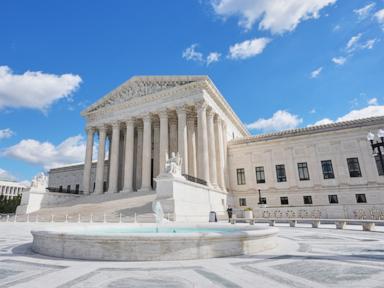
The Supreme Court litigation surrounding Colorado’s Universal Preschool (UPK) program is not an isolated dispute over early childhood education subsidies. It represents a structural stress test of the post-Carson v. Makin constitutional order, specifically examining where the state’s authority to enforce anti-discrimination mandates ends and the Free Exercise Clause’s protection of religious institutional autonomy begins. When Colorado excluded two Catholic parishes from its taxpayer-funded tuition reimbursement system because those schools require families and staff to align with Catholic teachings on sexual orientation and gender identity, the state forced a direct collision between two incompatible legal doctrines: general applicability under the First Amendment and conditional spending in public welfare programs.
Standard reporting frames this conflict as a binary culture war clash between religious liberty and LGBTQ+ civil rights. That framing obscures the underlying legal architecture. To understand how the Supreme Court will adjudicate this dispute—and how state agencies and religious institutions must recalibrate their compliance strategies—requires dissecting the statutory mechanics of Colorado’s UPK program, the evolution of the Court’s neutrality doctrine, and the operational friction of conditional funding.
The Architecture of Colorado’s Universal Preschool Program
In 2022, Colorado voters approved Proposition EE, creating a dedicated funding stream via nicotine taxes to provide at least 10 to 15 hours per week of tuition-free preschool for all four-year-olds in the state. Rather than building a monolithic network of state-run facilities, the Colorado Department of Early Childhood (CDEC) designed a mixed-delivery system. The state acts as a third-party payer, routing public funds directly to a decentralized network of public school districts, private secular daycares, home-based providers, and faith-based preschools.
To participate in this marketplace and receive state reimbursements, providers must sign a uniform provider agreement. Embedded within this contract is a statutory non-discrimination mandate. Under Colorado law, participating preschools are prohibited from discriminating against any child, family, or prospective employee based on race, ethnicity, religion, sexual orientation, or gender identity.
This regulatory design creates an immediate operational conflict for traditional religious institutions. St. Mary Catholic Parish in Littleton and St. Bernadette Catholic Parish in Lakewood operate preschools integrated into their broader parish ministries. Their admissions and employment policies reflect Catholic doctrine: families and staff are expected to uphold Church teachings regarding marriage and biological sex. By refusing to sign the non-discrimination attestation, these parishes were disqualified from receiving UPK funds, effectively pricing them out of a universal benefit available to their secular competitors.
The Three Pillars of the Free Exercise Challenge
The legal challenge mounted by the parishes, represented by Becket Law, rests on three distinct constitutional arguments engineered to trigger strict scrutiny—the highest standard of judicial review, which requires the government to prove its policy is narrowly tailored to achieve a compelling state interest.
1. The Trinity Lutheran to Carson Continuum
Over the past decade, the Supreme Court has systematically dismantled the "play in the joints" doctrine that previously allowed states to withhold public funds from religious entities even when the Establishment Clause did not require exclusion. This trajectory follows a clear linear progression:
- Trinity Lutheran Church of Columbia, Inc. v. Comer (2017): The Court ruled that excluding a church-run preschool from a state grant program for playground resurfacing solely because of its religious status violated the Free Exercise Clause.
- Espinoza v. Montana Department of Revenue (2020): The Court invalidated a state constitutional provision ("Blaine Amendment") that barred families from using state-funded scholarship tax credits at religious schools, reiterating that status-based discrimination is unconstitutional.
- Carson v. Makin (2022): The Court eliminated the distinction between religious status and religious use. Maine argued it was not excluding schools because they were religious, but because they intended to use public funds to deliver a sectarian education. The Court rejected this distinction, holding that once a state chooses to subsidize private education, it cannot disqualify private schools solely because they are religious.
The Colorado parishes argue that CDEC’s non-discrimination mandate is merely a sophisticated proxy for the status-and-use exclusions invalidated in Carson. For a Catholic parish, maintaining an admissions and hiring environment aligned with Catholic doctrine is an inseparable component of its religious exercise. Forcing the school to abandon its faith-based community standards as a condition of receiving UPK funds imposes an unconstitutional penalty on religious practice.
2. The Failure of General Applicability Under Fulton
Under Employment Division v. Smith (1990), laws that are "neutral and generally applicable" do not violate the Free Exercise Clause, even if they incidentally burden religious practice. Colorado’s primary defense relies on Smith: the non-discrimination rule applies equally to secular and religious preschools, making it a neutral, generally applicable condition of participating in a voluntary state program.
However, the Court’s decision in Fulton v. City of Philadelphia (2021) severely narrowed the definition of general applicability. In Fulton, Philadelphia refused to renew a foster care contract with Catholic Social Services because the agency would not certify same-sex couples. The Supreme Court ruled unanimously against the city, finding the contract was not generally applicable because it contained a mechanism allowing a city commissioner to grant discretionary exemptions at her sole discretion.
The Colorado plaintiffs leverage Fulton by pointing to the structural exemptions already embedded within the UPK program. CDEC permits providers to reserve seats for specific populations—such as children of employees, children of military families, or students with specific socioeconomic profiles—and allows religious schools to give admissions preferences to members of their own congregation. Because the state tolerates secular and categorical preferences that undermine the principle of universal, open-door access, the plaintiffs argue the state cannot selectively refuse an exemption for religious beliefs regarding sexuality and gender.
3. Compelled Association and Ministerial Autonomy
Beyond funding parity, the litigation implicates the First Amendment’s protection of expressive association and the ministerial exception established in Hosanna-Tabor Evangelical Lutheran Church and School v. EEOC (2012). Religious schools do not view preschool teachers merely as childcare workers; they view them as primary catechists responsible for transmitting the faith to young children. State mandates that dictate hiring criteria—specifically prohibiting a parish from requiring staff to live in accordance with Catholic moral teachings—directly interfere with internal church governance. Even if the state argues the UPK rules only apply to the preschool program and not the broader parish, separating a parish preschool from its parent church is an artificial administrative division that the Supreme Court has repeatedly refused to endorse.
The State’s Counter-Architecture: Conditional Spending and Anti-Discrimination
Colorado’s defense is not built on hostility toward religion; it is constructed around the state’s sovereign authority to define the parameters of its own public benefit programs and eradicate discrimination in the public square.
The core of the state’s legal theory rests on the distinction between prohibiting religious practice and refusing to subsidize it. Colorado does not ban Catholic preschools from operating, nor does it force non-participating parishes to alter their admissions policies. Instead, the state asserts that when taxpayers fund a universal public service, the state has a compelling interest in ensuring that every taxpayer-funded seat is open to every taxpaying family without exception.
From an administrative standpoint, CDEC faces a severe operational risk if it loses. A mixed-delivery system relies on private capacity to meet statutory universal access goals. If religious providers are permitted to accept state funds while rejecting children of same-sex parents or requiring families to sign statements of faith, the state effectively finances a segregated tier of public education. In rural Colorado counties where a single faith-based center may be the only licensed preschool provider within driving distance, granting a religious exemption would mean LGBTQ+ families have zero access to the state-funded benefit their taxes support.
Furthermore, Colorado relies heavily on Bob Jones University v. United States (1983), where the Supreme Court upheld the revocation of tax-exempt status for a religious university that prohibited interracial dating and marriage. The Court held that the government’s fundamental, overriding interest in eradicating racial discrimination substantially outweighed whatever burden the denial of tax benefits placed on the university’s religious beliefs. Colorado seeks to extend this principle, arguing that preventing discrimination based on sexual orientation and gender identity carries equivalent constitutional weight in the context of publicly funded education.
The Analytical Blind Spots in Public Commentary
Mainstream analysis of the Colorado UPK case routinely misses three structural dynamics that will actually govern the Supreme Court’s deliberation:
- The "Universal" Paradox: By marketing and structuring the program as universal preschool, Colorado inadvertently strengthened the plaintiffs’ constitutional position. When a state creates an entitlement available to the general public, excluding a subset of citizens (Catholic families who want to use their universal benefit at a Catholic school) triggers heightened scrutiny under Espinoza and Carson. Had Colorado structured the program as a targeted grant exclusively for secular public school expansion, the Free Exercise claim would lack a comparator.
- The Secular Comparator Trap: Under the Court’s current jurisprudence (specifically Tandon v. Newsom), a law fails general applicability whenever it treats any comparable secular activity more favorably than religious exercise. The moment Colorado allowed secular preschools to reserve seats for specific affinity groups (like corporate employees or specific neighborhoods) while denying religious preschools the ability to maintain faith-based community boundaries, the state walked into a doctrinal trap. The Court does not evaluate whether the state’s overall goal is benign; it evaluates whether the state values secular exceptions more than religious ones.
- The Downstream Liability of Federal Funding: Colorado’s UPK program does not exist in a vacuum; it intersects with federal Child Care and Development Block Grant (CCDBG) funds and Head Start regulations. A Supreme Court ruling invalidating Colorado’s non-discrimination condition will immediately destabilize similar statutory requirements across dozens of states that utilize mixed-delivery models for early childhood education and foster care.
Strategic Implications for State Agencies and Religious Institutions
The trajectory of the Supreme Court’s First Amendment jurisprudence indicates a high probability that Colorado’s categorical exclusion of the Catholic parishes will be struck down, provided the plaintiffs successfully demonstrate that the UPK program contains discretionary or secular exemptions comparable to those in Fulton. However, a victory for the parishes will not produce a totalizing rule that exempts religious institutions from all state regulations. Instead, it will force a structural redesign of public-private partnerships.
For state policymakers and administrative agencies, relying on broad, inflexible non-discrimination attestations in mixed-delivery welfare programs is no longer a viable legal strategy. To insulate public benefit programs from Free Exercise challenges, states must execute two structural shifts:
- Eliminate Discretionary Exemptions: State agencies must audit all provider contracts to strip out ad-hoc waiver mechanisms, hardship exemptions, and categorical seat-reservation allowances. If a state wishes to enforce a neutral rule under Smith, the rule must be absolute, rigid, and entirely devoid of secular carve-outs.
- Shift from Institutional Subsidies to Direct Parent Vouchers: Rather than contracting directly with providers—which entangles the state in the provider’s internal employment and admissions governance—states should route funds directly to parents via portable educational savings accounts or tuition vouchers. Under established Establishment Clause and Free Exercise precedent (Zelman v. Simmons-Harris), when funds reach a religious institution solely through the independent, private choice of a parent, the state’s regulatory nexus is severed, reducing constitutional friction.
For religious educational institutions and non-profits, participating in state-funded mixed-delivery systems requires proactive governance hardening before entering into public contracts:
- Codify Religious Nexus in Operational Bylaws: Institutions must explicitly document how admissions criteria, curriculum, and employee conduct standards are directly mandated by core theological tenets. Courts distinguish between institutional preferences and sincere religious mandates; vague mission statements will not survive strict scrutiny analysis.
- Segregate Secular and Sectarian Funding Streams: Where state regulations impose unavoidable compliance burdens on specific operational functions (such as facility safety, nutritional standards, or non-instructional staffing), religious providers should maintain strict accounting separation between state-reimbursed activities and privately funded ministry operations to prevent regulatory spillover into core ecclesiastical governance.
The Colorado preschool litigation marks the final frontier of the Supreme Court’s decade-long reconstruction of the Religion Clauses. Once the Court resolves whether anti-discrimination mandates can override religious institutional autonomy in universal benefit programs, the legal boundaries governing the American welfare state will be fixed for a generation.