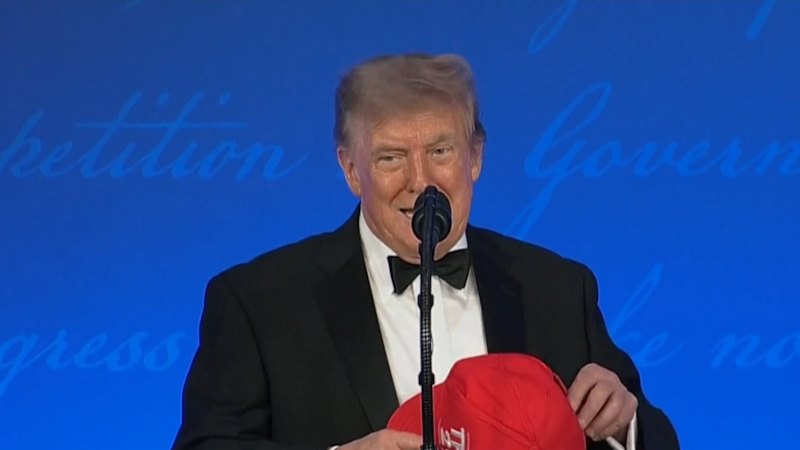
President Donald Trump sparked widespread media reaction when he donned a red "Trump 2028" hat and joked about a future White House bid during the White House Correspondents' Association dinner. While the moment generated immediate headlines and viral clips across social media platforms, the framework governing American presidential elections leaves no room for ambiguous interpretations. Under the Twenty-Second Amendment of the United States Constitution, ratified in 1951, no person can be elected to the office of the President more than twice. Because Donald Trump won both the 2016 and 2024 elections, he is currently serving his second elected term, rendering him constitutionally ineligible to run for or win another presidential election in 2028.
The history of presidential term limits reveals a deliberate effort by lawmakers to institutionalize a check on executive power. Before Franklin D. Roosevelt broke the longstanding tradition set by George Washington by winning four consecutive elections, the two-term limit was an unwritten norm upheld out of respect for democratic rotation. Following Roosevelt's tenure, Congress and the states moved quickly to codify this tradition into law to prevent permanent consolidation of the executive branch. Legal scholars and constitutional historians agree that any formal attempt to bypass this limitation would require a formal constitutional amendment, a grueling legislative process requiring a two-thirds vote in both houses of Congress and ratification by three-fourths of the state legislatures.
Despite the clear constitutional barrier, political figures frequently utilize future-focused rhetoric to command attention and maintain political momentum. Comments regarding extended terms or future bids often function as strategic tools rather than serious policy proposals. Political analysts note that keeping the media and political opponents guessing about long-term ambitions helps deflect attention from immediate legislative fights and sustains high engagement among a politician's core supporters. By teasing a future campaign, a high-profile leader ensures that the political narrative remains centered squarely on their influence, dominating news cycles even when policy debates or governance challenges should theoretically take precedence.
The reaction from the press corps and political rivals typically follows a predictable script. Journalists rush to analyze the legal feasibility of a third term, while opposition lawmakers issue stern reminders of foundational constitutional principles. This cycle benefits both sides. The media secures high viewership and click-through rates driven by curiosity and controversy, while the political figure manages to control the daily news agenda without expending capital on actual legislative text. When Donald Trump clarified during his remarks that he was "only kidding," it reinforced the reality that these remarks belong in the realm of theatrical political performance rather than actionable electoral strategy.
As political campaigns and media environments continue to evolve, the appetite for speculative headlines shows no sign of slowing down. Every offhand remark, symbolic hat, or humorous aside is magnified through modern digital distribution channels, turning throwaway quips into dominant national discussions. Yet, beneath the noise of viral soundbites and partisan posturing, the structural guardrails of the American political system remain firmly in place. The boundaries established by the Twenty-Second Amendment stand as a rigid constraint, ensuring that regardless of political theater or rhetorical maneuvering, the office of the presidency remains subject to strict temporal limits.