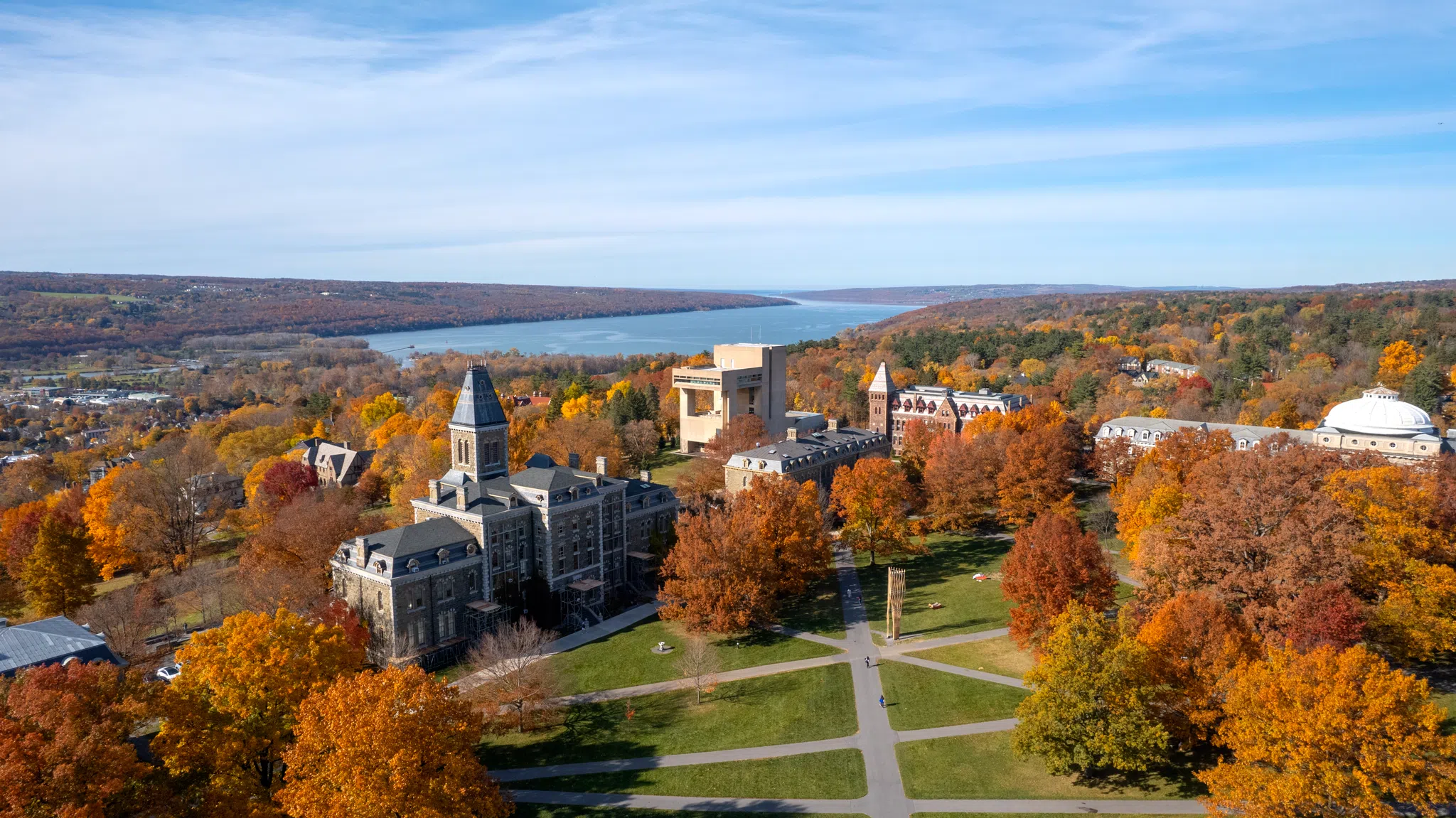
The university quad is supposed to be an ivory tower insulated from the raw, blood-sport mechanics of national politics. That illusion died in Ithaca. When a high-stakes civil litigation involving alleged sexual violence at a Cornell University fraternity collided with the administrative crosshairs of Washington and Albany, it exposed a fragile institutional apparatus. This is not merely a localized campus scandal. It is a stress test for an American higher education system caught in the crossfire of political polarization, where every administrative misstep becomes ammunition in a broader cultural war.
To understand how a fraternity house incident from late 2024 morphed into an institutional earthquake, one must examine the structural decay of accountability within elite academies. For years, universities operated under a self-regulated feudalism. They handled internal discipline through opaque Title IX boards, insulated by massive endowments and legal teams whose primary mandate was risk mitigation rather than systemic reform. When the allegations involving a former student surfaced—detailing a night of heavy drinking and subsequent trauma inside a campus chapter house—the traditional playbook failed. Campus police summaries, local prosecutable thresholds under New York's voluntary intoxication laws, and internal administrative reviews did not just misalign; they triggered a cascading failure of public trust.
Enter the political opportunists. In Washington, the administration had already spent months targeting elite universities over federal funding, ideological compliance, and administrative bloat. In New York, state officials and Attorney General Letitia James stepped into the vacuum, launching independent inquiries that transformed a campus tragedy into a public referendum on state versus federal oversight. President Donald Trump publicly weaponized the inquiry, attacking state prosecutors while simultaneously leveraging federal pressure to force structural concessions.
This is where the narrative pushed by mainstream commentators often misses the mark. Observers love to frame these campus crises as simple binaries: right versus left, administration versus student body, or victim advocacy versus due process. The reality on the ground is far more cynical and complex. It is about liability management colliding with an electorate that no longer trusts institutional gatekeepers. When Cornell faculty voted no confidence in university leadership, and when president Michael Kotlikoff scrambled to appoint former federal officials like Sally Yates to conduct independent reviews, it signaled that the university could no longer police itself.
Consider the legal mechanics at play. New York State's statutory definitions regarding voluntary intoxication and incapacitation have long created a treacherous gray area for prosecutors. If an individual consumes substances voluntarily, proving legal incapacitation under current state statutes creates a heavy burden of proof, often resulting in local district attorneys declining to bring criminal indictments—even when investigative transcripts reveal profound distress. This legal friction point is precisely why state lawmakers are now scrambling to rewrite the code. Yet changing a statute in Albany does not fix the rot inside Greek life infrastructure or eliminate the institutional reflex to sweep misconduct under the rug until it lands on the front page of national newspapers.
The broader implications for Trump's America are stark. Higher education is undergoing a forced restructuring. For decades, universities enjoyed broad autonomy while tuition prices soared and administrative hierarchies ballooned. Today, those same institutions are vulnerable. By tying federal compliance, civil rights investigations, and future funding settlements directly to political oversight, the federal government has established a new precedent. Universities are no longer autonomous republics of learning; they are heavily contested political battlegrounds.
When the dust settles in Ithaca, the Greek system may look entirely different, executive leadership will have shifted, and state legislators may tighten consent laws. But the underlying disease remains untouched. Elite institutions still operate on a model of PR defense first and systemic justice second. Until universities dismantle the protective fortresses surrounding campus social organizations, external political forces will continue to storm the gates.