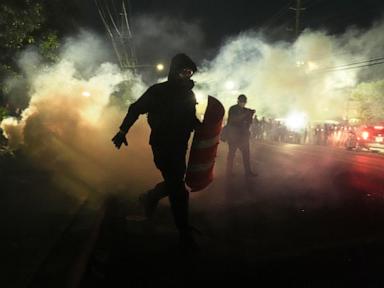
More than 80 protesters have been arrested outside Delaney Hall in Newark, New Jersey, following escalating clashes with federal immigration officers and state police over alleged medical neglect, maggot-infested food, and extreme heat inside the facility. While the federal government dismisses the unrest as outside political agitation, the conflict stems directly from a massive $1 billion private prison contract and a complex web of legal exemptions that shield the facility from state oversight. This escalation reflects a broader institutional battleground where state laws, federal supremacy, and corporate profits collide on the streets of Newark.
Understanding the crisis requires looking beyond the immediate images of pepper spray and barricades. The friction has been building for months, fueled by a combination of a structural shift in federal immigration enforcement and the unique legal status of private detention contractors in New Jersey.
The Billion Dollar Shield
The escalation at Delaney Hall cannot be decoupled from its corporate management. The facility is operated by GEO Group, a prominent private prison contractor that secured a $1 billion, 15-year federal contract to run the facility for Immigration and Customs Enforcement (ICE). This deal was part of a broader federal push to expand detention capacity nationwide, creating a highly lucrative arrangement that operates largely outside the jurisdiction of local authorities.
New Jersey previously attempted to ban private immigration detention facilities within its borders through legislation passed in 2021. However, federal courts routinely rule that state laws cannot interfere with federal immigration operations under the Supremacy Clause of the U.S. Constitution. This legal reality creates a stark contradiction where a facility operates under federal protection inside a state whose political leadership explicitly opposes its existence.
Private contractors like GEO Group operate on a model tied to bed occupancy and minimized operational costs. According to immigrant advocacy group Cosecha, detainees launched a coordinated hunger strike after experiencing systematic deprivation, including overcrowding, un-air-conditioned cells during seasonal heat spikes, and a lack of necessary prescription medications. When corporate entities maximize profit margins within federally protected enclaves, the surrounding municipality invariably inherits the social and financial fallout.
Inside the Hunger Strike
The official response to the internal conditions at Delaney Hall reveals a deep divide between the federal executive branch and local oversight. Detainees managed to smuggle out handwritten letters detailing cells filled with mold, food containing maggots, and severe medical neglect for chronic conditions. Democratic members of Congress from New York City toured the facility and publicly validated these claims, describing the accounts from inside as entirely credible.
The federal government rejects these descriptions. Department of Homeland Security Secretary Markwayne Mullin publicly dismissed the hunger strike and the reported deprivations, stating that detainees receive sufficient calories and noting that the facility "isn't Holiday Inn." Border czar Tom Homan similarly defended the operations, publicly praising the facility's food quality after a personal visit.
GEO Group maintains that the allegations are fabricated by external political groups intent on dismantling the federal immigration framework by targeting private contractors. For the individuals locked inside, however, the reality is defined by isolation. When a hunger strike leader was abruptly transferred to disciplinary segregation at a separate facility in Elizabeth, New Jersey, the move backfired. Instead of suppressing internal dissent, it catalyzed the external protest movement into a direct physical confrontation with law enforcement.
When Local Curfews Meet Federal Mandates
The tactical shift on the streets of Newark highlights the strain placed on municipal resources. What began as peaceful vigils transformed into intense standoffs at the entrance gates of Delaney Hall. Protesters formed human chains, constructed makeshift barricades from mattresses and trash cans, and actively blocked transportation routes to prevent ICE vehicles from moving detainees.
The local government attempted to regain control by implementing an emergency 9 p.m. curfew, ordered by Newark Mayor Ras Baraka. This measure shifted the enforcement burden directly onto the New Jersey State Police. While local authorities sought to de-escalate the neighborhood disruptions, federal ICE agents used pepper spray and batons to break through crowds blocking the facility's gates.
The resulting arrests highlight a difficult reality for local law enforcement. State and local officers are forced to police their own communities to maintain public order around a federal operation that their own state laws deem unauthorized. Over 80 individuals face charges ranging from curfew violations to federal counts of assaulting and obstructing law enforcement officers.
The Policy Deadlock
The situation at Delaney Hall demonstrates the limits of state legislative power when confronting federal immigration policy. Even with clear opposition from New Jersey's governor and legislature, the financial incentives embedded in a long-term, billion-dollar federal contract ensure that private detention centers remain operational.
"Anyone who assaults law enforcement will be prosecuted to the fullest extent of the law. Rioters will not slow us down and ICE operations remain undeterred," Secretary Mullin stated via social media, reaffirming the federal stance.
This unwavering federal posture means that local protests, regardless of their size or intensity, face an unyielding legal barrier. The private contract structure insulates the facility from local political pressure, converting humanitarian protests into a cyclical war of attrition on the pavement outside.
The tension in Newark is a direct result of this structural design. With federal authorities refusing to alter operations and state officials lacking the legal power to close the doors, the perimeter of Delaney Hall remains a volatile flashpoint where local policy, corporate contracts, and federal enforcement continue to collide.